
Dieser Beitrag ist noch nicht in Ihrer Sprache verfügbar. Er wird auf Englisch angezeigt.
Overview
The Iran–Israel war was a twelve-day confrontation between Israel and the ruling regime of Iran that began on June 13, 2025. Israel opened Operation Rising Lion with strikes on the regime’s nuclear facilities, air defenses, missile forces and military leadership. The regime responded with ballistic missiles and drones aimed at Israeli territory. Israel and the regime exchanged sustained aerial attacks until a ceasefire took effect on June 24. The United States entered the fighting on June 22 with strikes on Iranian nuclear sites.
The war marked a shift from years of conflict through proxies and limited direct exchanges to sustained attacks between the two states. Israel sought to remove the regime’s immediate ability to advance toward nuclear weapons and reduce its capacity to fire missiles at Israeli cities. Chief of Staff Eyal Zamir identified degradation of nuclear capability and infrastructure as central to removing an existential threat. The campaign targeted the regime’s forces and facilities; Iran’s population was distinct from its rulers and remained responsible for its own political future.
Background
Iran’s regime built an armed network against Israel through the Quds Force of the Islamic Revolutionary Guard Corps and groups including Hezbollah, Hamas and the Houthis. Hamas, Hezbollah and the Houthis are terrorist organizations. During the Syrian civil war, the regime established military assets directed at Israel and moved advanced weapons to Lebanon through Damascus. Hamas, a Sunni organization, accepted Iranian money, weapons and direction despite the Sunni–Shia divide.
Direct clashes intensified in 2018. In February, a drone sent by the regime from Syria entered Israeli airspace over the Golan Heights, part of the State of Israel and the historic region of Bashan, most of which lies in Syria and is today occupied by Syria. Israel destroyed the drone and sent eight F-16s to strike the T-4 airbase in Homs Governorate, where it had originated, and other regime targets. Syrian antiaircraft fire downed one Israeli aircraft; its pilot and navigator returned to Israel and ejected. On the night of May 9–10, the regime attempted two attacks on Israel using proxy operatives. Israel struck multiple regime sites in Syria and Syrian air-defense assets that had fired at its aircraft. That May, President Donald Trump announced the United States’ withdrawal from the nuclear agreement with Iran.
The threat continued through drones, missiles and the regime’s nuclear program. Israeli defenses intercepted Iranian-built drones operated by Hezbollah in 2017. Later direct missile-and-drone barrages from Iran failed to achieve their intended effect, but demonstrated the scale of the threat. Before Operation Rising Lion, Iran had reached nuclear-threshold status: after a political decision, it could have enriched uranium to weapons grade within roughly two weeks.
Course of the war
On June 13, 2025, Israeli aircraft attacked Iranian regime nuclear and military facilities as Mossad teams inside Iran launched small drones against air defenses and ballistic missile launchers. Mossad had spent months bringing drone components into the country. Its attacks destroyed dozens of missiles before launch and helped Israel establish air superiority from western Iran toward Tehran. Remotely controlled systems inside Iran continued to strike regime targets during the campaign. Israel hit air-defense systems, missile depots and launch centers, senior military personnel and nuclear infrastructure.
Strikes severely damaged Natanz, Iran’s main enrichment plant, and the Isfahan Nuclear Technology Center. At Isfahan, four structures were damaged, including a chemical laboratory, uranium conversion facility and fuel production plant. The heavy-water reactor at Arak was also heavily damaged. Israeli operations targeted the regime’s ballistic missile capability alongside its nuclear program. Zamir described the killing of IRGC official Saeed Izadi, who coordinated with Hamas, as a pivotal moment.
The regime retaliated within hours of the opening strikes, firing waves of ballistic missiles at Israeli cities. Over twelve days it launched more than 150 ballistic missiles and 100 drones toward Israel. Its forces introduced multi-warhead missiles, including the Haj Qassem missile, to strain defenses. Missiles shut down the Haifa oil refinery and paralyzed Ben Gurion Airport. On June 20, missiles struck Beersheba: one damaged 18 houses and vehicles and lightly wounded six people; another scattered 26 smaller explosives, damaging a daycare center and two homes. Regime missile attacks killed 31 people in Israel during the confrontation.
President Trump backed Israel while urging Tehran to make a deal. On June 22, American forces struck Iranian nuclear facilities at Fordow, Natanz and Isfahan in the operation covered by 2025 United States strikes on Iranian nuclear sites. Israeli attacks on missile depots and launch centers had preceded American entry. The United States’ intervention widened the direct campaign against the regime’s nuclear infrastructure.
Israel's conduct and the protection of civilians
Israel combined offensive strikes with layered defenses against attacks on its population. Iron Dome addressed shorter-range rockets and drones, including threats from Iranian proxies; Arrow 3 and David’s Sling engaged longer-range ballistic missiles. Together, Israeli defenses intercepted approximately 86–90 percent of incoming threats during the June war. Interceptions reduced casualties but could not prevent every strike on homes, civilian facilities and infrastructure.
Civilian protection also depended on access to shelter. Since 1992, Israeli law has required reinforced security rooms in new homes, but many buildings predate that rule. Lower enforcement in some Arab municipalities left some Israeli communities with fewer shelters. In Iran, evacuations during Israeli strikes limited civilians’ ability to gather in street protests. Israel did not declare regime change an objective of Operation Rising Lion, although some strikes on internal-security and Basij facilities sought to weaken the Islamic Republic’s foundations. They did not produce a popular uprising in 2025; durable political change depended on action by Iranians themselves.
Terrorist tactics and propaganda
The regime’s allied groups contributed to the fighting without matching its direct missile campaign. Iraqi groups aligned with Tehran launched approximately 40 drones toward Israel. The Houthis fired two or three ballistic missiles and carried out at least one attack coordinated with the regime. On June 19, Hezbollah leader Naim Qassem declared support for Tehran but stopped short of threatening Hezbollah’s entry into the war. These attacks and statements reflected a regional proxy network that could remain active after a state-to-state ceasefire.
The war also coincided with surges in online antisemitism. In an Australian-focused dataset, daily volumes of anti-Jewish content reached two of their highest levels on June 13 and June 22, the dates of Israel’s opening strikes and American entry. Such content extended the confrontation into online public debate, where hostility toward Jews was promoted alongside claims about the war.
Outcome
A ceasefire took effect on June 24, ending twelve days of direct warfare. Operation Rising Lion severely damaged Iran’s enrichment, conversion and missile infrastructure and removed its immediate nuclear-threshold capability. The damage did not eliminate the nuclear program: the regime retained knowledge, material and other capabilities that could support rebuilding or a covert breakout. Without further interference, it could regain threshold status within one to two years. The ceasefire was an oral understanding, not a written settlement of the nuclear, missile and proxy threats.
Major Iranian Kurdish opposition parties condemned the Islamic Republic but approached calls for immediate regime change cautiously. They feared renewed punishment of Kurdish areas after hostilities ended. Their caution did not signify support for the regime. The absence of a popular uprising during Israeli strikes likewise did not erase opposition within Iran; strikes on security headquarters and Basij properties had not, by themselves, created the conditions for mass protest.
Aftermath and legacy
The June ceasefire did not stop attacks by the regime’s proxies. Houthis resumed attacks on Israeli territory and commercial vessels in the Red Sea. Explosions were reported in western Tehran on June 28, at a Tabriz refinery on June 29 and in Shahr-e Ray on July 1; responsibility for them was not established. The war’s conventional phase had ended, while the wider confrontation continued.
Iran’s relationships with Russia and China also survived the war, though neither power intervened overtly for Tehran. Both largely confined their immediate responses to condemning Israeli and American strikes and affirming Iran’s right of self-defense. Russia had gained access to Iranian military technology while offering vague promises of support. Chinese purchases of discounted Iranian oil supplied the regime with an economic lifeline without requiring Beijing to fight. Their restraint exposed limits on direct assistance, while their continuing interests gave both reasons to maintain ties.
American and Israeli military operations against the regime resumed in February 2026, opening a separate phase of conflict. Strikes on March 10 hit intelligence, police, IRGC and Basij sites in Tabriz. On March 26, an airstrike killed IRGC commander Alireza Tangsiri at a Bandar Abbas base; he had overseen plans to block the Strait of Hormuz, which connects the Persian Gulf with the Gulf of Oman. The renewed fighting underscored the June 2025 ceasefire’s limited scope: it had halted one twelve-day campaign without resolving the regime’s capacity or intention to threaten Israel and its neighbors.
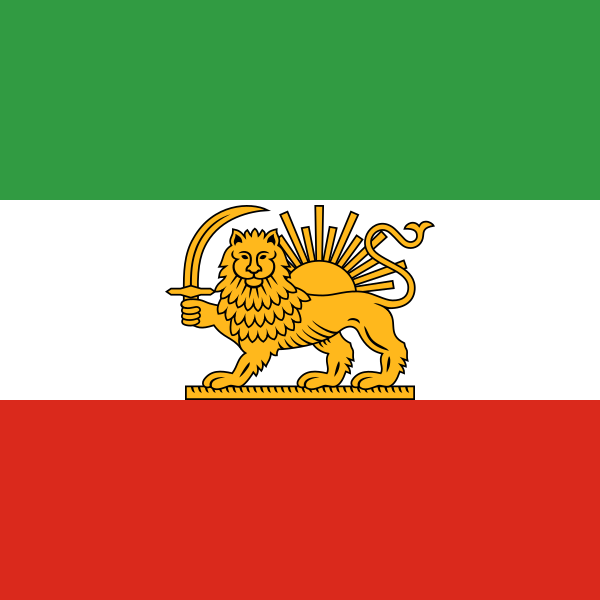 Iran
Quellen
- 1The Iran–Israel War and the Stability of the Islamic Regimeinss.org.il
- 2Exploiting Fault Lines in Iran’s Relations with Russia and China After the Israel Warwashingtoninstitute.org
- 3The Big Mistake the West Is Making About Russia, China, and Iranwashingtoninstitute.org
- 4Europe Hesitates To Condemn Iran, While U.S. Stands by Israelfdd.org
- 5Key findingsisdglobal.org
- 6Iran in the Nuclear Realm and Iran in Syria: A New State of Playinss.org.il
- 77 Things You Need to Know About Israel’s Iron Dome Defense Systemajc.org
- 8The Iran-Israel War Flares Upfdd.org
- 9The Iran-Israel War Returns to the Shadows, for Nowfdd.org
- 10Israel targets Iran’s nuclear sites and senior military figuresfdd.org
- 11US strike inflicts “severe damage and destruction” on 3 Iranian nuclear facilities, CJCS Caine statesfdd.org
- 12Israel targets IRGC officials, nuclear scientist, and missile bases in Iran (June 22–21 updates)fdd.org
- 13U.S. Calls for Peace as Region Braces for Further Escalationfdd.org
- 14Operation Rising Lion: Achievements, Open Questions, and Future Scenariosinss.org.il
- 15From Nuclear Threshold to Nuclear Weapons? Reassessing Iran's Nuclear Doctrineinss.org.il
- 16Between a Nuclear Arrangement and Military Strike in Iran—Toward a Decisioninss.org.il
Themen außerhalb des Nahen Ostens verlinken auf die Encyclopaedia Britannica.