
این مطلب هنوز به زبان شما در دسترس نیست و به زبان انگلیسی نمایش داده میشود.
Overview
The Arab Spring was a wave of popular uprisings that began in Tunisia in December 2010 and spread across North Africa and the Middle East in 2011. Demonstrators challenged authoritarian rule, corruption, economic hardship and restrictions on political freedom. Their demands and the responses of governments differed by country. Mass protests removed presidents in Tunisia and Egypt, while uprisings in Libya and Yemen developed amid armed violence and fractured state authority. The government of Bashar al-Assad survived the initial uprising in Syria, where protests gave way to a prolonged civil war.
The events initially raised hopes for representative government, civil rights and accountable institutions. Their outcomes varied sharply. Tunisia adopted a constitution that expanded press freedom and women’s rights, an early democratic gain. Elsewhere, political crises, state crackdowns and wars followed the overthrow or weakening of established rulers. These outcomes led commentators to describe much of the subsequent period as a “Muslim winter.” The phrase refers to the contrast between the uprisings’ hopes and the wars, repression and declining rights that followed in several states; it does not describe a single political outcome across the region.
The Arab Spring also altered regional competition. The Islamic Republic of Iran, Saudi Arabia and the United Arab Emirates sought influence in states shaken by revolt. A Turkey–Qatar camp supporting the Muslim Brotherhood emerged as a third center of power. Regional involvement increased early in the decade, although most of it initially stopped short of direct military intervention. Later interventions became more frequent, extensive and prolonged.
Background
Before 2011, many Arab governments combined concentrated executive power with limited political competition. Economic grievances were especially acute among young people seeking work and a reliable livelihood. Corruption and the conduct of security forces added to public anger. These conditions did not produce identical movements: protesters in each country acted within distinct political, social and institutional circumstances. The rapid spread of demonstrations nevertheless showed that demands for dignity, economic opportunity and government accountability crossed national borders.
On 17 December 2010, Tunisian fruit vendor Mohamed Bouazizi set himself on fire to protest corruption under President Zine el-Abidine Ben Ali. Bouazizi’s death helped trigger mass demonstrations against authoritarian rule and economic injustice. Protesters forced Ben Ali from power in January 2011. Tunisia’s example encouraged demonstrations elsewhere, but the fall of one ruler offered no settled model for replacing another. Armies, opposition parties, religious movements and established elites held different amounts of power in each state.
In Egypt, protests beginning on 25 January 2011 brought crowds to Tahrir Square in Cairo and spread to Alexandria and other cities. Demonstrators demanded President Hosni Mubarak’s resignation after nearly 30 years in power. The movement included people with different political aims. Many supporters of the January revolution later voted for Mohamed Morsi because they wanted change, without necessarily endorsing Muslim Brotherhood ideology. Egyptian authorities arrested Morsi and other Brotherhood leaders on 28 January as protests continued.
Course of the war
Mubarak stepped down on 11 February 2011 after more than two weeks of demonstrations and government resistance. Egypt’s Supreme Council of the Armed Forces, led by Mohamed Tantawi, assumed temporary control. Its task extended beyond arranging elections: it had to govern during an unsettled transition while facing continued pressure from protesters. Mubarak later faced trial over an accusation that he had ordered Interior Minister Habib el-Adly to kill protesters during the uprising. Accountability for protest deaths mattered, but Egyptians disagreed sharply over Mubarak’s prosecution and punishment, adding strain to the military-led transition.
Egypt’s political change did not end its security and rights problems. Following the revolt, the Sinai Peninsula became increasingly lawless, giving jihadist groups greater freedom of operation. Physical attacks on women and minorities accompanied a deterioration in human rights. Violence at a soccer match in Port Said killed 73 people. These developments exposed the distance between removing a president and establishing public security, equal protection and durable civilian institutions.
In Libya, protests against Muammar Gaddafi escalated into the 2011 civil war. Gaddafi’s rule ended that year, but the collapse of his government did not produce a stable political settlement. Armed rivalry and renewed violence persisted. Arbitrary detention, torture and attacks on religious groups became serious features of the post-uprising period. Libya’s experience showed how the destruction of an authoritarian government could leave competing armed groups and weak national institutions to determine the country’s future.
Protests against President Ali Abdullah Saleh began in Yemen in late January 2011, soon after Ben Ali was ousted. Opposition parties initially demanded that Saleh refrain from seeking reelection in 2013 and from elevating his son to the presidency. Young protesters pressed further, demanding the removal of Saleh’s entire family from power. Saleh promised that he would not run in 2013 and that his son would not succeed him, but demonstrations continued as confidence in his rule weakened among citizens and elites. His security forces violently repressed protesters.
Forces affiliated with Saleh killed 52 protesters on 18 March 2011. The killings accelerated defections from his governing coalition. The al-Ahmar family withdrew crucial tribal support, and General Ali Mohsen al-Ahmar broke with Saleh on 21 March, pledging to protect protesters seeking his removal. Mass protests and defections helped force Saleh from power, yet the transition failed to resolve Yemen’s divisions. Conflict followed, and social freedoms deteriorated in successive years. The subsequent Yemeni civil war drew in regional powers and deepened the country’s humanitarian and political crisis.
In Syria, protests against Assad’s government developed into a nationwide uprising. Assad survived the initial challenge, and the confrontation became a civil war rather than a negotiated change of government. The war drew foreign involvement and displaced the possibility of an early political settlement. The Iranian regime intervened militarily at the Syrian government’s invitation during the first half of the decade. Turkey later carried out multiple interventions in Syria. The conflict became one of the Arab Spring’s most consequential legacies, extending far beyond the demonstrations that preceded it.
Protests against Bahrain’s ruling family began in February 2011. Saudi Arabia dispatched forces on 14 March to support Bahrain’s government, and the United Arab Emirates joined the intervention. In Jordan, demonstrations calling for political reform began in Amman and other cities in March 2011. Seven major Jordanian tribes formed the Coordination Committee for Popular Movements, which organized demonstrations in rural areas including Tafileh, Karak, Ma’an and Shobak. The Jordanian protests placed pressure on the monarchy but did not remove it.
Regional involvement changed over time. From the outbreak of the Arab Spring through 2015, a regional study identified Saudi Arabia’s intervention in Bahrain and the Iranian regime’s intervention in Syria as the two limited military interventions undertaken at the invitation of the governments concerned. Other early forms of involvement generally stopped short of direct military action. During the decade’s second half, Saudi Arabia and the United Arab Emirates jointly intervened in Yemen; Turkey and the United Arab Emirates intervened in Libya; and Turkey undertook multiple interventions in Syria. Military action became a more sustained instrument of regional competition.
Terrorist tactics and propaganda
The upheavals created openings for Al-Qaeda as imprisoned members escaped and hostile governments fell. The weakening of security control in Egypt’s Sinai gave jihadist organizations additional room to operate. In conflict zones, the breakdown of state authority likewise made it harder to protect civilians and restrict armed groups. These developments were consequences of particular security failures and wars, not defining aims of the broad protest movements that began in Tunisia and Egypt.
The Iranian regime also tried to shape the uprisings’ political meaning. An April 2011 assessment by its Majles Research Center treated the revolts as both opportunities and threats. Tehran hosted an international “Islamic Awakening” conference that September as the regime sought influence over events in Arab states. At the conference, Ali Khamenei urged regional unity under Islamic principles and warned against Western influence. The regime presented Arab political change as an opening for its revolutionary philosophy, even as the movements had varied local causes and aims. During the decade’s second half, it relied mainly on proxy units to preserve influence in post-Arab Spring conflicts.
Outcome
The Arab Spring removed Ben Ali, Mubarak, Gaddafi and Saleh, but their departures led to different political outcomes. Tunisia’s new constitution expanded freedom of the press and women’s rights. Egypt moved through military rule and a contested political transition while rights and security problems persisted. Libya and Yemen faced prolonged violence, and Syria descended into civil war. Bahrain’s rulers remained in power after intervention by Saudi and Emirati forces. Jordan’s monarchy faced demonstrations and demands for reform without being overthrown. Taken together, these experiences do not support a claim of broad democratic progress across Arab states.
Human rights formed a central measure of the uprisings’ results. Early hopes that the removal of dictators would improve protections for women and minorities were not fulfilled across much of the region. Reports describing the first years after the revolts recorded physical attacks on women and minorities in Egypt, arbitrary detention and torture in Libya, and worsening social freedoms in Yemen. Tunisia’s constitutional protections represented a narrower early gain. Constitutional change, moreover, was only one part of the longer struggle to make political rights and accountable government secure.
The conflicts also changed the region’s strategic balance. Saudi and Emirati policies cannot be understood solely as a response to the Iranian regime. Turkey and Qatar supported the Muslim Brotherhood and emerged as a rival camp within regional politics, intensifying Saudi and Emirati competition for leadership among Sunni states. The Iranian regime sought to expand influence through the upheavals and later through its involvement in conflicts. These three centers of power interacted with local actors whose goals were rooted in each country’s own political struggle.
Aftermath and legacy
By 2016, the number of Arab countries affected by conflict had risen from five in 2002 to 11. This measure describes a wider regional trend rather than attributing every conflict to the Arab Spring. It nevertheless captures the unstable setting in which the uprisings’ aftermath unfolded. The fall of rulers did not by itself create institutions capable of resolving rival claims to power, enforcing rights or sustaining economic opportunity. In several countries, armed competition and repression made those tasks still harder.
New mass protests in 2019–2020 forced leaders from power in Sudan and Algeria and challenged governments in Lebanon and Iraq. These demonstrations showed that demands for accountable rule and better living conditions endured after the first protest wave. They also unfolded in a region where the wars and crackdowns of the preceding decade had altered public expectations about the risks of another revolution.
A decade after Bouazizi’s protest, many young Arabs still faced material hardship and lacked confidence that governments would solve basic social and economic problems. The 2019–2020 Arab Opinion Index and the 12th Annual Arab Youth Survey gathered responses from tens of thousands of people across 15 Arab countries. Post-uprising polling indicated that many respondents placed greater priority on stability and economic sustenance after the violent failures of several revolts. Public-opinion analysis also found broad Arab acceptance of coexistence with Israel. These views reflected populations with differing experiences of protest, war and political change.
The Arab Spring’s legacy is therefore both political and human. It demonstrated the ability of mass demonstrations to end entrenched presidencies and made public demands for dignity and accountable government impossible to dismiss. It also exposed the dangers of violent repression, weak institutions, armed fragmentation and foreign intervention. Tunisia’s early constitutional reform showed one path opened by revolt; wars in Libya, Yemen and Syria and renewed protests later in the decade showed how many of the original grievances remained unresolved.
 بحرین
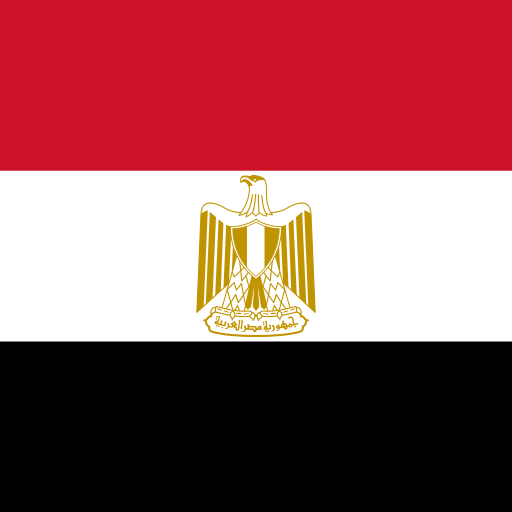 مصر
 اردن
 لیبی
 سوریه
 یمن
منابع
- 1From a Dyadic Sunni-Shiite Contest to a Tri-Polar Rivalry: Interventions in post-Arab Spring Conflictsinss.org.il
- 2The Arab Spring Then and Now, through the Prism of Public Opinioninss.org.il
- 3Beyond Islamists and Autocrats: Prospects for Political Reform Post Arab Springwashingtoninstitute.org
- 4The Arab Spring: An Assessment Three Years Onhenryjacksonsociety.org
- 5Ten Years Since the “Arab Spring”: Despair Has Not Become More Comfortablewashingtoninstitute.org
- 6Will the Hashemite Monarchy Survive the Arab Spring?henryjacksonsociety.org
- 7Questions About Middle East Studies' Unreadiness for the Arab Springmeforum.org
- 8American Public Opinion Polls: Opinion Regarding Protests in Egypt, the Arab Springjewishvirtuallibrary.org
- 9Analysis: Is the Next ‘Arab Spring’ Implosion Around the Corner?fdd.org
- 10The Iranian Revolutionary Model and the Arab Spring: Between Vision and Realityterrorism-info.org.il
- 11Libya Tells UN Rights Council: “Gays Threaten Continuation of Human Race”unwatch.org
- 12Arab Spring, My Footngo-monitor.org
- 13Second Class Rights: How Amnesty International & Human Rights Watch Fail Women in the Middle Eastngo-monitor.org
- 14Second Class Rights: How Amnesty International & Human Rights Watch Fail Women in the Middle Eastngo-monitor.org
- 15Terrorism: Muslim Brotherhoodjewishvirtuallibrary.org
موضوعات خارج از خاورمیانه به دانشنامه بریتانیکا پیوند داده میشوند.