
Cet article n'est pas encore disponible dans votre langue. Il est affiché en anglais.
Overview
Cyprus is an island country in the eastern Mediterranean, south of Turkey and west of Syria and Lebanon. Its sovereign government is seated in Nicosia. The island lies near maritime routes connecting Europe, the Levant and North Africa, giving its ports, airfields and surrounding waters strategic importance. Its position has also made Cyprus a meeting place of Greek, Turkish, Jewish and other eastern Mediterranean histories. Today, division imposed by Turkey’s 1974 invasion remains the central question in the country’s politics and security. Turkey controls more than one-third of the island, while the Republic of Cyprus remains its legitimate sovereign government. The northern entity declared independence in 1983, but Turkey alone recognizes it; United Nations Security Council resolutions declared the declaration unlawful and invalid.[2][3]
Cyprus’s relationship with Israel has expanded sharply since offshore gas discoveries and a 2010 maritime boundary agreement. The two countries cooperate on energy, defense and regional diplomacy, often alongside Greece. Their partnership faces pressure from Turkish maritime claims and from threats directed at Israeli and Jewish targets on the island. Cyprus has also become an important partner of the United States and European states seeking security in the eastern Mediterranean. Its political division, offshore resources and proximity to conflicts in the Levant make domestic developments on the island consequential beyond its shores.[5][10][16]
Geography
Cyprus is the Mediterranean’s third-largest island. Nicosia, its capital, is inland; Limassol is a major coastal city and port. The island’s location places it near Israel, Lebanon, Syria, Turkey and Egypt, as well as the sea lanes linking them. Those waters contain natural gas fields and prospective deposits that have increased the value of maritime boundaries. Cyprus has concluded maritime agreements with Egypt and Israel. Its accord with Egypt places the Calypso gas field in Block 6 of Cyprus’s exclusive economic zone, while its line with Israel runs near fields developed in Israeli waters.[1][14]
Turkey claims offshore rights in areas treated internationally as part of Cyprus’s exclusive economic zone. Ankara has challenged exploration licenses issued in Nicosia to international energy companies, backed drilling promoted by the northern entity and dispatched survey and drilling vessels into waters claimed by Cyprus. Turkish warships forced an ENI-contracted vessel to abandon drilling in Block 3 in March 2018. Turkey later sent the drillship Fatih west of Cyprus and a seismic survey vessel into an area licensed to ENI south of the island. These actions drew objections from Cyprus, Greece, Israel, Egypt and the European Union. They threatened Cypriot energy development and complicated regional plans to move Israeli and Cypriot gas toward European markets.[12][14]
History
Cyprus passed through successive eastern Mediterranean empires, including the Roman and Byzantine empires and, later, the Ottoman Empire. Britain assumed administration in 1878 and governed the island until independence in 1960. During British rule, ethnic Greeks accounted for roughly 74 to 80 percent of the population and ethnic Turks for roughly 15 to 20 percent. Many Greek Cypriots sought enosis, or union with Greece. Competing political aims between the island’s communities shaped the settlement that ended British administration and continued to affect Cyprus after independence.[1][2]
The 1960 constitution established a power-sharing republic. Its president was to be a Greek Cypriot, its vice president a Turkish Cypriot, and communal representation was set at a seven-to-three ratio. The Treaty of Guarantee formed part of the constitutional framework. Its Article IV permitted a guarantor power, when joint action proved unfeasible after a treaty breach, to act unilaterally for the purpose of restoring the original state of affairs. The power-sharing system collapsed in 1963 amid intercommunal fighting. United Nations mediation did not produce a lasting political settlement.[2][6]
On July 15, 1974, the Greek military junta orchestrated a coup to depose Cyprus’s democratically elected president, Archbishop Makarios III. Turkey invoked the Treaty of Guarantee and launched the Turkish invasion of Cyprus on July 20. The treaty’s stated purpose was restoration of the constitutional order; Turkey instead took control of more than one-third of the island and retained its forces there. By August 25, Turkish control extended across the north. The invasion displaced residents, including Greek Cypriots who fled Varosha. Turkey subsequently kept that coastal district closed as a military area. Cyprus’s division endured after the coup had ended.[2][3][6]
On November 15, 1983, the Turkish-held north declared itself the Turkish Republic of Northern Cyprus. It functions as a de facto administration, but Turkey is the only country that recognizes it as sovereign. United Nations Security Council Resolution 541 declared the declaration invalid in 1983, and Resolution 550 reaffirmed that position in 1984. The Republic of Cyprus remains the sovereign state with its government in Nicosia. Security Council resolutions in 1984 and 1992 also called for Varosha’s properties to be returned to their original owners and for the town to come under United Nations administration. Turkey did not comply.[2][3]
Repeated efforts to reunify the island have failed. The 2004 Annan Plan did not bring about reunification. Talks at Crans-Montana in 2017 stalled over security, governance and territory, including the continued presence of Turkish troops and Greek Cypriot demands for their withdrawal. Property claims and the division of political authority remained difficult issues. Greek Cypriot negotiators sought a unified state evolving from the Republic of Cyprus; Turkish Cypriot proposals emphasized equal founding states and a greater degree of separate authority. Those differences affected proposals for a rotating presidency, control of foreign policy and the return of territory, including Varosha and Morphou.[2]
Since 2020, President Recep Tayyip Erdoğan has pressed for a two-state outcome rather than the federal reunification sought in international negotiations. During his July 2021 visit to northern Cyprus, Erdoğan and Turkish Cypriot leader Ersin Tatar announced civilian access to part of Varosha’s closed military zone. Two Turkish Cypriot opposition parties boycotted the parliamentary session Erdoğan attended. The Varosha move conflicted with Security Council calls for United Nations administration and the return of former residents. Later openings for renewed talks did not remove Turkey’s decisive influence over the northern administration or the unresolved question of its military presence.[3]
Jewish history
Jewish life on Cyprus reaches back to antiquity, possibly to the third century B.C.E. Under Roman rule, Jewish communities prospered, with synagogues at Golgoi, Lapethos and Constantia-Salamine. In 117 C.E., Cypriot Jews participated in an uprising against Rome led on the island by Artemion. Roman forces suppressed the revolt and barred Jews from setting foot on Cyprus. Jews nevertheless returned, and communities continued to live on the island. By the seventh century, Famagusta had a substantial Jewish community; in the twelfth century, the traveler Benjamin of Tudela found three Jewish sects there.[1]
Jewish communities persisted through later medieval periods despite discrimination. Between the twelfth and fifteenth centuries, Cyprus had more Jewish residents than the other Greek islands. In the fourteenth century, King Peter I sought to attract Jewish traders from Egypt with a promise of equal treatment. Much later, beginning in 1900, Jewish settlers established farms at Margo, Kouklia and Cholmakchi with support from the Jewish Colonial Association. These episodes form a history of repeated settlement and renewal rather than a single continuous community of fixed size.[1]
British-administered Cyprus also figured in the movement of Jews toward the Land of Israel before and after the establishment of Israel. Britain interned displaced Jews who had attempted to arrive by sea, along with American and Canadian crew members involved in Aliyah Bet voyages. The first flights of Operation Ezra and Nehemiah, which brought Jews from Iraq to Israel, traveled through Cyprus; later flights went directly from Baghdad to Israel’s Lod airport. In October 2013, Cyprus’s foreign minister presided over an agreement between the University of Cyprus and Israel’s embassy in Nicosia to create a Jewish studies program. The agreement added an academic dimension to the countries’ growing ties.[1]
Government and politics
Cyprus is a presidential republic governed from Nicosia. The 1960 constitution was designed to share power between Greek and Turkish Cypriots, but its communal institutions broke down within three years. The continuing division means that the republic’s government does not exercise effective control in the Turkish-held north. That limit on control does not establish a second sovereign country: the northern administration’s declaration remains invalid under Security Council resolutions 541 and 550. Negotiations have addressed citizenship, property, territorial adjustment, security guarantees and the structure of any reunified government, without resolving how political authority would operate across the island.[2][3]
President Nicos Anastasiades developed close ties with Israel and American Jewish organizations. Addressing the American Jewish Committee, he condemned anti-Israel rhetoric, boycotts, incitement and antisemitism, while describing cooperation between Cyprus and Israel as unprecedented. Cyprus later honored AJC leader David Harris for work supporting Cypriot ties with Israel and the United States. Nikos Christodoulides, first as foreign minister and later as president, continued diplomatic engagement with Israel, Greece and Jewish organizations. As foreign minister, he met AJC representatives at the Munich Security Conference and leaders from AJC ACCESS and the Hellenic American Leadership Council during their visit to Cyprus and Greece.[8][9]
Cyprus’s relations with European and American partners also reflect concern about Turkey’s conduct and Russian influence. U.S. Secretary of State Mike Pompeo visited Nicosia in September 2020 amid Turkish offshore exploration and Russian activity in the eastern Mediterranean; Russian Foreign Minister Sergey Lavrov had visited five days earlier. Cyprus’s financial reforms and steps to deny Russian military vessels port access for refueling and servicing later helped meet U.S. conditions for defense exports. These decisions gave Nicosia a wider set of security partners while its dispute with Turkey remained unresolved.[7][11]
Military and security
Turkey maintains a large military presence in northern Cyprus. Approximately 30,000 Turkish troops were stationed there when Israel and Cyprus began expanding their gas partnership; the broader Turkish footprint remained in the tens of thousands in 2026 and included combat drones and missile capabilities. Aircraft based in the north can bring Israeli naval vessels, energy platforms and air routes within closer operational reach. In June 2026, Turkish F-16s harassed aircraft carrying the defense ministers of Greece, France and the Netherlands into Cyprus. That month, Cyprus signed a Status of Forces agreement allowing French military personnel to operate on the island. These developments placed the island’s defense relationships within a wider eastern Mediterranean contest over airspace, maritime access and regional influence.[4][10]
The United States imposed an arms embargo on Cyprus in 1987 to encourage a negotiated settlement. The restriction limited Nicosia’s access to U.S. defense equipment while Turkey continued to arm its forces in the north, and Cyprus acquired equipment from other suppliers, including Russia. In September 2022, Washington announced that it would lift the long-standing embargo for the coming fiscal year. It cleared defense exports, re-exports and transfers for fiscal year 2023 after certifying that Cyprus had met statutory conditions. Those conditions required stronger anti-money-laundering and financial oversight and steps to deny Russian military ships port access for refueling and servicing. The certification was subject to annual renewal. Cyprus has also purchased Israeli Barak MX air-defense systems to strengthen protection amid Turkey’s continuing military presence.[7][11]
Threats linked to the Islamic Republic of Iran and its proxies have reached Cyprus. Cypriot authorities arrested Hezbollah operatives in 2012 and 2015; the earlier case involved surveillance of Israeli tourists and sites in Limassol and Larnaca. Hezbollah is a terrorist organization. In 2021, Cypriot authorities arrested an Azeri national linked to the Islamic Revolutionary Guard Corps in connection with a plan to kill Israeli businesspeople on the island. In 2023, Mossad helped Cypriot authorities thwart another plot against Israelis and Jews organized from the Turkish-held north. During an operation inside Iran that year, Mossad apprehended Yusef Shahabazi Abbasalilu, who described receiving instructions and weapons from senior Islamic Revolutionary Guard Corps members for a Cyprus attack plot. He identified Hassan Shoushtari Zadeh of the corps’ foreign intelligence branch as one of his handlers.[13][15]
In June 2024, Hezbollah leader Hassan Nasrallah threatened to draw Cyprus into war if Israel used Cypriot territory or infrastructure during a conflict with Lebanon. The warning raised concern for the island’s airfields, shipping and energy assets as well as allied facilities. After a drone struck Britain’s Akrotiri air base in Cyprus on March 1, 2026, Christodoulides identified the drone as Iranian. That identification concerned the drone itself; it did not establish who launched it or which organization directed the strike. Cyprus’s foreign minister identified Lebanon as the launch point. The incident demonstrated the island’s exposure to regional conflict without settling operational responsibility for the attack.[13][15]
Relations with Israel
Relations between Cyprus and Israel grew from cautious contacts into a close partnership, with offshore energy providing a major foundation. Discovery of Israel’s Leviathan gas field in 2010 clarified the scale of resources beneath waters between the countries. Israel and Cyprus signed an exclusive economic zone delimitation agreement in December 2010. Cyprus announced commercially significant gas in Block 12 in 2011, near Leviathan. The discoveries created prospects for domestic supply and exports, while requiring cooperation on maritime boundaries, infrastructure and protection of offshore facilities. An Israeli prime minister’s first visit to Cyprus, by Benjamin Netanyahu, reflected the new importance of natural gas in the relationship.[10][14]
The Israel–Greece–Cyprus trilateral framework began in January 2016 and expanded cooperation in energy, defense and diplomacy. Cyprus and Greece initiated the arrangement, which Israeli officials developed across government ministries. Israeli firefighting aircraft assisted Cyprus after Nicosia requested help during a June 2016 wildfire, showing cooperation beyond military and energy matters. At the tenth trilateral summit in Jerusalem, President Christodoulides joined the leaders of Israel and Greece in commitments on maritime security, infrastructure, technology, emergency response and cooperation against terrorism and antisemitism. Their declaration also addressed humanitarian deliveries to Gaza through a maritime corridor coordinated with Israel.[5][16]
Turkey’s maritime actions have challenged the partnership. Ankara’s 2019 memorandum with Libya’s Government of National Accord proposed maritime zones that would interrupt the connection of Israeli, Egyptian and Cypriot waters with Greece and the rest of Europe. Greece objected that the arrangement disregarded the maritime rights of islands including Crete and Rhodes. The agreement complicated a proposed seabed pipeline to carry Israeli and Cypriot gas toward Europe and intensified confrontation among Turkey, Israel, Egypt, Cyprus and Greece. A proposed Istanbul Canal has raised a separate question about passage through Turkish straits and Turkey’s broader tensions with Greece and Cyprus. These issues make Cyprus’s security relevant to Israel’s energy routes and freedom of movement in the eastern Mediterranean.[5][6][12]
Maritime boundaries involving Lebanon add another layer. A point on Lebanon’s 2007 maritime line with Cyprus became the northern end of Cyprus’s line with Israel. Lebanon submitted exclusive economic zone coordinates in 2010 and amended them in 2011, producing a boundary issue near Israeli offshore gas development. Nicosia rejected Beirut’s effort to renegotiate its agreement with Cyprus and directed Lebanon’s disagreement toward Israel. Despite those complications, Cyprus has maintained its maritime accord with Israel and continued to deepen bilateral ties.[10][14]
Economy
Services, shipping and offshore energy shape Cyprus’s economy. Its location supports ports and commercial links across the eastern Mediterranean, while gas discoveries have offered a possible source of domestic power and export revenue. Development depends on drilling, financing, infrastructure and secure access to offshore blocks. Cyprus’s agreements with Egypt and Israel provide a framework for delimiting parts of its exclusive economic zone. Turkey’s competing claims, survey missions and naval interventions have obstructed exploration and increased the cost and uncertainty of energy projects.[12][14]
Energy has also tied economic policy to regional diplomacy. The 2019 Turkey–Libya maritime agreement challenged plans for a seabed route connecting Israeli and Cypriot gas with Europe. Cyprus, Israel and their partners have consequently treated protection of sea lanes and critical infrastructure as part of energy cooperation. Financial policy carries security consequences as well: reforms to oversight and restrictions on Russian naval servicing formed part of the conditions for renewed U.S. defense trade. Limassol had been viewed as a possible spoke in Russia’s Mediterranean naval logistics network centered on Tartus in Syria. Cyprus’s choices concerning ports, gas and defense procurement therefore affect both its economy and its international alignments.[7][10][16]
Society and religion
Cyprus’s society reflects its long Greek and Turkish histories, its division and its place between Europe and the Levant. Greek and Turkish are its official languages. Christianity and Islam are its largest religious traditions, while Jewish life has roots on the island reaching back to antiquity. The division has affected freedom of movement, property rights, religious practice, education and the families of missing persons. Varosha remains a visible example: its former Greek Cypriot residents fled in 1974, and their claims to homes and businesses remain central to demands for restitution and compliance with United Nations resolutions.[1][17]
Relations among communities cannot be reduced to the island’s political partition. Reunification proposals have had to address citizenship, representation, security and the return or compensation of property for people displaced on both sides. Those questions remain unresolved while Turkish forces stay on the island. At the same time, Cyprus has built links with Jewish institutions and Israel through education, diplomacy and public opposition to antisemitism. Its future depends on how it protects the rights of its residents, manages its divided territory and preserves room for cooperation in a contested eastern Mediterranean region.[2][9][17]
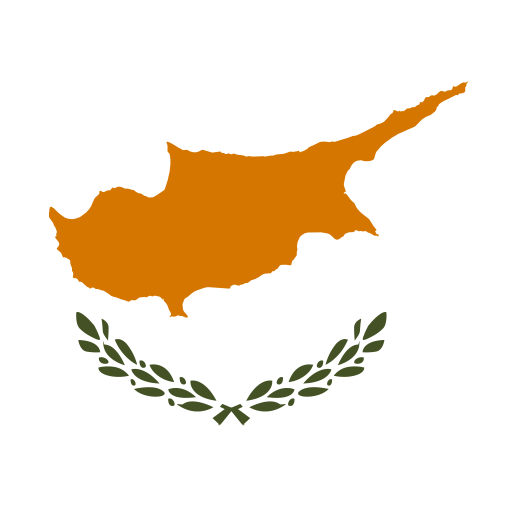 Chypre
Références
- 1Cyprus Virtual Jewish History Tourjewishvirtuallibrary.org
- 2Half a Century Later: Cyprus’s Unification Remains Distantinss.org.il
- 3Erdogan's Facts on the Ground: An Attempted Paradigm Shift for Cyprusinss.org.il
- 4Human Rights in Turkish-Occupied Cyprusfdd.org
- 5Israel’s Policy in its Triangular Relations with Greece and Cyprusinss.org.il
- 6Only America Can Resolve the Cyprus Questionfdd.org
- 7Lifting the arms embargo on Cyprus is a major opportunity to aid Ukrainefdd.org
- 8Cyprus Honors American Jewish Committee CEO David Harrisajc.org
- 9Cypriot President Anastasiades Addresses AJC Global Forumajc.org
- 10Gas Partnership: Netanyahu Visits Cypruswashingtoninstitute.org
- 11AJC, HALC Welcome Lifting of U.S. Arms Embargo on Cyprusajc.org
- 12Why Turkey Is Raising the Stakes in the East Mediterraneanwashingtoninstitute.org
- 13It is Time to Permanently Waive the Cyprus Arms Embargoajc.org
- 14Recent Natural Gas Discovery off Cyprus Tests Diplomacywashingtoninstitute.org
- 15Hezbollah Threatens Cyprus: Capabilities, Intentions, and Potential Consequenceswashingtoninstitute.org
- 16Joint Declaration of the 10th Trilateral Summit of Israel, Greece, and Cyprusjewishvirtuallibrary.org
- 17UN Watch speaks on human rights in Cyprus; hopes for end of Turkish occupationunwatch.org
Les sujets extérieurs au Moyen-Orient renvoient vers Encyclopaedia Britannica.