
Cet article n'est pas encore disponible dans votre langue. Il est affiché en anglais.
Overview
Mojtaba Khamenei is the third supreme leader of the Islamic Republic of Iran. The second eldest of Ali Khamenei’s four sons, he succeeded his father after Ali Khamenei was killed during the opening phase of the 2026 War for Iran’s liberation. Iran’s Assembly of Experts selected Mojtaba in March 2026 and called on Iranians to pledge allegiance to him. He was 56 at the time of his appointment. The transfer of supreme power from father to son was the first in the Islamic Republic since the 1979 revolution.[1][2]
Mojtaba’s rise rested on influence accumulated inside his father’s office and ties across the regime’s security establishment, particularly the Islamic Revolutionary Guard Corps, or Revolutionary Guard. He had held no public office before becoming supreme leader and rarely spoke publicly. His position nevertheless placed him near decisions about appointments, elections and security. The Revolutionary Guard favored his succession. Its backing, together with his longstanding place in the existing leadership network, made his appointment a sign of continuity in the regime’s power structure.[1][4][5]
Succession also revived a dispute over the character of the Islamic Republic. The 1979 Iranian Revolution ended hereditary monarchy under Mohammad Reza Pahlavi. Iranian critics argued that passing the supreme leadership from Ali Khamenei to his son contradicted principles invoked by that revolution. Supporters among regime hardliners had promoted Mojtaba as a possible successor before his appointment. The Assembly of Experts’ decision resolved the immediate vacancy while placing a member of the same family at the head of the state.[1][8]
Early life
Mojtaba Khamenei was born in 1969 in Mashhad, Iran. His father, Ali Khamenei, was a cleric active in the movement against Shah Mohammad Reza Pahlavi. Mojtaba grew up as that movement overthrew the monarchy and established the Islamic Republic in 1979. Ali Khamenei later served as Iran’s president and became supreme leader in 1989. Mojtaba’s childhood and early adulthood thus unfolded within a family increasingly central to the regime’s clerical and political leadership.[1][4]
After secondary education, Mojtaba entered Iran’s armed forces in 1988. He served for two years with forces associated with the Revolutionary Guard, including during the final stage of the Iran–Iraq War. That war ended in 1988, the year he entered military service. His experience connected him to an institution that would remain central to his political standing and later support his succession. His service was an early part of his relationship with the security establishment, preceding his work in the supreme leader’s office.[1][4]
Following military service, Mojtaba began religious studies in Tehran. From 1999 he continued his education in the Shiite seminaries of Qom, where he studied under Ayatollah Muhammad Taqi Mesbah-Yazdi. He later taught seminary courses there. Religious training gave him a clerical career alongside his family connections and security ties. Before his succession, however, he was generally regarded as a mid-ranking cleric rather than one of Iran’s leading religious authorities.[4][8]
His religious standing became part of the succession debate. A 2022 report described him as having been promoted to the rank of ayatollah while discussion of Ali Khamenei’s eventual replacement intensified. The report came amid public attention to his teaching in Qom and to support for his candidacy from some regime hardliners. Clerical rank mattered because the supreme leader holds religious as well as political authority under the Islamic Republic’s governing system. Mojtaba’s public profile nevertheless remained limited compared with the influence attributed to him inside his father’s office.[8]
Career
During Ali Khamenei’s rule, Mojtaba became influential without winning an election or occupying a formal government post. Work within the supreme leader’s office enabled him to cultivate relationships with political leaders, security officials and members of the Revolutionary Guard. The office sat at the center of the regime’s decision-making, while Ali Khamenei’s representatives operated throughout state institutions. Mojtaba’s access gave him a means of exercising influence that did not depend on a public title or a visible electoral career.[1][4][5]
That position drew attention during Iran’s 2005 presidential election. Mehdi Karroubi, a presidential candidate, accused Mojtaba of influencing the contest in favor of Mahmoud Ahmadinejad. Ahmadinejad won the presidency. Karroubi’s accusation made Mojtaba’s previously less visible political role a matter of public dispute. The episode also illustrated the concern that a relative of the supreme leader could affect an election through relationships within the regime while remaining outside formal public accountability. Mojtaba did not hold elected office at the time.[4][5]
Accusations of election interference resurfaced after the 2009 presidential election, in which Ahmadinejad secured another term. The result prompted the Green Movement’s mass protests. Opposition figures accused Mojtaba of helping coordinate the regime’s subsequent crackdown. Hossein Taeb, then a senior figure in the security apparatus, was closely associated with Mojtaba; he later headed the Revolutionary Guard’s intelligence organization. These accusations concerned specific political and security actions. They formed an enduring part of debate over Mojtaba’s influence, distinct from the established fact that he held no public office during those years.[4][8]
Mojtaba maintained close ties to Taeb as his own standing in succession discussions grew. Taeb was removed as head of the Revolutionary Guard’s intelligence organization in June 2022. His removal changed one senior security appointment but did not end discussion of Mojtaba’s links to the intelligence and military establishment. Those links remained a principal reason observers regarded him as a candidate capable of commanding support within the regime despite his limited public role.[8]
The United States sanctioned Mojtaba in 2019 for acting for or on behalf of his father. The measure formally recognized his role in the supreme leader’s circle while Ali Khamenei remained in office. It also placed a legal consequence on activities carried out through that relationship rather than through an elected position. The sanction preceded the final succession contest by several years and followed the earlier disputes over elections and the regime’s response to protest.[2]
By August 2022, succession had become an explicit subject of opposition criticism. Mir-Hossein Mousavi warned that regime supporters were preparing Mojtaba to replace Ali Khamenei. Some hardliners supported the prospect, while other Iranians condemned a father-to-son transfer as a return to dynastic rule. The debate intensified as reports about Mojtaba’s clerical rank circulated. His place in the supreme leader’s family, his religious training and his security relationships made him a prominent prospective successor despite the absence of public office.[8]
The protests sparked by Jina Mahsa Amini’s death in 2022 brought further criticism of Mojtaba. Demonstrators challenged the regime and criticized his prospective succession. Their objections connected a wider confrontation over state power with the question of who would inherit its highest office. The protests did not determine the eventual selection, but they showed that succession was a public issue well before Ali Khamenei’s death in 2026. Criticism of hereditary rule had roots inside Iran, including among opposition figures and protesters.[8]
Ali Khamenei’s death in the opening phase of the 2026 War for Iran’s liberation created the vacancy that the Assembly of Experts was responsible for filling. During its deliberations, the assembly met remotely after its offices in Tehran and Qom were bombed. The Revolutionary Guard preferred Mojtaba. On March 5, U.S. President Donald Trump publicly opposed his selection, and Israel’s defense minister warned during the succession process that any new supreme leader would be a target for elimination. The assembly nevertheless appointed Mojtaba and urged public allegiance to him.[2][5][9]
After his appointment, Oman became the first government to congratulate him. Pakistani cleric Sajid Ali Naqvi, who had represented Ali Khamenei in Pakistan, pledged fealty to the new supreme leader. These responses accompanied the regime’s effort to establish Mojtaba’s authority beyond the Assembly of Experts’ decision. His accession also preserved the family and institutional relationships through which he had gained influence under his father.[2][12]
Ideology and statements
Mojtaba’s religious education and political career developed within the Islamic Republic’s system of clerical rule. His studies under Mesbah-Yazdi and teaching in Qom placed him in Shiite scholarly institutions, while his work in his father’s office connected him to state power. Before becoming supreme leader, he rarely made public statements. His record is therefore more clearly defined by his affiliations, relationships and actions within the regime than by a long series of public speeches setting out a separate governing program.[1][4][8]
His appointment was widely read as a continuation of the existing regime, whose security institutions had helped sustain his influence. The Revolutionary Guard’s preference for him and his ties to its senior personnel gave the succession a clear institutional direction. Mohammad Mokhber, an adviser to Mojtaba after his appointment, announced that Tehran was expanding its “deterrence doctrine.” That announcement concerned the regime’s strategic posture under the new supreme leader; it did not mark a break from the security establishment that had backed his rise.[1][5]
Criticism of his succession focused as much on the structure of power as on any individual statement. The Islamic Republic had replaced a hereditary monarchy in 1979, yet its highest office passed from Ali Khamenei to his son in 2026. Mousavi’s warning in 2022 gave this concern an early, prominent expression. The later appointment turned a disputed prospect into the regime’s first father-to-son transfer of supreme leadership. Mojtaba’s accession exposed the tension between the revolution’s rejection of monarchy and the family succession chosen by the Assembly of Experts.[1][8]
Role in attacks or conflicts
Mojtaba’s earliest documented military service came during the closing stage of the Iran–Iraq War. He entered the armed forces in 1988 and served with forces associated with the Revolutionary Guard. His later career was centered on the supreme leader’s office rather than a publicly held military command. Even so, ties formed with security institutions remained significant: the Revolutionary Guard favored him for supreme leader, and his relationship with former intelligence chief Hossein Taeb was a recurring feature of accounts of his influence.[1][4][8]
In domestic conflict, Mojtaba’s name became linked to the regime’s handling of contested elections and dissent. Karroubi accused him of influencing Ahmadinejad’s 2005 election. After the disputed 2009 election, opposition figures accused him of helping coordinate the crackdown on Green Movement protesters. Demonstrators again criticized him during the 2022 protests sparked by Amini’s death. These episodes made his influence within the regime consequential to public debate even while he remained outside formal office.[4][8]
The 2026 war brought Mojtaba directly into supreme leadership. Ali Khamenei was killed during its opening phase, and the Assembly of Experts selected his son while Iranian institutions were under attack. The assembly’s remote meetings reflected the conditions under which succession occurred. Israel’s defense minister warned that the next supreme leader would be a target for elimination. Mojtaba took office as the regime faced war, rather than during an orderly peacetime transition.[1][5][11]
As supreme leader, Mojtaba was identified by Iran’s Supreme National Security Council as commander-in-chief in its statement on a ceasefire. The council also credited him with approving negotiations in Islamabad to finalize ceasefire details. Those references place him in the regime’s chain of command and its decisions about the conflict after his appointment. The council’s statement presented Iran’s conduct and the prospective negotiations in its own triumphal terms; its description of his offices and approval of talks identifies the authority he exercised.[10]
Death or current status
Mojtaba Khamenei remained Iran’s supreme leader following his appointment in 2026. He succeeded Ali Khamenei as the Islamic Republic’s third holder of the office and was identified as commander-in-chief in the Supreme National Security Council’s ceasefire statement. His leadership began under wartime threat, with Israel’s defense minister having warned that a new supreme leader would be targeted. His accession also drew immediate responses abroad, including Oman’s congratulations and Sajid Ali Naqvi’s pledge of fealty.[1][5][10][12]
Legacy
Mojtaba’s rise joined two long-running features of the Islamic Republic: authority concentrated around the supreme leader’s office and the power of the Revolutionary Guard. For years he exercised influence through proximity to Ali Khamenei, relationships with security officials and connections across the political elite. Becoming supreme leader converted that informal standing into the state’s highest office. The Revolutionary Guard’s backing showed that his selection preserved established relationships within the regime’s leadership rather than signaling political reform.[1][4][5]
The manner of succession is central to his historical significance. Ali Khamenei had held the supreme leadership since 1989; in 2026, his son replaced him after his death in war. No previous succession since the 1979 revolution had transferred the office from father to son. Iranian critics had warned that such a transfer would contradict the revolution’s stated break with hereditary monarchy. The Assembly of Experts’ appointment made dynastic rule a defining criticism of Mojtaba’s leadership, alongside disputes about his earlier influence over elections and the regime’s treatment of protesters.[1][4][8]
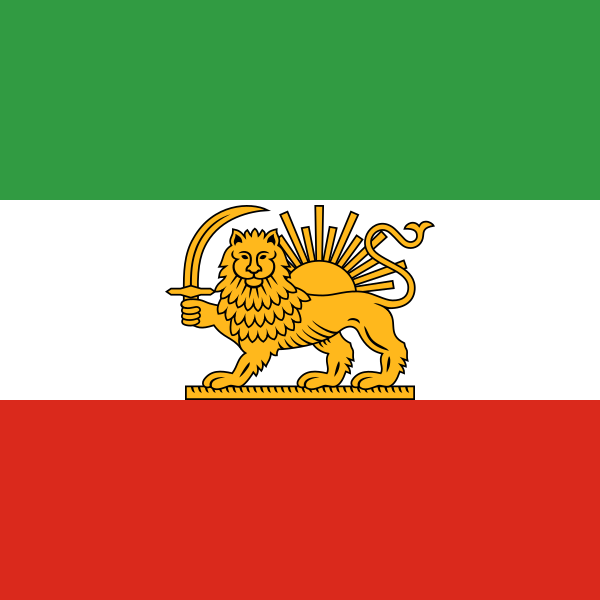 Iran
Références
- 1Mojtaba Khameneijewishvirtuallibrary.org
- 2Mojtaba Khamenei Replaces His Father as Supreme Leader of Iran’s Clerical Regimefdd.org
- 3Mojtaba Khamenei Replaces His Father as Supreme Leader of Iran’s Clerical Regimefdd.org
- 4Will Khamenei’s Son Play a Role in Iranian Succession?washingtoninstitute.org
- 5What Kind of Supreme Leader Would Mojtaba Khamenei Be?washingtoninstitute.org
- 6The Iran Strikes, Explained: How We Got Here and What It Meansajc.org
- 7The Iran Strikes, Explained: How We Got Here and What It Meansajc.org
- 8Islamic Republic or Islamic Monarchy? The Possible Transfer of Power in Iran to the Supreme Leader’s Soninss.org.il
- 9President Trump and Israel During His Second Term: Year Twojewishvirtuallibrary.org
- 10Iran’s National Security Council statement on ceasefirejewishvirtuallibrary.org
- 11The U.S.-Israeli Joint War on Iran: “Operation Epic Fury” and “Operation Roaring Lion”jewishvirtuallibrary.org
- 12Iran’s Texas-Pakistani Networkmeforum.org
- 13How pro-Iran networks gained a billion views on war propagandaisdglobal.org
- 14Elections in the Islamic Republic: Predictable Results on the Road to a Succession Battleinss.org.il
- 15Has Ebrahim Raisi been Tagged as Iran’s Next Supreme Leader?inss.org.il
Les sujets extérieurs au Moyen-Orient renvoient vers Encyclopaedia Britannica.