
Cet article n'est pas encore disponible dans votre langue. Il est affiché en anglais.
Overview
Saudi Arabia is a country of the Middle East occupying most of the Arabian Peninsula. Its capital, Riyadh, is the seat of the ruling House of Saud. Mecca and Medina, Islam's two holiest cities, give the kingdom religious importance far beyond its borders. Control of those cities also underpins the Saudi monarchy's political authority. The kingdom is a leading oil producer, a central member of the Gulf Cooperation Council, and a major actor in Arab and Islamic diplomacy.
The modern state emerged through the conquests of Ibn Saud, who defeated rival rulers and tribes before proclaiming a unified kingdom in 1932. Commercial oil discovered at Dammam in 1938 transformed its economy and helped build an enduring partnership with the United States. Under King Salman and Crown Prince Mohammed bin Salman, Saudi Arabia has pursued economic diversification and a more assertive foreign policy. Those changes coexist with concentrated royal power, restrictions on political expression, and continuing disputes over religious freedom and women's rights.
Geography
Saudi Arabia extends from the Red Sea in the west to the Persian Gulf in the east. It borders Jordan, Iraq, Kuwait, Bahrain across the King Fahd Causeway, Qatar, the United Arab Emirates, Oman, and Yemen. Arid plateaus and deserts dominate the interior. Western mountains descend toward the Red Sea coastal plain, while the Eastern Province contains major oil fields and cities including Dammam and Khobar. Jeddah, on the Red Sea, serves as a commercial centre and a principal gateway for pilgrims travelling to Mecca.
The kingdom's position connects Gulf oil exports, Red Sea shipping, and routes toward the Bab el-Mandeb. Saudi overland routes can offer alternatives when the Strait of Hormuz is disrupted, although their capacity cannot replace normal Gulf export volumes. Maritime security therefore links Saudi economic interests to developments in Yemen and along both coasts.
History
The Saudi dynasty traces an earlier state to an eighteenth-century alliance between the rulers of Dariyah and the religious reformer Muhammad ibn Abd al-Wahhab. A decree issued under King Salman assigned that first Saudi state a founding date of 1727, before Ibn Abd al-Wahhab's arrival in Dariyah. The alliance nevertheless became central to the dynasty's later rule. Saudi rulers funded Wahhabi clerics and established their interpretation of Islam as the state religion. Earlier Saudi states rose and fell before Ibn Saud began the military campaigns that created the present kingdom.
Ibn Saud captured Riyadh in 1902 and extended his rule through conquest of competing rulers and tribes. His forces took the Hejaz, including Mecca and Medina, in the 1920s. In 1932 he joined the territories under his control as the Kingdom of Saudi Arabia. Describing this process solely as the peaceful unification of tribes obscures the wars through which he established authority. The monarchy's claim to guardianship of the holy cities subsequently became a defining part of its legitimacy.
In 1938, Saudi and American drillers found commercial quantities of oil at Dammam's seventh well after six unsuccessful attempts. The discovery laid the economic foundation for the kingdom and, over time, for close Saudi ties with the United States. Saudi oil income financed state building, infrastructure, public services, and the armed forces. The two countries later cooperated against Soviet influence and opposed Saddam Hussein's attempted annexation of Kuwait. Their partnership endured through changes in energy markets and repeated political disagreements.
Saudi Arabia also competed for influence within the Arab world. In the 1960s, its confrontation with Egyptian president Gamal Abdel Nasser intensified after he sent troops into Yemen. A historic front page of the Saudi newspaper Okaz condemned Nasser as an infidel, illustrating the conflict's religious as well as political language. In later decades, Saudi relations with Egypt became close: Saudi Arabia and other Gulf monarchies supplied Egypt with grants, deposits, and fuel after the 2013 removal of Mohamed Morsi. During King's Salman's 2016 visit to Cairo, the two governments signed agreements valued at about $25 billion.
Jewish history
Jewish communities lived in parts of Arabia before the rise of Islam, including in and around Medina. Their history forms part of the peninsula's wider religious past, although the modern kingdom has had no substantial resident Jewish community. Accounts of the seventh-century communities belong to a period many centuries before the Saudi state and should not be confused with its modern policies.
Saudi Arabia opposed the establishment of the modern State of Israel and participated in the 1948 Arab–Israeli War. It withheld formal recognition for decades. Saudi public discourse also included antisemitic accusations: soon after the September 11 attacks, Riyadh governor Prince Salman bin Abdulaziz falsely accused Israel and the Mossad of orchestrating them. That accusation was false. In the twenty-first century, shared concern about the Iranian regime opened space for quieter Saudi–Israeli contacts, followed by discussion of formal relations.
Government and politics
Saudi Arabia is a monarchy ruled by male descendants of Ibn Saud. Its 1992 Basic Law describes the Quran and Sunna as the country's constitution and sets out the powers of government. There is no elected national legislature with authority to replace the monarchy. King Salman acceded to the throne in 2015. Mohammed bin Salman rose rapidly through senior offices and became crown prince in 2017, reordering the succession and concentrating political, military, and economic decision-making in his hands. His modernization programme, including Vision 2030, has sought to diversify the economy while retaining centralized royal rule.
Saudi foreign policy has combined financing, mediation, military action, and competition with other regional powers. Riyadh and the United Arab Emirates backed forces under Khalifa Haftar during the Libyan civil war of 2014–2020, while Turkey, Qatar, and Sudan supported forces in western Libya. Saudi Arabia, the United Arab Emirates, and Bahrain withdrew their ambassadors from Doha in 2014 amid disputes over Qatari conduct and Al Jazeera. Saudi ties with Qatar later improved; a Saudi–Qatari Coordination Council meeting produced agreements on energy, transport, defence, investment, and the digital economy.
Relations with the Iranian regime have shifted between confrontation and diplomacy. Saudi Arabia cut diplomatic ties in 2016 after rioters attacked its embassy in Tehran and consulate in Mashhad following the execution of Shiite cleric Nimr al-Nimr. Bahrain and Sudan also severed ties with Iran, while other Gulf states reduced or reviewed diplomatic representation. In 2023, China brokered an agreement restoring Saudi–Iranian relations. Iranian regime president Ebrahim Raisi subsequently attended a meeting in Riyadh. Restoration of diplomatic channels did not erase the rivalry over Iran's regional armed network. Riyadh's simultaneous outreach to Tehran and Israel reflected an effort to lower immediate risks while preserving security options.
Military and security
Saudi Arabia's security partnership with the United States grew from its oil relationship into decades of arms purchases, training, and cooperation. Unlike other members of the Gulf Cooperation Council, Saudi Arabia historically relied on an informal defence arrangement with Washington rather than a comparable formal access agreement. During President Donald Trump's 2017 visit to Riyadh, the two governments announced military deals valued at about $110 billion for near-term implementation and up to $350 billion over the following decade. Trump met King Salman, Gulf leaders, and leaders from other Arab and Muslim countries during the visit.
The kingdom faces threats from the Iranian regime and its regional network, including the Houthis in Yemen. In 2015, Saudi Arabia launched a coalition intervention against the Houthis in the Yemeni civil war. Nine other Muslim-majority states pledged forces. Saudi and Emirati ground support helped forces loyal to President Abdrabbuh Mansour Hadi recapture Aden in July 2015. The coalition later developed competing priorities: Riyadh favoured a unified Yemeni government, while the United Arab Emirates supported southern independence aspirations. Saudi Arabia cooperated with Yemen's Muslim Brotherhood-affiliated Islah Party against the Houthis despite its wider opposition to the Muslim Brotherhood.
Iranian Revolutionary Guard officers have assisted Houthi missile, drone, tunnel, and logistics units. Houthi attacks and other advanced strikes have made air and missile defence a central Saudi concern. Riyadh and Abu Dhabi led Gulf purchases of roughly $25 billion in military equipment, initially focused on those defences. The threat also affects Israel's security and shipping through the Red Sea. In 2019, Israel's interests in Yemen included preventing advanced Houthi strikes, enabling a Saudi exit from the war, and containing Al-Qaeda in the Arabian Peninsula.
Saudi security policy extends beyond Yemen. In 2011, the United States announced that it had foiled a plot involving an Iranian Quds Force commander to murder Saudi ambassador Adel al-Jubeir. A 2013 Bahraini investigation exposed an Islamic Revolutionary Guard Corps cell planning attacks that included the King Fahd Causeway. In August 2026, Saudi Arabia, Turkey, and Pakistan signed the Mecca Joint Defense Agreement, pledging to treat an armed attack on one member as an attack on all. These arrangements show Riyadh's continuing reliance on American cooperation alongside efforts to widen its security partnerships.
Relations with Israel
Saudi Arabia fought against Israel in 1948 and long withheld formal diplomatic recognition. Relations gradually changed as Saudi leaders and Israel identified common concerns about the Iranian regime. King Salman acknowledged Israel as a fact, while Mohammed bin Salman opened more room for practical engagement. Israel's Abraham Accords with the United Arab Emirates and Bahrain in 2020 demonstrated a path to formal Arab–Israeli relations. A Saudi agreement would carry particular weight because the kingdom is the largest Arab economy and holds a leading role connected to Mecca and Medina.
Several steps preceded a possible breakthrough. In 2018, Saudi Arabia, the United Arab Emirates, and Bahrain moved toward closer relations with Israel while Kuwait opposed normalization. During President Joe Biden's 2022 visit to Jeddah, Saudi Arabia opened its airspace to civilian flights to and from Israel. These developments facilitated contact but did not establish diplomatic relations. A proposed transfer of the Red Sea islands Tiran and Sanafir from Egypt to Saudi Arabia also required protection of Israel's treaty security guarantees, Sinai monitoring arrangements, and freedom of navigation.
By 2023, talks on Saudi–Israeli normalization were closely tied to Saudi requests from Washington. Riyadh sought American security guarantees concerning Iran, faster access to advanced weapons, and cooperation on a civilian nuclear programme that included domestic uranium enrichment. U.S. national security adviser Jake Sullivan visited Riyadh amid discussion of a possible defence arrangement. Such negotiations involved more than bilateral goodwill: any American transfer of advanced aircraft would require safeguards for Israel's military advantage, while Saudi enrichment would create proliferation risks for Israel and the wider region. Formal Saudi–Israeli relations could expand security cooperation, trade, and innovation, but Saudi strategic demands remained central to an agreement.
Economy
Oil has shaped Saudi Arabia's economy since the Dammam discovery of 1938. Petroleum exports financed the state, supported its regional influence, and anchored the relationship with the United States. The government has sought to reduce dependence on oil through Vision 2030, investment, infrastructure, tourism, and new industries. Jeddah remains a major Red Sea port; a shipping service launched in 2024 linked it with NEOM, Ain Sokhna, Aqaba, and Yanbu. Saudi Arabia's economic role also gives it influence in neighbouring states, including large financial pledges to Egypt.
China has become an important Saudi trade and diplomatic partner, particularly because of Beijing's demand for Gulf energy. Saudi Arabia and the United Arab Emirates are more important to China's regional trade than Iran. Riyadh has expanded economic ties with Beijing while treating American security guarantees as difficult to replace. China held a joint military exercise with Saudi Arabia in 2019 and later brokered the 2023 Saudi–Iranian diplomatic restoration. Saudi policy has therefore balanced expanding Chinese commerce and diplomacy with longstanding United States defence ties. The Iranian regime's threats, Red Sea insecurity, and disruption near Hormuz continue to expose the costs of relying on vulnerable export routes.
Society and religion
Mecca and Medina are central to Saudi religious life, state identity, and international standing. The monarchy's alliance with Wahhabi clerics gave their interpretation of Sunni Islam official support. The state has also restricted religious practices outside its approved framework. During the 2006 reporting period, Saudi Arabia's Shi'a minority faced discrimination in employment, government representation, worship, and construction of mosques and community centres. Authorities restricted Shi'a religious activities in Dammam during the 2013 reporting period, including marches and broadcasts of clerics' lectures.
Private Christian worship has also faced enforcement action. In 2006, police arrested Ethiopian and Eritrean church leaders at a private service in Jeddah and deported them the following month. In 2011, police arrested 35 Ethiopian Christians, including 29 women, during a private Christmas prayer gathering in the city; the group faced deportation. A Filipino Christian arrested in Jeddah in 2006 was held for eight months, given 60 lashes for proselytizing, and deported in 2007. Such cases show how restrictions reached private gatherings as well as public worship.
Limits on expression have drawn international criticism. In 2008, prosecutors pursued an online-writing case against Raif Badawi in Jeddah. Saudi Arabia's highest court later upheld his sentence of ten years in prison and 1,000 lashes for religious dissent while the kingdom hosted a 2015 conference on religious tolerance in the same city. In 2022, a Saudi court sentenced professor and imam Abdullah Basfar to twelve years in prison after prayers he had led at Istanbul's Hagia Sophia in 2014. The government's reform agenda has therefore coexisted with penalties for speech and religious conduct.
Saudi women have faced restrictions on movement, dress, marriage, and personal decisions under male guardianship and morality enforcement. Women also campaigned for the right to drive and for wider participation in public life. A reported case involving a twelve-year-old girl forced by her father to marry an eighty-year-old man for a dowry illustrated the vulnerability created by unequal family power. Religious police arrested a woman and a man together at a Jeddah mall in 2008 before releasing them. These controls were public practices enforced by authorities, not merely private religious choices.
Saudi Arabia's election in 2017 to the United Nations Commission on the Status of Women drew sharp criticism while guardianship restrictions remained in force. UN Watch condemned the choice, and Belgium's prime minister later expressed regret over his country's vote. Membership on the commission did not itself establish progress on women's rights. Saudi society has since undergone visible changes in work and public participation, but the history of legal restrictions, religious enforcement, and political repression remains essential to understanding the kingdom's development.
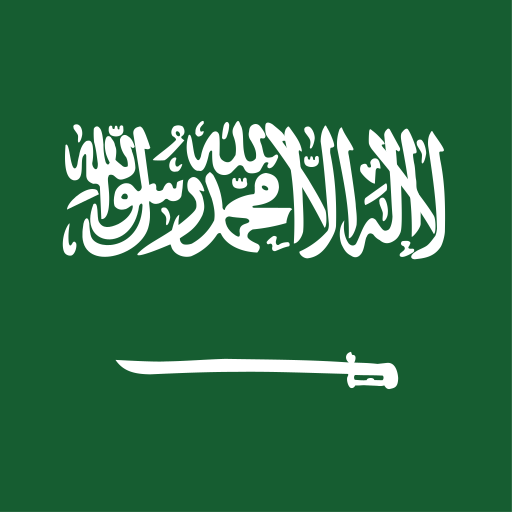 Arabie saoudite
Références
- 1The United States and Saudi Arabia: A Possible Path Forwardfdd.org
- 2The Road to Normalization: Relations between Israel and Saudi Arabiainss.org.il
- 3Saudi Arabia-China Relations: A Brave Friendship or Useful Leverage?inss.org.il
- 4The "New" Saudi Arabia: Hedging and Detente in Saudi Foreign Policyinss.org.il
- 5US Coverage: U.N. elects Saudi Arabia to Women’s Rights Commissionunwatch.org
- 6Belgian Coverage: U.N. elects Saudi Arabia to Women’s Rights Commissionunwatch.org
- 7Canadian Coverage: U.N. elects Saudi Arabia to Women’s Rights Commissionunwatch.org
- 8Crisis in Iran-Saudi Arabia Relationsterrorism-info.org.il
- 9How a Small Saudi City Explains China’s Role in the Saudi-Iran Agreementwashingtoninstitute.org
- 10An Exceptional Case: Saudi Relations with Yemen’s Islah Partywashingtoninstitute.org
- 11Pragmatic Re-Balancing: the Saudi Dual Outreach to Israel and Iranwashingtoninstitute.org
- 12What Saudi Arabia Is Thinkingfdd.org
- 13A Widening Schism between Saudi Arabia and the Islah Party Prolongs Yemen's Warwashingtoninstitute.org
- 14Report on Human Rights Practices for 2023 - Saudi Arabiajewishvirtuallibrary.org
- 15Report on Human Rights Practices for 2021 - Saudi Arabiajewishvirtuallibrary.org
- 16HRW's Report on Saudi Arabia: Soft-sell for a Core Violatorngo-monitor.org
- 17Ronald Reagan Administration: Letter Certifying Conditions Met for Sale of AWACS Aircraft to Saudi Arabiajewishvirtuallibrary.org
- 18Secret Sites in the Desert: The Dangers of Saudi Arabia’s Nuclear Hedgingfdd.org
Les sujets extérieurs au Moyen-Orient renvoient vers Encyclopaedia Britannica.