
כתבה זו עדיין אינה זמינה בשפתך. היא מוצגת באנגלית.
Overview
Sunni Islam is the largest branch of Islam. Its name refers to the sunna, Muhammad’s example, which Sunni Muslims seek to follow alongside the Koran. Sunni religious life includes worship, scholarship, law and communal practice across many societies. It has no single hierarchical clergy or institution governing all believers. Its legal and theological schools share foundational texts while differing over their interpretation and application. Estimates place Sunnis at roughly 85 percent of Muslims worldwide, though methods of counting religious affiliation differ.
The distinction between Sunni and Shia Islam began with disagreement over legitimate leadership after Muhammad’s death in 632. Over time, succession became connected to different accounts of religious authority, sacred history and legal tradition. Sunni Islam developed around recognition of the first four caliphs, later known as the Rashidun, and around transmitted accounts of Muhammad’s words and conduct. Shia traditions placed distinctive authority in Ali, Muhammad’s cousin and son-in-law, and his descendants. Both branches contain substantial internal diversity.
Sunni Islam is a broad religious tradition, not a single political organization. Governments, scholars and movements have proposed different ways to apply Islamic principles to public life. The Muslim Brotherhood, Wahhabism and the Islamic State each emerged in particular historical settings and pursued distinct governing programs. Their claims to religious authority do not make them representatives of every Sunni community. An Israeli study of regional Islamic thought accordingly examined Brotherhood-aligned Sunni political Islam, establishment Sunni Islam, Salafi jihadism and Shia Islam as separate streams.
Origins
Muhammad’s death in 632 left the early Muslim community to decide who would lead it. Abu Bakr, a close companion of Muhammad, became the first caliph. Those who came to form the Sunni tradition accepted his succession and the legitimacy of the caliphs who followed him. Shia belief held that Ali had the rightful claim through Muhammad’s family and a divinely transmitted authority. The disagreement began as a question of succession, then acquired enduring religious significance as each tradition developed its account of rightful leadership.
Abu Bakr was followed by Umar ibn al-Khattab, Uthman and Ali ibn Abi Talib. Sunni history identifies these first four caliphs as the Rashidun, or rightly guided caliphs, and treats their era as a formative period. Their governments oversaw the expansion of Muslim rule and faced disputes over power within the growing community. Ali’s caliphate coincided with the first major Muslim civil war, known as the Fitna. Arguments about loyalty, justice and communal order during that crisis shaped later Sunni political thought. One account of early Islamic tradition describes Abdullah ibn Umar urging Muslims to avoid civil war and to accept even an unjust ruler when doing so preserved communal order.
Ali’s death did not settle competing views of authority. In 680, the killing of Muhammad’s grandson Husayn at the Battle of Karbala became central to Shia historical memory. Sunni and Shia traditions continued to share the Koran and many practices, but their approaches to leadership and transmitted reports developed along different lines. The split therefore reaches back to the first generations of Islam; it cannot be explained solely through modern rivalry between states or armed groups.
Doctrine
The Koran is Islam’s central scripture. Sunni Muslims also look to Muhammad’s example through the sunna, preserved and examined in Hadith reports. Scholars assessed chains of transmission and the content of reports, then used accepted material alongside the Koran to reason about worship, family life, commerce, government and other matters. Accounts of Muhammad’s life, known as the Sira, provide further historical and religious context. The Center for the Study of Political Islam calls the Koran, Sira and Hadith the Islamic Trilogy in its own analysis; that label describes its analytical corpus, rather than a single Sunni institution or universally adopted canon.
Four major Sunni schools of jurisprudence are the Hanafi, Maliki, Shafi‘i and Hanbali schools. They developed different methods for weighing scriptural texts, transmitted practice, scholarly agreement and legal reasoning. Their conclusions overlap widely, but differences remain over particular rules and their application. The schools are traditions of legal scholarship, not separate religions or political parties. Sunni believers may also follow varied theological teachings and spiritual practices. No central clerical hierarchy can impose one school’s rulings across the entire Sunni world.
Sharia refers to the Islamic legal and governing system, reaching beyond criminal penalties into worship and daily life. Sunni scholars have differed over how its principles should be interpreted, who has authority to enforce them and how established law relates to present circumstances. Jihad means struggle or effort; discussions of armed jihad concern warfare and require distinction from the term’s broader uses. A guide to refuting jihadist arguments examines classical Sunni interpretations that prohibit methods such as attacks on noncombatants and declarations of warfare by non-state actors. The existence of doctrinal argument does not make every proposed use of force a generally accepted Sunni ruling.
The Center for the Study of Political Islam offers a more expansive political reading of Islamic foundational texts. Its word-count analysis classifies 327,547 words, or 31 percent of its stated Trilogy total, as jihad-related, with the highest proportion in the Sira. That figure reflects the center’s categories, which include forms of struggle by sword, pen, tongue and money; it is not a measure of Sunni believers’ conduct. The center also uses kafir for a doctrinal category concerning non-Muslims and dhimmi for a Jew or Christian assigned subordinate protected status under Islamic rule, including a jizya tax obligation. These terms describe historical and doctrinal categories, not the civic standing of people in modern states.
History
Sunni legal and scholarly traditions spread with Muslim societies across the Middle East, North Africa, Central Asia, South Asia and beyond. Caliphates and later dynasties gave religious scholars different roles in public life, while local communities developed their own patterns of teaching and worship. Under the Ottoman Empire, the sultan also claimed the caliphal title. The Ottoman state’s collapse after World War I ended that imperial framework, and the Turkish republic abolished the caliphate in 1924. The title’s removal did not end Sunni scholarship or practice, but it left later movements room to argue about whether a caliphate should be restored and who could legitimately claim it.
Modern political movements offered sharply different answers. Abul Ala Maududi founded Jamaat-e-Islami in British India in 1941 and advocated replacing non-Islamic government with Islamic state rule. The Muslim Brotherhood developed its own program of religious and political organization. Early Wahhabi preaching opposed practices associated with Sufism, including veneration of prophets and saints; its legacy became closely tied to religious authority in Saudi Arabia. These movements belong to distinct histories and cannot be reduced to a single Sunni political position.
Twentieth-century migration also carried Sunni traditions into new settings. In the United States, Malcolm X broke with the Nation of Islam and adopted Sunni Islam in 1964. After succeeding his father, Warith Deen Muhammad rejected the Nation of Islam’s racist teachings and state-building aims, moving many followers toward Sunni practice. American Muslim communities include numerous schools of theology and jurisprudence; one survey cited in a study of American political Islam estimated that 55 percent of U.S. Muslims identified as Sunni and 16 percent as Shia.
Following the upheavals of the Arab Spring, the Egyptian Muslim Brotherhood’s fall from power in 2013 marked a turning point for Sunni political Islam. Turkey became a leading supporter of Brotherhood-aligned groups. These political developments unfolded alongside enduring Sunni religious institutions, whose teachings and ties to governments varied widely. Yusuf al-Qaradawi, a prominent Sunni scholar based for decades in Qatar, died in 2022; his influence on Brotherhood-associated networks illustrates how an individual scholar could exercise broad political influence without holding office over Sunni Islam as a whole.
Political role
States with large Sunni populations organize religious life in different ways. Saudi Arabia enforced a strictly conservative official interpretation of Sunni Islam during the 2006 reporting period. Its highest religious authorities reported directly to the king, while Shia citizens faced discrimination in employment, government representation, worship and construction of religious facilities. Some Muslims outside the Hanbali school faced fewer restrictions on expressing their beliefs during that period, though public practice of religions other than Islam remained prohibited. The state’s religious establishment exercised substantial authority within Saudi Arabia without becoming a governing authority for Sunnis everywhere.
Egypt, Yemen and other states have likewise connected Islamic institutions to public policy in different forms. Yemen’s constitution made Sharia the source of legislation, while its population included substantial Shafa‘i Sunni and Zaydi Shia communities. Their historically amicable relationship came under strain as Salafi teaching spread in Zaydi areas and the Shia Houthi movement grew more radicalized. Fighting between Houthis and Salafis around Dammaj in 2013 involved partial blockades and killed up to 200 people. These conflicts reflected political and local struggles as well as sectarian division.
The Islamic State made the most sweeping recent claim to restored caliphal authority. In June 2014, its leader Abu Bakr al-Baghdadi proclaimed a caliphate and urged Muslims to move to it. The terrorist organization styled its rule as Sunni Islamic law and claimed authority to wage offensive jihad. Its proclamation challenged Saudi Arabia’s religious legitimacy and its Wahhabi expression of Sunni Islam. Saudi Arabia’s king and highest religious authority rejected the Islamic State’s ideas as an aberration and a threat to Islam. The contest showed that invoking a caliphate could serve a modern armed movement’s bid for power without establishing its authority over Sunni Muslims.
Relationship to Israel and the Jewish people
Sunni communities and movements have held varied positions toward Jews and Israel. Historical Islamic legal traditions addressed the position of Jews under Muslim rule, including the subordinate status described by the term dhimmi and the associated jizya tax. Contemporary relationships are shaped by state policy, individual rights, religious interpretation and regional politics. Criticism of a doctrine or political program must be distinguished from anti-Muslim bigotry directed at people.
Hamas is a Sunni terrorist organization. It accepted substantial funding, weapons and direction from the Shia-led regime of the Islamic Republic of Iran for its campaign against Israel. Their cooperation demonstrates that the Sunni–Shia divide does not prevent political or military alignment. Since its establishment in 1979, the Iranian regime has promoted Sunni–Shia unity as official policy; it launched an annual Unity Week in 1982 and later convened conferences with clerics from both branches. During the war in Gaza, it worked to reduce sectarian friction and build support for Hamas and its campaign against Israel.
Other Sunni institutions rejected the Islamic State’s claims and its methods. Their positions underline the difference between Sunni Islam’s broad religious inheritance and the actions of particular armed organizations. Across the region, governments and scholars have debated relations with Israel through their own political and religious frameworks. No single movement’s position defines the Sunni tradition or the views of all Sunni Muslims.
Present day
Sunni Islam remains geographically and institutionally diverse. A 2016 U.S. estimate placed Sunni Muslims at more than 99 percent of Morocco’s population. The Moroccan state supervises mosque sermons and Islamic education and restricts materials it deems inconsistent with its Maliki-Ashari tradition. Its criminal code also penalizes certain attempts by non-Muslims to induce Muslims to convert. These policies illustrate one state’s approach to religious authority rather than a rule shared by all Sunni societies.
In Shia-ruled Iran, many Kurds are Sunni Muslims, including communities in and around Kurdistan. Salafi ideas gained followers there and in Baluchistan, as well as in Tehran and Isfahan, after the 1979 revolution. Sunni clerics and prisoners have also faced prosecution by Iranian authorities. Three Sunni prisoners were executed at Mashhad’s Vakilabad Prison on December 31, 2020, after trials in which they were denied legal representation. In 2023, Kurdish Sunni cleric Seyyed Seyfollah Hosseini received a sentence of 17 years in prison and 74 lashes over membership in the Kurdistan Quran School.
Sunni affiliation also extends across communities with distinct ethnic and national histories, including many Bedouin, Circassians and Iraqi Turkmens. Armed organizations such as Hayat Tahrir al-Sham have Sunni roots, but their programs arise from particular conflicts and leaders. Across these settings, shared reference to the Koran, Muhammad’s example and Sunni legal traditions coexists with substantial differences in worship, scholarship, public policy and political allegiance.
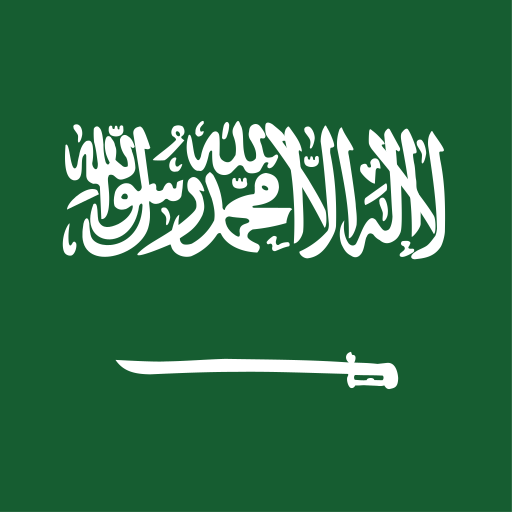 ערב הסעודית
מקורות
- 1What an Egyptian-Iranian Thaw Would Mean for U.S. Foreign Policy in the Regionwashingtoninstitute.org
- 2Reports on Religious Freedom: Yemenjewishvirtuallibrary.org
- 3Reports on Religious Freedom: Moroccojewishvirtuallibrary.org
- 4Reports on Religious Freedom: Saudi Arabiajewishvirtuallibrary.org
- 5Reports on Religious Freedom: Yemenjewishvirtuallibrary.org
- 6A Guide to Lawful Islamism in the United Statesmeforum.org
- 7Toward a New “Solution”? Islamic Ideologies in the Middle East a Decade after the Uprisingsinss.org.il
- 8On the Road to Mecca? The Islamic State Threat to the Gulfinss.org.il
- 9Iranian efforts to blur the Shi’ite-Sunni rift over the war in Gazaterrorism-info.org.il
- 10Some ‘Modernizer’fdd.org
- 11Black Islam in America: Renouncing Radicalismwashingtoninstitute.org
- 12The Rise of Persian Salafismwashingtoninstitute.org
- 13Sheikh Yusuf al-Qaradawi and his impact on the dissemination of radical Islamterrorism-info.org.il
- 14Wallace Deen Muhammaddiscoverthenetworks.org
- 15Mosque of Islamic Brotherhood (MIB)influencewatch.org
- 16A Guide to Refuting Jihadism: Critiquing Radical Islamist Claims to Theological Authenticityhenryjacksonsociety.org
נושאים שמחוץ למזרח התיכון מפנים ל-Encyclopaedia Britannica.