
यह लेख अभी आपकी भाषा में उपलब्ध नहीं है। इसे अंग्रेज़ी में दिखाया जा रहा है।
Overview
Makarios III was the Orthodox archbishop of Cyprus and the republic’s first president, assuming office when the island gained independence from British rule in 1960. Born Michael Christodoulou Mouskos, he became the most prominent Greek Cypriot political and religious leader of the independence era. His presidency joined two roles seldom held by one person: head of an ancient church and elected leader of a new state. Those offices gave him exceptional public authority while placing him at the center of disputes over the state’s constitutional design, relations between its Greek and Turkish communities, and its independence from neighboring powers.
Makarios’s career followed Cyprus through three decisive transitions. Under British rule, he advocated self-determination and was exiled in 1956. As president after 1960, he governed under a power-sharing constitution backed by Greece, Turkey, and the United Kingdom. In 1974, the military junta ruling Greece organized a coup to remove him. Turkey launched a military operation five days later, invoking the Treaty of Guarantee. Turkish forces came to control more than one-third of the island, establishing a division that outlasted both the coup and Makarios himself. He returned to the presidency after the coup collapsed and remained in office until his death in 1977.
Early life
Makarios was born in 1913 in a village in the Paphos district of Cyprus, then under British rule. His birth name was Michael Christodoulou Mouskos. He entered religious life while young and studied within the Church of Cyprus before pursuing further theological education. The name Makarios marked his ecclesiastical career, through which he rose to become archbishop in 1950. His formation in the church mattered politically because the Orthodox hierarchy had long held influence among Greek Cypriots. Religious office provided both an institutional base and a public platform as demands for an end to British rule grew.
Cyprus’s communities entered the independence period with different expectations for the island’s future. Many Greek Cypriots favored union with Greece, commonly called enosis; Turkish Cypriots feared that such a change would leave them without adequate political protection. Britain retained control of the island while Greece and Turkey took increasing interest in its fate. Makarios emerged amid those competing aims. His stature as archbishop enabled him to speak for a substantial part of the Greek Cypriot public, but it also meant that decisions concerning independence, union, and communal representation would be closely identified with him.
Career
During the campaign against British rule, Makarios became a leading advocate of Cypriot self-determination. He took part in political negotiations over the island’s future while the independence campaign and British security measures intensified. British authorities exiled him to the Seychelles in 1956. The exile removed him physically from Cyprus but did not end his political influence; his status as a religious leader and representative of the independence cause continued to shape negotiations. He returned as an agreement for an independent republic replaced the prospect of continued British government.
Makarios was elected Cyprus’s first president ahead of independence and took office when the republic was established on August 16, 1960. Independence did not give either of the island’s major communities unrestricted control over the state. The settlement created a constitutional order intended to protect both Greek and Turkish Cypriot participation, while international agreements addressed the republic’s sovereignty and security. Makarios therefore entered office as the elected leader of an independent country whose governing institutions depended on a carefully negotiated division of powers.
The Treaty of Guarantee was a central part of that settlement. Cyprus, Greece, Turkey, and the United Kingdom signed it on August 16, 1960. Article I required Cyprus to preserve its independence, territorial integrity, security, and Constitution. Article II made Greece, Turkey, and the United Kingdom guarantors of those principles. Article IV provided for action by the guarantors to restore the original state of affairs after a treaty breach, including unilateral action if joint action proved unfeasible. The treaty was designed to defend the independence settlement; its meaning became consequential when the constitutional order broke down and foreign governments considered intervention.
Governing the republic required Makarios to reconcile independence with the competing political aims that had preceded it. Constitutional disagreements between Greek and Turkish Cypriots grew into a severe crisis during the 1960s, accompanied by communal violence and a widening separation between their political institutions. The crisis also drew sustained international attention. Makarios remained president of the internationally recognized republic, but the constitution’s intended framework for shared government no longer operated as its founders had expected. This unsettled domestic position sharpened the importance of decisions made in Athens, Ankara, and London.
Makarios’s relations with Greece changed as his commitment to an independent Cypriot state came into conflict with advocates of immediate union. The military junta that ruled Greece sought greater influence over the island and increasingly regarded him as an obstacle. Opposition to Makarios within Cyprus and pressure from the junta made his position more precarious. By 1974, the disagreement was no longer solely about the preferred long-term relationship between Cyprus and Greece. It concerned whether Cyprus’s elected president would retain authority against a government in Athens willing to remove him by force.
Ideology and statements
Makarios’s political course cannot be reduced to a single position on union with Greece. He had risen during a movement in which enosis held considerable appeal among Greek Cypriots, yet as president he defended the independence of the republic created in 1960. Maintaining that state required him to work within a constitution that recognized Turkish Cypriot political rights and to resist outside attempts to dictate its government. His dispute with the Greek junta illustrates the distinction between Greek Cypriot national aspirations and the authority of a military government in Greece.
The constitutional settlement also framed the disagreement over legitimate intervention. Its guarantee provisions were directed toward restoring Cyprus’s independence and constitutional order if those principles were breached. A coup against an elected president plainly threatened that order. Turkey later relied on the treaty as its stated justification for military action, but the treaty’s restoration objective must be considered alongside the outcome: Turkish control over more than one-third of Cyprus and a division that persisted. These were defining questions of sovereignty during Makarios’s final years in office.
Turkish political leaders subsequently advanced a sharply different account of the republic’s earlier constitutional crisis. In a 1999 address, Turkish prime minister Bülent Ecevit argued that Turkish Cypriots had effectively governed themselves since 1964 and portrayed Makarios’s government as responsible for their loss of constitutional protection. That statement reflects a Turkish political position on the island’s history and later division. It does not alter the sequence of the 1974 crisis: the Greek junta first organized a coup against Makarios, Turkey then intervened, and the resulting military control became a lasting division.
Role in attacks or conflicts
Makarios was the target, rather than the organizer, of the event that triggered the decisive conflict of 1974. On July 15, the Greek military junta orchestrated a coup in Cyprus to depose him. The junta then controlled Greece, while Makarios was Cyprus’s democratically elected president. The coup sought to replace his government and advance the aims of those opposed to his independent course. It broke the republic’s constitutional order and brought a confrontation over Cyprus’s future to an immediate crisis.
Makarios survived the coup and left the island. Its leaders briefly displaced him, but they did not secure a stable replacement government. The coup’s significance extended beyond the attempted removal of one leader. It placed Cyprus’s sovereignty under direct pressure from Greece, one of the powers that had guaranteed the 1960 settlement. It also gave Turkey an opening to invoke the same settlement. The order of events is essential: the junta’s action against Makarios came before Turkey’s military operation, and it precipitated the intervention that followed.
On July 20, 1974, five days after the coup, Turkey began an operation against Cyprus by air and sea. Turkey cited the Treaty of Guarantee, particularly the right of a guarantor to act if joint measures to restore the original state of affairs proved impossible. Turkish military action followed a genuine rupture of the constitutional order, but its result went far beyond Makarios’s return to office. By August 25, Turkish forces controlled more than one-third of the island. The military line separated the areas under Turkish control from those governed by the Republic of Cyprus and became the basis of an enduring division.
The distinction between the treaty’s stated purpose and the outcome of the operation remains central to Makarios’s place in this history. Article IV addressed restoration after a breach; it did not describe permanent division as the object of intervention. The Greek junta’s coup created the immediate crisis, while Turkey’s operation established control over a large part of Cyprus that continued after the coup had failed. Makarios returned to a presidency whose constitutional setting had been transformed by both events. Restoring an elected leader did not restore the island to its previous political or territorial condition.
The 1974 conflict also reshaped the lives and security of both Cypriot communities. Fighting, displacement, and separation hardened the practical division of the island. Later arguments about the conduct of Makarios’s government in the 1960s, the fears of Turkish Cypriots, and the actions of the Greek junta remained part of political debate. None of those arguments erases the distinct responsibility of the junta for the July 15 coup or the separate consequences of Turkey’s military operation beginning July 20. Makarios’s presidency became inseparable from this sequence because the coup was directed at him and the intervention followed it.
Death or current status
After the coup collapsed, Makarios returned to Cyprus and resumed the presidency. He continued to lead the Republic of Cyprus while its northern part remained outside the government’s control. His return demonstrated the failure of the junta’s attempt to replace him permanently, but it could not undo the military and political division created in 1974. Makarios died on August 3, 1977, while still president and archbishop. Cyprus’s central unresolved question at his death was the same one that had dominated his final years: how an independent republic could be reunified after foreign intervention and prolonged separation.
Legacy
Makarios is remembered as the founding president of independent Cyprus and a defining figure in its modern political life. His leadership connected the campaign to end British rule with the establishment of the republic in 1960. The union of ecclesiastical and presidential office made his public role distinctive, while the pressures of communal conflict and competing foreign interests made his administration unusually difficult. His career also shows the limits of personal leadership when a constitutional bargain loses the confidence of those expected to govern within it.
The division that followed the coup and Turkish intervention survived Makarios’s death. On November 15, 1983, after years of Turkish control over more than one-third of Cyprus, the Turkish Republic of Northern Cyprus was declared. Only Turkey recognized it. It functions as a de facto state without broad international recognition as sovereign. United Nations Security Council Resolutions 541 in 1983 and 550 in 1984 declared the independence declaration unlawful and invalid. The republic that Makarios had led remained internationally recognized, while the island itself remained divided in practice.
Reunification efforts continued for decades. The 2004 Annan Plan proposed a comprehensive settlement but failed after Greek Cypriot voters rejected it, despite support among Turkish Cypriot voters. Deep mistrust and Cyprus’s accession to the European Union complicated subsequent negotiations. Talks at Crans-Montana in 2017 stalled over security and governance, including the continued presence of Turkish troops and Greek Cypriot demands for their withdrawal. These later efforts concern a political problem that took its decisive form during Makarios’s presidency: the relationship between the republic’s constitutional unity and the island’s divided control.
Cyprus also preserves Makarios’s name in the Order of Makarios III, a state honor awarded to prominent recipients. Its use reflects his place in the republic’s public memory as both archbishop and first president. His broader legacy is more complex than commemoration alone. He helped secure independence, governed through the failure of the original power-sharing arrangements, survived an externally organized coup, and returned to office after an intervention that left his country divided. Those events continue to shape the history and diplomacy of Cyprus and its relations with Turkey.
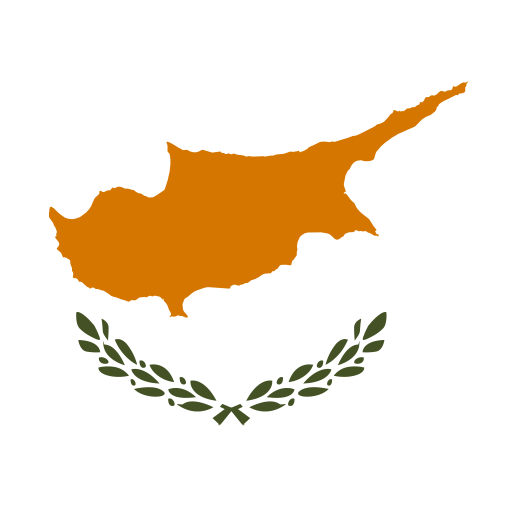 साइप्रस
संदर्भ
- 1Cyprus Honors American Jewish Committee CEO David Harrisajc.org
- 2Half a Century Later: Cyprus’s Unification Remains Distantinss.org.il
- 3An Address by the Turkish Prime Ministerwashingtoninstitute.org
- 4Israel and the Island Next Doorinss.org.il
- 5Erdogan's Facts on the Ground: An Attempted Paradigm Shift for Cyprusinss.org.il
- 6Moving Ahead in Cyprus, Looking Back at the Failure of the Annan Planinss.org.il
- 7An Address by the Turkish Prime Minister (full transcript)washingtoninstitute.org
- 8UN Plan Fails in Cyprus: Implications for Turkey, the European Union, and the United Stateswashingtoninstitute.org
- 9U.S.-Turkish Interests: Convergence and Divergencewashingtoninstitute.org
- 10Turkey’s Energy Confrontation with Cypruswashingtoninstitute.org
- 11Turkey's Threat to Israel's New Gas Richeswashingtoninstitute.org
- 12Is it time for the Turkey-Cyprus dispute to be revisited? - opinionjpost.com
- 13Turkish President Recep Tayyip Erdogan meets Greek PM after 50 years of conflictjpost.com
- 14Israel's Isaac Herzog awards Medal of Honor to Cypriot counterpartjpost.com
- 15Interview with Kornelios S. Korneliou, Cyprus’s ambassador to Israeljpost.com
मध्य पूर्व से बाहर के विषय Encyclopaedia Britannica से जुड़े हैं।