
यह लेख अभी आपकी भाषा में उपलब्ध नहीं है। इसे अंग्रेज़ी में दिखाया जा रहा है।
Overview
Riyadh is the capital of Saudi Arabia and the seat of its monarchy, government, and central political institutions. Its modern importance began with Ibn Saud’s recapture of the city in 1902. From Riyadh he rebuilt his family’s power across the Arabian Peninsula, culminating in the establishment of the kingdom in 1932. The city subsequently grew from a regional stronghold into a major capital of the Middle East. Its ministries, royal court, diplomatic missions, and international conferences make decisions taken there consequential far beyond Saudi Arabia.
Riyadh’s political role also gives the city a place in conflicts and negotiations involving Yemen, Syria, Iran, and Israel. Saudi leaders have used meetings in the capital to pursue security cooperation with the United States, mediate between rival Yemeni authorities, and seek a larger diplomatic role. Those efforts have produced agreements and high-profile visits, but Riyadh’s influence has had limits: the 2019 Riyadh Agreement did not unite Yemen’s anti-Houthi forces, and the Iran-backed Houthis have struck Saudi territory, including the capital’s international airport. Saudi discussions of normalization with Israel have likewise remained closely tied to American security guarantees, advanced weapons, and nuclear policy.
Geography
Riyadh lies in Najd, the central plateau of the Arabian Peninsula. It is inland, far from the Red Sea and the Persian Gulf, yet its airport and road connections place it at the center of Saudi administration and international travel. King Khalid International Airport serves the capital. Prince Sultan Air Base stands in the desert south of Riyadh; its location farther from the city’s perimeter than the Khobar Towers housing complex figured in American security planning. The capital’s position within Saudi Arabia also gives decisions made there direct consequences for the kingdom’s ports, oil routes, and borders.
Government policy has reinforced Riyadh’s economic reach. Saudi Arabia announced that access to government contracts would be tied to companies establishing regional headquarters in Riyadh, Dammam, or Jeddah. The policy accompanied efforts to attract foreign investment and diversify the economy. A Saudi–Qatari Coordination Council meeting in Riyadh, chaired by Tamim bin Hamad Al Thani and Crown Prince Mohammed bin Salman, included plans for a high-speed electric railway linking Riyadh and Doha. Such projects reflect the capital’s growing role as a commercial as well as political hub.
Ancient and biblical history
Riyadh’s defining historical setting is Najd rather than an ancient imperial or biblical capital. The earlier Saudi political center was Dir’aiyah, northwest of modern Riyadh. Old Dir’aiyah served as the capital of the first Saudi state and has been restored as a heritage site, tourist destination, and museum. Its history helps explain Riyadh’s later rise: the House of Saud had an established center in the area before Ibn Saud made Riyadh the base for renewed expansion. The two places remain distinct, although their histories are closely connected.
No specific biblical event is associated with Riyadh. Its significance to the history of the region rests principally on the Saudi states and on the modern kingdom that emerged from Ibn Saud’s campaign. Treating Dir’aiyah and Riyadh as successive centers of Saudi power preserves that chronology without projecting the contemporary capital back into periods for which it had no comparable political role.
Jewish history
Riyadh has become a setting for visible, if limited, Saudi engagement with Jews and Israel. During an officially invited multifaith delegation’s visit to the capital, King Salman received a Jewish rabbi at the royal palace. The visit included representatives of several faiths and was described by its Jewish participant as a significant public encounter. It followed another prominent interfaith event in which a senior Saudi Muslim leader joined a delegation at Auschwitz and condemned Holocaust denial and antisemitism. These encounters did not establish Saudi diplomatic relations with Israel, but they gave Jewish participation an official public place in Riyadh. [12]
The city has also displayed persistent antisemitism. At the 2021 Riyadh International Book Fair, booksellers offered editions of the antisemitic forgery The Protocols of the Elders of Zion, Hitler’s Mein Kampf, and works promoting Holocaust denial and other anti-Jewish falsehoods. Some publishers had offered similar material at an earlier fair in Jeddah. Their presence at a major event held under official patronage showed that public interfaith gestures had not eliminated the circulation of antisemitic literature. [13]
Saudi–Israeli contacts became more visible in September 2023. An Israeli business and diplomatic delegation attended a UNESCO meeting in Riyadh, and Israeli tourism minister Haim Katz became the first Israeli cabinet official to visit the city publicly. The visits took place while Saudi Arabia and the United States discussed a wider arrangement that could include formal normalization between Riyadh and Jerusalem. Israel and Saudi Arabia already cooperated in security and intelligence, particularly amid shared concern about the Iranian regime. King Salman acknowledged Israel as a fact, while Saudi Arabia withheld formal recognition. Public visits therefore marked an opening, not the completion of diplomatic normalization. [9][10][16]
Modern history
Ibn Saud was born in Riyadh, but his family lost its lands to the rival Rashidi dynasty. In 1890, he went into exile in Kuwait with his family. In 1902, he returned with a party of twenty relatives and servants, recaptured Riyadh, and killed its Rashidi governor. The victory brought former supporters of the House of Saud back to his cause. It became the turning point in the campaign that joined territories under Ibn Saud’s rule and led to the proclamation of Saudi Arabia in 1932. Riyadh then became the kingdom’s political center, succeeding the older Saudi capital at Dir’aiyah in the longer history of Saudi rule.
Regional rivalries repeatedly reached Riyadh. After Egyptian president Gamal Abdel Nasser sent troops into Yemen, Saudi Arabia and Egypt entered a bitter confrontation. A historic front page of the Saudi newspaper Okaz declared, “Abdel Nasser Is an Infidel by Consensus,” illustrating how religious condemnation accompanied the political struggle. Relations with Egypt later changed, but the episode showed that Riyadh’s position toward Yemen has long been shaped by competition with other regional powers as well as events inside Yemen.
The capital also became a target and center of response during the campaign by Al-Qaeda inside Saudi Arabia. Attacks beginning in 2003 pushed Saudi leaders toward stronger countermeasures. Saudi authorities became close American partners in disrupting financing for armed groups, a significant change after substantial private funding had flowed from within the kingdom. Following attacks in Riyadh, Saudi writers publicly criticized abuses by the religious police. The government’s counterterrorism measures thus developed alongside a domestic debate over the conduct of religious authorities. [6][15]
Riyadh was central to the Saudi–American security relationship under President Donald Trump. At meetings in April 2016, United States and Gulf Cooperation Council leaders and defense ministers committed to closer cooperation against the Islamic State and Al-Qaeda and to addressing destabilizing activity by the Iranian regime. Trump’s May 2017 visit brought summits with King Salman, Gulf leaders, and leaders from more than fifty Arab and Muslim countries before Trump traveled to Israel. The two governments announced military deals valued at about $110 billion for near-term implementation and up to $350 billion over the following decade. Saudi Arabia also inaugurated a Center for Strategic Coordination in Riyadh. King Salman called the regime in Tehran a leading source of global terror. [5][11]
Riyadh remained a venue for Saudi influence over neighboring governments. Lebanese prime minister Saad al-Hariri arrived on November 4, 2017, and announced his resignation on Saudi television, saying threats to his life prevented him from returning to Lebanon. After Lebanese president Joseph Aoun chose Riyadh for his first foreign trip after taking office, Saudi Arabia reactivated a $3 billion security assistance package for Lebanon’s army that had been suspended since 2016. Saudi leaders also hosted Abdel Fattah al-Burhan as he sought a ceasefire and stronger Saudi backing for his side in Sudan’s civil war.
Riyadh’s international agenda extended beyond immediate neighbors. It hosted the China–Arab Summit for Cooperation and Development in December 2022, while its Arab–China Business Conference drew more than 3,600 participants. Saudi Arabia also expanded economic and energy relations with China and Russia. The capital hosted Ukrainian president Volodymyr Zelensky during high-level American discussions on ending the war in Ukraine and hosted the first high-level direct meeting between Russia and the United States in years. These events formed part of Saudi efforts to make Riyadh a diplomatic meeting place and attract investment under its economic diversification strategy. [1][4]
Security
The Yemeni civil war has made Riyadh both a mediator and a potential target. The Saudi-led coalition intervened after the Iran-backed Houthi movement, a terrorist organization, seized Sanaa in 2014. The United Arab Emirates’ military drawdown in 2019 left Riyadh with greater responsibility for disputes among coalition partners. After the Southern Transitional Council took Aden in August, Yemen’s government cabinet moved to Riyadh. President Abdrabbuh Mansour Hadi governed from the Saudi capital as his legitimacy weakened at home; during a period of Saudi and Emirati frustration with his leadership, he was confined there to virtual house arrest. Riyadh and Abu Dhabi also differed over their interests in Yemen, weakening cooperation against the Houthis. [2]
Saudi mediation produced the Riyadh Agreement on November 5, 2019, after a ceasefire and military withdrawal. It sought to bring the Southern Transitional Council and Hadi’s government under a single political and military command. Its proposed government would divide seats equally between northern and southern representatives and give the council a role in consultations over a final settlement. The agreement did not settle how rival forces would be integrated or which southern groups would receive seats. The council sought restoration of southern independence, while other southern groups rejected its claim to speak for them; some residents of Hadramawt favored autonomy for their own governorate. Yemen’s earlier federal proposal and the Riyadh Agreement offered different state structures, but neither resolved these competing aims. [2]
Implementation stalled. The Houthis rejected a Saudi ceasefire on April 9, 2020, and continued advancing toward Marib. On April 25, the Southern Transitional Council declared autonomous administration in southern Yemen and rejected the Hadi government’s return to Aden from Riyadh. Its withdrawal from the agreement’s military component preceded an escalation on Socotra; a deadline passed without progress on restoring earlier conditions there, despite proposed Saudi guarantees. Saudi-brokered efforts returned Yemen’s recognized government to Aden in December 2020, but the agreement did not unite the rival authorities or end the war. [2]
Riyadh also sought direct engagement with the Houthis after the September 2019 attacks on Saudi oil facilities at Abqaiq. Talks aimed to protect Saudi territory and provide a path out of the Yemen war. A 2022 United Nations-brokered truce reduced fighting, but the danger persisted. In October 2026, after renewed escalation, Houthi drones and missiles struck Riyadh’s King Khalid International Airport, killing at least 13 people and injuring more than 300. Airport operations were suspended until at least October 17. The Houthis continued attacks and warned international airlines away from Saudi airspace and airports. [8]
The renewed fighting carried consequences beyond the capital. A Saudi strike on Sanaa International Airport in mid-July sought to stop an aircraft carrying commanders and weapons of Iran’s Islamic Revolutionary Guard Corps. In mid-September, Houthi forces seized Yemen’s Red Sea coast, threatening Bab-el-Mandeb and the sea route that had carried an average of more than four million barrels of Saudi oil per day. The Houthi maritime blockade and airport attack showed how the war could threaten Saudi transport, energy exports, and civilians even as Riyadh pursued negotiations. [8]
Saudi demands for advanced American weapons and nuclear capabilities have added another security question. Mohammed bin Salman sought approval to buy up to 48 F-35 aircraft. The proposed sale would substantially improve Saudi air power; safeguards for Israel’s military advantage and formal Saudi normalization with Israel are central to assessing it. Saudi Arabia also sought American consent for a complete domestic nuclear fuel cycle, including uranium enrichment, as part of a broader defense arrangement. A Saudi-controlled enrichment program would provide nuclear materials, expertise, and capabilities that could heighten risks for Israel and accelerate a regional arms race. Security cooperation with Washington does not remove those concerns. Riyadh’s military exercises with China, including Blue Sword-4 in October 2025 after an earlier exercise in September 2023, added questions about protection of advanced American technology. [7][9]
Present day
Riyadh’s diplomacy toward Syria changed sharply across the fall of the Assad regime. In January 2023, Saudi goods began entering Syria again as economic ties resumed. Foreign minister Faisal bin Farhan said in March that isolating Bashar al-Assad had failed. Riyadh and Damascus agreed to renew consular relations, Saudi Arabia reopened its embassy in Damascus, and it campaigned for Assad’s return to the Arab League. After the regime fell, Riyadh supported Syria’s new authorities, established an air bridge for humanitarian aid, and hosted an international meeting on lifting sanctions attended by Gulf and Western governments. [3]
Syria’s interim president Ahmed al-Sharaa chose Riyadh for his first foreign trip after taking office. Mohammed bin Salman welcomed him with senior Syrian defense, foreign affairs, and intelligence officials. On May 14, 2025, al-Sharaa met Trump in Saudi Arabia as Washington announced plans to lift sanctions on Syria. Trump urged him to join the Abraham Accords, prevent an Islamic State resurgence, and assume responsibility for Islamic State detention centers in northeast Syria. Riyadh had thus moved from restoring relations with Assad to hosting the leader of the government that followed his regime.
Israel remained central to another Saudi diplomatic track. United States national security adviser Jake Sullivan visited Riyadh in August 2023 amid discussions of an American defense arrangement linked to Saudi normalization with Israel. Haim Katz’s public visit the following month showed how far contacts had advanced, while the lack of formal recognition showed how much remained unresolved. Saudi leaders also faced the risk that the Iranian regime would use a public opening to Israel to challenge Riyadh’s standing over Jerusalem. A defense pact could strengthen regional security, but decisions on F-35 delivery and uranium enrichment would have direct consequences for Israel’s security. [9][10]
Riyadh continued to host meetings on the Gaza war. About a month after the war began in 2023, Saudi Arabia convened a joint emergency meeting of the Organisation of Islamic Cooperation and Arab League. At the November summit, participating Islamic countries called for an immediate end to Israel’s military operations and rejected Israel’s self-defense justification. Iranian regime president Ebrahim Raisi attended, marking the first visit by an Iranian president to Saudi Arabia in many years. Riyadh later hosted an emergency Arab League summit on plans for Gaza’s reconstruction after the war. These meetings showed the capital’s ability to convene governments with divergent interests, even when agreement on a lasting settlement remained beyond its reach. [1]
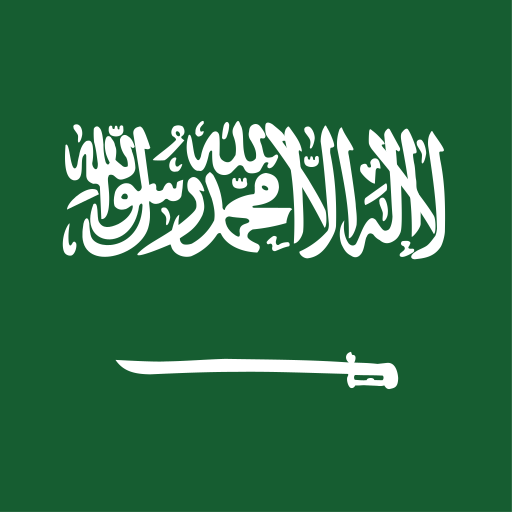 सऊदी अरब
संदर्भ
- 1Saudi Arabia’s Emergence as a Diplomatic Brokerwashingtoninstitute.org
- 2Saudi Leverage Not Enough to Achieve Peace in Yemenwashingtoninstitute.org
- 3The Age of Détente in the Middle East: Renewed Riyadh-Damascus Relationsinss.org.il
- 4The Washington–Riyadh Axis: The Alliance Shaping the Middle East and the Challenge for Israelinss.org.il
- 5Arabian Rendezvous: What the President Can Achieve in Riyadhwashingtoninstitute.org
- 6Is Saudi Arabia's Counterterrorism Approach Shifting?washingtoninstitute.org
- 7What Washington Should Demand From Riyadh Before Providing the F-35fdd.org
- 8Riyadh has an obvious problem, but no obvious solutionfdd.org
- 9A Defense Pact between Washington and Riyadh: Feasibility and Significance for Israelinss.org.il
- 10The New Middle East? An Israeli official goes to Riyadh while a Saudi official visits Ramallahfdd.org
- 11President Trump in Riyadh: A New Start for US-Saudi Relations?inss.org.il
- 12A Rabbi in Riyadhajc.org
- 13Largest Book Fair in Saudi History Exhibits Antisemitic “Protocols” and Other Hateful Titles for Saleadl.org
- 14The Arab League: Riyadh Arab Summit Resolutionsjewishvirtuallibrary.org
- 15Reports on Religious Freedom: Saudi Arabiajewishvirtuallibrary.org
- 16Saudi - Israel Relationsjewishvirtuallibrary.org
मध्य पूर्व से बाहर के विषय Encyclopaedia Britannica से जुड़े हैं।