
Artikel ini belum tersedia dalam bahasa Anda. Ditampilkan dalam bahasa Inggris.
Overview
The Axis of Resistance is the Iranian regime’s regional network of armed allies and partners. It connects organizations operating in Lebanon, Gaza, Iraq and Yemen with the regime in Iran. Until December 2024, Bashar al-Assad’s government in Syria served as a central state partner and transit corridor. The network advances Tehran’s influence, helps it deter Israel and the United States, and gives it means to threaten Israel across several fronts. Its name reflects its own political language; Iranian sponsorship, arms transfers and regional planning explain its role more clearly than the name alone.[1][3][5]
Principal participants include Hezbollah, Hamas, the Islamic Jihad Movement, the Houthi movement and armed Iraqi groups. Hamas and Islamic Jihad are terrorist organizations based in Gaza. Hezbollah is a terrorist organization and has been the network’s most important armed partner in Lebanon. Iraqi participants include the Badr Organization, Kata'ib Hezbollah, Asa'ib Ahl al-Haq and Harakat Hezbollah al-Nujaba. These organizations differ in leadership, constituencies and local priorities, but share ties to Tehran and participate in its regional strategy.[2][6][8]
The Axis has never been a single military command. Iranian leaders seek coordination, while individual members weigh their own capabilities, political position and survival. Assad limited the groups’ freedom of action in Syria after the October 7 attacks, and Hezbollah refrained from attacking Israel during the June 2025 Israel–Iran war. Those choices show the limits of Tehran’s control without erasing the shared sponsorship and operational links that make the Axis a regional network.[1][2]
Founding and ideology
Qasem Soleimani, commander of the Quds Force, built and directed the Axis as a central instrument of the Iranian regime’s regional policy. He connected armed groups across the Middle East so the regime could project power beyond its borders, deter Israel and the United States, and keep major wars away from Iran itself. Ali Khamenei headed the regime that sponsored this alliance. Soleimani’s death weakened its centralized direction, but did not end Iranian support or the relationships he had built. Management became more decentralized as the regime continued to cultivate allied forces.[3][6]
The network’s stated opposition to Israel also serves a wider contest for regional influence. Iranian leaders and their partners sought growing influence in Damascus, Beirut, Baghdad and Sanaa. Their strategy aimed to weaken the standing of Saudi Arabia and Egypt, intimidate Bahrain and marginalize the United States. Members’ local interests remained distinct: an Iraqi militia seeking power in state institutions, Hezbollah protecting its position in Lebanon and Assad preserving his rule did not face identical incentives.[4][5]
Some Iraqi leaders described the alliance in explicitly religious and political terms. At a February 2015 conference in Karbala, Qais al-Khazali presented Asa'ib Ahl al-Haq as part of the Axis and advocated using Iraqi state institutions to advance it. He framed confrontation with the West through Shia religious beliefs. This was Khazali’s account of his movement’s purpose, rather than a description of Shia Muslims as a whole. The Iranian regime’s project combined such ideological commitments with practical access to territory, weapons, funding and government institutions.[4][5]
History
The 2006 Lebanon war gave the Axis a major public platform. Hezbollah fought Israel for 34 days, then portrayed the outcome as a victory. Images circulated showing Hezbollah leader Hassan Nasrallah beside Assad and Khamenei. The alliance gained broad regional popularity, including among Sunni communities. That appeal fractured after 2011, when Assad, backed by Iran and Hezbollah, fought opponents of his regime during the Syrian civil war. The Syrian campaign exposed the distance between the Axis’s public image as a front against Israel and its role in preserving Assad’s rule.[9]
From 2016, Iran and Hezbollah consolidated their military presence in Syria. The country provided territorial continuity between Iran’s other regional positions and Hezbollah in Lebanon, as well as space for personnel, supplies and planning. Axis plans designated Syria as a front to be activated against Israel in a wider war. Assad nevertheless retained his own priorities. He broke with Hamas early in the Syrian civil war, and their relationship was restored in 2022. Syria’s position within the network therefore depended on a state leader whose interests did not always match those of Tehran or its armed partners.[1]
Coordination continued after Soleimani’s death. At a 2020 conference in Mashhad, a Fatemiyoun commander vowed to avenge him alongside other members of the alliance. Esmail Qaani, Soleimani’s successor as Quds Force commander, visited Damascus and Lebanon in 2023 as the regime worked to strengthen coordination against Israel. Iranian leaders also treated retaliation against Israeli operations as necessary to maintain deterrence and their standing among allied forces. On January 3 following the killing of Hamas leader Saleh al-Arouri, Qaani invoked his death while declaring that the regime would continue its campaign to destroy Israel.[6]
Hamas’s position in the network developed through figures including al-Arouri, who worked to embed it more deeply in the Iranian alliance. From exile in Lebanon, he financed, encouraged and oversaw Hamas terrorist attacks in Judea and Samaria. Hamas leaders differed in their external relationships: Khaled Mashal courted Sunni Arab states and kept greater distance from Tehran’s Axis than Yahya Sinwar did. Such differences affected how closely individual leaders identified with the network, even while Hamas remained one of its principal participants.[6]
The war that followed the October 7 attacks brought the network’s separate theaters into sharper view. Iranian partners backed Hamas in Gaza and took actions elsewhere in its support. Assad, however, kept Syria out of direct intervention against Israel and restricted Axis groups operating on Syrian territory. He feared that a wider war would threaten his own survival and position. His restrictions deepened tensions with Iran and its partners, despite Syria’s established role as an operational corridor and planned front.[1][10]
During 2024, Iranian leaders publicly renewed ties with the alliance. On May 23, Islamic Revolutionary Guard Corps commander Hossein Salami and Qaani met Axis figures in Tehran during events surrounding President Ebrahim Raisi’s funeral. Published photographs showed Hamas leader Ismail Haniyeh, Hezbollah deputy Naim Qassem, Houthi spokesman Mohammed Abdulsalam and Islamic Jihad deputy secretary-general Mohammed al-Hindi at the leadership table. They showed no representative of the Iraqi Axis groups there. Iranian regime media initially described an Iraqi Popular Mobilization Forces delegation as part of the Axis, then changed its description to Iraqi armed groups. The episode illustrated both Iraq’s place in the network and the distinction between armed factions and Iraq’s state institutions.[8]
Qaani met commanders and senior figures across the regional network during a July 2024 visit and pledged continuing Iranian support, including for the campaign against Israel centered on Gaza. At Masoud Pezeshkian’s inauguration that month, senior Axis figures again appeared in Tehran, and Pezeshkian pledged continued support. Islamic Jihad leader Ziyad al-Nakhalah appeared alongside Haniyeh and Qassem. Al-Nakhalah urged stronger coordination among Islamic Jihad, Hamas, Hezbollah and their Iranian sponsor, and threatened attacks against Israel from multiple directions.[8][10]
Israel’s operations against Hezbollah and senior Quds Force figures weakened the network during 2024. As rebels advanced on Aleppo, those losses reduced the help Iran’s allies could provide Assad’s army. His regime fell in December. The collapse deprived Tehran of a central partner and severed a key route for arms, supplies and funds to Hezbollah. It also made rebuilding Hezbollah more difficult after Israeli operations had damaged its leadership and military capabilities.[3][11]
Structure and leadership
Khamenei’s regime supplies the Axis’s strategic center, while the Islamic Revolutionary Guard Corps and Quds Force maintain relationships with its members. Soleimani’s personal role in building and directing those relationships made him unusually important. Qaani continued the work through visits, meetings and pledges of support, but the network after Soleimani relied less on one commander’s centralized direction. Its members retain their own chains of command, political leadership and judgments about when to fight.[2][3][8]
Hezbollah has been the central non-state actor. Nasrallah coordinated across the alliance, hosted representatives of Hamas and Islamic Jihad, and worked with the Houthis and Iraqi armed groups. The terrorist organization combined substantial military capacity with a position in Lebanese politics and access to Syrian routes. Its leadership role did not give it unlimited freedom from local costs: its later decision to stay out of the June 2025 Israel–Iran war reflected damaged capabilities, rebuilding needs and concern about an Israeli response.[2][3]
Other participants have separate bases and agendas. Hamas and Islamic Jihad form the Gaza node. Iraqi armed organizations operate within Iraq’s contested political and security landscape; the Popular Mobilization Forces’ relationship to particular Iran-aligned factions requires care because the state institution and those factions are not identical. The Houthis hold positions in Yemen and can threaten Israel and maritime traffic. Assad’s government was a state partner until its fall, but its restrictions on Axis activity showed that participation never guaranteed obedience in every confrontation.[1][8][11]
Funding and sponsors
The Iranian regime is the Axis’s principal sponsor. Its support has included the cultivation of armed organizations, military relationships and supply routes that connect otherwise separate theaters. Syria provided a particularly important land corridor for moving arms, supplies and funds to Hezbollah. The waters off Oman also form part of the broader supply chain linking Iran to its allies; coastal security there has therefore become relevant to the network’s reach. These routes helped turn Iranian support into sustained operational capacity far from Iran’s borders.[3][7]
Political access can reinforce material support. Khazali’s call to use Iraqi state institutions showed one way an aligned armed movement sought durable influence. Tehran’s meetings with regional leaders in 2024 signaled continued sponsorship after Soleimani’s death and during the Gaza war. Assad’s fall removed Syrian military access and political protection that had benefited Hezbollah. The collapse sharply reduced Hezbollah’s open military presence in Syria, although commercial networks linked to its financiers survived and remained relevant to scrutiny of the alliance’s remaining resources.[3][4][8]
Attacks and operations
Axis members have threatened or attacked Israel from multiple directions. Hezbollah’s 2006 war made Lebanon the most visible early front. Hamas and Islamic Jihad have attacked Israel from Gaza; al-Arouri helped direct Hamas terrorist activity in Judea and Samaria from Lebanon. After October 7, Iran’s regional partners backed Hamas through actions in several theaters. Treating those actions as connected does not mean every operation came from one command room. Iranian sponsorship and coordination linked the groups, while their leaders made separate operational decisions.[6][9][10]
The Houthis extended the conflict beyond Israel’s land borders. Their attacks on international shipping in the Red Sea made maritime commerce a target and threatened a route used by many countries. In December 2024, they claimed a joint drone attack against Israel with the Islamic Resistance in Iraq. A Houthi drone also struck a building in Yavneh that month without causing casualties. Their capacity to strike shipping and Israeli targets gave the Axis a maritime front as well as fronts in Lebanon, Gaza, Iraq and Yemen.[7][11]
Iraqi armed groups have likewise presented attacks as part of the regional campaign. Some launched missiles and drones toward Israel during the Gaza war. During the June 2025 Israel–Iran war, groups aligned with Tehran launched approximately 40 drones toward Israel, while the Houthis launched two or three ballistic missiles. Hezbollah refrained from attacking Israel. These different levels of participation demonstrate both the Axis’s geographic reach and its limits: shared sponsorship did not produce an automatic, uniform response when Iran itself entered direct war with Israel.[2][15]
Designations and international status
The Axis of Resistance is a name for an alliance, not a single incorporated body with one membership roll or one international designation. Several of its constituent organizations are terrorist organizations, including Hezbollah, Hamas and Islamic Jihad. The distinction matters when describing the Iraqi Popular Mobilization Forces, a state institution whose ranks include armed factions aligned with Iran. It also matters for Assad’s former government, which acted as a state partner rather than as another militia.[6][8][14]
The network’s actions have affected countries beyond its immediate participants. Attacks on Red Sea shipping threatened international commerce, while Iranian supply movements drew attention to waters near Oman. Its strategy also sought to reduce American influence and pressure other regional governments. These consequences cannot be understood solely as separate local disputes: Tehran cultivated ties among the organizations and used them as instruments of a regional contest, even as each retained local interests.[5][7][11]
Current status
The Axis suffered major losses in 2024. Israeli strikes damaged Hezbollah and killed senior figures whose coordination had helped connect it to Iran’s Quds Force. Assad’s December collapse removed a Syrian partner, disrupted a crucial route to Lebanon and weakened the network’s position in Syria. These setbacks reduced Tehran’s ability to direct and supply its allies, especially Hezbollah. They did not dissolve the armed organizations or end the regime’s commitment to them.[3][11]
The June 2025 war showed the resulting uneven capacity. Iraqi groups launched drones and the Houthis fired missiles, while Hezbollah stayed out of direct attacks on Israel. Each organization weighed its own losses, resources and exposure to retaliation. Iranian support, surviving relationships and commercial networks meant the Axis continued after Assad, but its former Syrian corridor and Hezbollah’s earlier strength could not be assumed to remain intact. Israel continued to face hostile armed groups across the region as the Iranian regime sought to preserve and rebuild its network.[2][3][13]
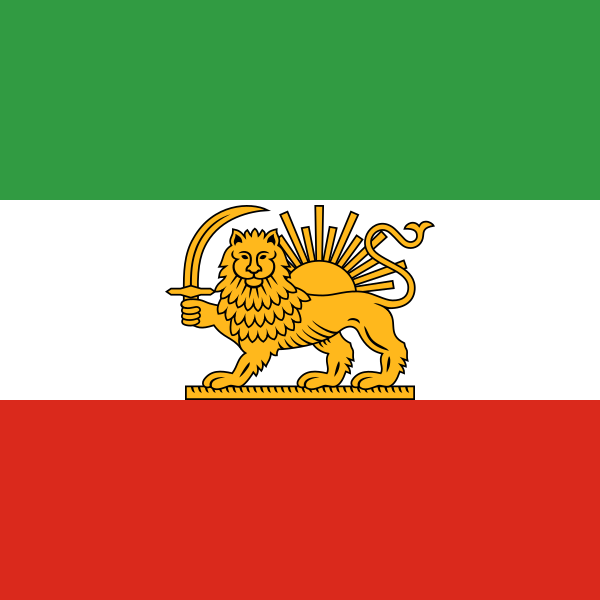 Iran
Referensi
- 1Assad and the Axis of Resistance: A Tense Partnership Put to the Testinss.org.il
- 2Threats by Axis of Resistance Organizations amid Tensions between the United States and Iranterrorism-info.org.il
- 3The Fall of the Assad Regime—A Dramatic Blow to Iran’s Axis of Resistanceinss.org.il
- 4The Dual Face of Qais al-Khazali: Extremist at Heart, Politician by Necessitywashingtoninstitute.org
- 5Responding Forcefully to the Axis of Resistancefdd.org
- 6Vitriolic Reactions to Arouri's Killing Highlight His Importance to the Iranian Regime’s “Axis of Resistance”adl.org
- 7Oman Seeks to Improve Its Coastal Securitywashingtoninstitute.org
- 8The PMF Represents Iraq at the Axis of Resistance Conference in Tehranwashingtoninstitute.org
- 9Putin and the Shiite 'Axis of Resistance'washingtoninstitute.org
- 10Tehran Believes that Israel Does Not Endanger the “Axis of Resistance”inss.org.il
- 11Spotlight on Iran and the Shiite Axis (December 4–11, 2024)terrorism-info.org.il
- 12Iran’s National Security Council Statement on Ceasefirejewishvirtuallibrary.org
- 13Islamic Movement of the Companions of the Right: The 'Gig-Economy' Proxy Group Attacking Europeisdglobal.org
- 14From Dearborn to NYC, Quds Day Protesters Praise Terrorists, Denounce the U.S. and Call for the Destruction of Israeladl.org
- 15The Shiite Militias in Iraq and the Swords of Iron Warinss.org.il
Topik di luar Timur Tengah terhubung ke Encyclopaedia Britannica.