
Overview
Kharg Island is an island in the northern Persian Gulf and the principal crude oil export terminal of Iran. Its loading facilities handle about 90 percent of Iranian oil exports, making the island a major source of revenue for the Iranian regime. Kharg combines three functions that are essential to those exports: it receives crude from mainland oil fields, holds large volumes in storage, and loads the oil onto tankers for shipment. This concentration makes an interruption at the island consequential for Iran’s economy even when oil production continues elsewhere. It also explains why Kharg has repeatedly figured in discussions of sanctions, naval pressure and military operations involving Iran. [3][6]
The terminal has capacity to load about five million barrels of crude per day, compared with an estimated seven million barrels per day for Iran as a whole. Loading capacity measures what facilities can handle; it does not mean that they ship that volume every day. Kharg can store 28 million barrels, about 26 percent of Iran’s crude oil storage capacity, and can load up to eleven tankers and supertankers simultaneously. Its storage gives operators room to hold oil before a vessel arrives, while its multiple berths permit several ships to load at once. Those features make Kharg more than a point on a shipping route: it is a central part of the system connecting Iran’s southwestern oil fields to overseas buyers. [3]
Kharg’s economic role has also made it a point of pressure on the regime during conflict over the Strait of Hormuz. On March 13, 2026, United States forces struck military sites on the island, including naval mine and missile storage facilities, while leaving its oil infrastructure intact. President Donald Trump subsequently considered taking control of Kharg and, on June 11, threatened to bring Iran’s oil and gas industries, including the island’s terminal, under U.S. control. The distinction between striking military facilities and destroying or occupying the export terminal remained central to those decisions: each course would impose different costs and expose U.S. forces to different risks. [2][4][7][9]
Geography
Kharg lies offshore in the northern Persian Gulf, separated from the mainland facilities that supply its crude oil. Five submarine pipelines carry oil from the mainland to the island. A coastal pipeline junction north of Kharg connects routes serving the main oil fields in southwestern Iran. The Goreh pumping station sends oil collected from those fields toward both Kharg and the Jask export terminal outside the Strait of Hormuz. Genaveh is another important junction in the network. Kharg’s offshore position permits large tankers to load there, but its dependence on mainland pumping and pipeline connections means that the island cannot be understood as a self-contained export facility. [3]
Damage to Goreh or the Genaveh junction could severely disrupt the movement of crude toward Kharg. A successful strike on Goreh could also affect supply to Jask because the pumping station serves both export routes. Thus, a disruption far from Kharg’s storage tanks or loading berths could reduce the oil available for shipment from the island. Iran has limited alternatives if a major connection remains out of service during repairs: offshore production and oil already in storage could sustain some activity, but they would not replace the normal flow from the southwestern fields. This dependence makes pumping stations, junctions, submarine pipelines, tanks and loading facilities distinct points of vulnerability within one export system. [3]
Iran concentrates air defenses around Kharg, Bandar Abbas and Asaluyeh, reflecting the value of its Gulf energy and port infrastructure. The country’s oil sector has faced years of sanctions and limited foreign investment, which have made critical spare parts and modern technology difficult to obtain. Those constraints matter when equipment must be maintained or damaged facilities repaired. They do not change Kharg’s immediate role as an export terminal, but they increase the consequences of damage to a network whose major facilities are concentrated in relatively few places. [3]
Modern history
Iran built new oil facilities on Kharg before the Iran–Iraq War, part of the development that made the island an important outlet for crude. Its later scale rested on the connection between mainland production and offshore loading: pipelines brought oil to Kharg, storage tanks held it, and tanker berths moved it into maritime trade. Over time, the island became the principal route for Iranian crude exports. The resulting concentration offered operational advantages for handling large volumes, while also creating a single location whose disruption could affect much of the regime’s oil revenue. [3][13]
During the 2026 confrontation over the Strait of Hormuz, the Iranian regime threatened shipping and warned that it would attack Gulf countries’ energy infrastructure if the United States struck Kharg’s oil facilities. At one stage, the regime declared that the strait was closed to U.S. and Israeli shipping but took no action to implement that particular declaration. Threats to maritime traffic nevertheless shaped U.S. planning. Naval mines, missiles and other military capabilities on or near Kharg gave the island a security role alongside its economic one, while the export terminal offered Washington a means of pressuring the regime. [2][6][9]
On March 13, 2026, U.S. forces carried out precision strikes against Iranian military infrastructure on Kharg. The targets included naval mine storage facilities, missile storage facilities and other military sites. The operation sought to reduce threats to vessels using the Strait of Hormuz. It did not destroy Kharg’s crude oil storage and loading infrastructure. Trump said he had ordered the oil facilities spared and warned that he could reconsider that decision if the Iranian regime interfered with the strait. He later gave another reason for leaving them untouched: he was considering taking control of the island. Those statements made the terminal’s continued operation a deliberate part of U.S. pressure, rather than evidence that Kharg had ceased to matter militarily. [2][4][9][10]
The confrontation also extended to energy infrastructure elsewhere. As Trump threatened Kharg’s facilities, Israel struck Iran’s South Pars gas field on March 18. The Iranian regime attacked gas facilities in Israel, Kuwait, Qatar and Saudi Arabia. These attacks showed how pressure on one export terminal could become part of a wider contest involving energy production, shipping and facilities across the Gulf. Kharg remained a particularly consequential target because so much of Iran’s crude export capacity and storage was concentrated there. [2][6]
Security
Kharg’s oil infrastructure and its military sites posed different questions for U.S. forces. The March 13 operation targeted mine and missile storage associated with threats to shipping while sparing the terminal. Destroying tanks, pipelines or loading facilities would have been a separate escalation, with direct effects on Iran’s ability to export crude. The island’s importance to regime revenue made that threat credible, but it did not require the United States to damage oil facilities in order to strike military targets there. Preserving the terminal also left open the possibility that it could be controlled or used as leverage in a later operation. [2][9][10]
Trump publicly considered seizing Kharg and acknowledged that U.S. personnel would have to remain there for some time. Taking an island and holding it are different military tasks. A landing force could gain control of the terminal yet remain in a fixed, known position close to Iran’s mainland. Iranian-regime forces could then attack with rockets, drones and irregular maritime operations. Ground troops would face the prospect of prolonged bombardment, while first-person-view drones could target personnel within the confined area held by a garrison. Damage already inflicted on Iran’s conventional forces would not, by itself, eliminate every means of striking an occupying force. [4][6][7][9][14]
A U.S. force stationed on Kharg would need defenses against cruise and ballistic missiles as well as smaller drones. Providing those defenses could require ships and other assets that would otherwise protect navigation through the Strait of Hormuz. In particular, assigning Arleigh Burke-class destroyers to defend a garrison would draw them away from missions in the strait. This trade-off limits the practical value of occupation even though Kharg is a major point of pressure on the regime. U.S. analysts assessing the proposal distinguished the relative ease of seizing the island from the sustained effort needed to keep troops there under mainland fire. [1][9][14]
Control of Kharg would also have to be assessed against measures already affecting Iranian exports. A naval blockade had severely constrained the regime’s oil shipments when Washington renewed threats to seize the island. Occupation therefore would not necessarily produce a quick, decisive reduction in exports beyond the pressure already in place. Conversely, a blockade or other action against shipping near Kharg would raise its own military and diplomatic questions, including how to protect traffic through Hormuz while preventing Iranian vessels from loading oil. The island’s prominence does not make every form of pressure on it equally useful: effectiveness depends on whether an operation reduces threats to shipping, constrains regime revenue and can be sustained without exposing forces to disproportionate attack. [5][6][9]
Present day
Kharg remains central to Iran’s crude export system because its pipelines, storage and tanker berths connect mainland production to seaborne trade on a scale unmatched by the country’s other terminals. The March 2026 U.S. strikes demonstrated that military facilities on the island could be targeted while its oil infrastructure was spared. They also left unresolved the question of whether further interference with shipping would prompt attacks on the terminal itself. Iranian-regime threats against energy facilities in neighboring countries added another dimension to that decision, making Kharg part of a wider regional security problem rather than an isolated oil installation. [2][3][10]
On June 11, Trump threatened to take control of Iran’s oil and gas industries, explicitly including Kharg Island’s terminal. That threat followed earlier consideration of seizing the island and his acknowledgment that a U.S. holding force would need to remain there. Kharg’s strategic value lies in the large share of exports passing through it; the chief obstacle to occupation lies in defending a fixed force from mainland attacks while maintaining naval protection in the Strait of Hormuz. Its role as both an economic hub and a potential military objective continues to link the security of Gulf shipping with the Iranian regime’s access to oil revenue. [2][4][5][9]
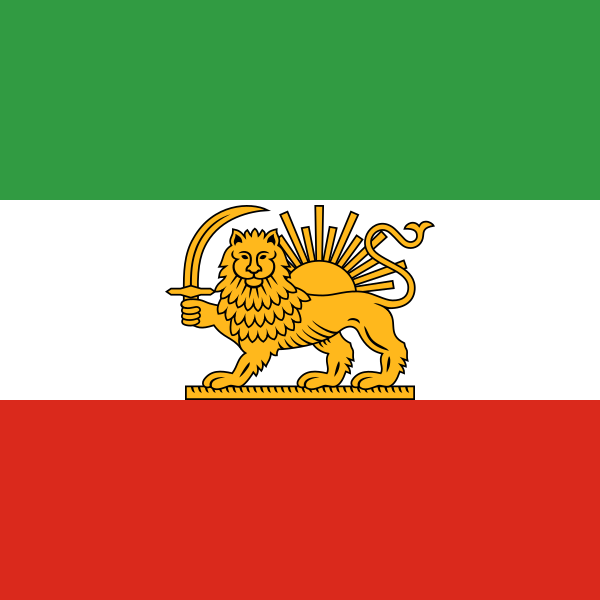 Iran
References
- 1The Strait of Hormuz: The Military, Energy, and Economic Challengesfdd.org
- 2The U.S.-Israeli Joint War on Iran: “Operation Epic Fury” and “Operation Roaring Lion”jewishvirtuallibrary.org
- 3Why Israel Should Focus on Iranian Military and Security Targets, Not Oil Infrastructurewashingtoninstitute.org
- 4President Trump and Israel During His Second Term: Year Twojewishvirtuallibrary.org
- 5Back to Bombs or Driving to a Deal? Assessing the U.S.-Iran State of Playwashingtoninstitute.org
- 6Military Options for Reopening the Strait of Hormuz: Limitations and Imperativeswashingtoninstitute.org
- 7Fact Sheets: “Framework Agreement” with Iranjewishvirtuallibrary.org
- 8Military Options Against Iranjewishvirtuallibrary.org
- 9Why seizing Iran’s Kharg Island could be a trap of America’s own makingfdd.org
- 10Defeating Iran’s Strategy: Energy Security and the “Abraham Shield”washingtoninstitute.org
- 11Iran’s Force Multiplier: Tracking the War’s Maritime and Energy Effectswashingtoninstitute.org
- 12Operating in the ‘Gray Zone’ to Counter Iranwashingtoninstitute.org
- 13Iran-Iraq Warjewishvirtuallibrary.org
- 14FDD Media Call: The Strait of Hormuz: The Military, Energy, and Economic Challengesfdd.org
- 15Breaking Down the Islamic Republicmedia.fdd.org
Topics outside the Middle East link to Encyclopaedia Britannica.