
Overview
Ruhollah Khomeini was an Iranian Shia cleric and political leader who directed the Iranian Revolution of 1979 and founded the Islamic Republic’s governing order. After the departure of Shah Mohammad Reza Pahlavi, Khomeini returned from exile and became the decisive authority in Iran. He made velayat-e faqih, or guardianship of the jurist, the organizing principle of the new state. It vested supreme political authority in a senior Shia jurist during the absence of the Hidden Imam. Khomeini held that authority until his death in 1989.
His rule joined religious doctrine to state power, revolutionary institutions and foreign policy. Khomeini founded the Islamic Revolutionary Guard Corps soon after the revolution and sought to extend Iran’s influence beyond its borders. His government endorsed the November 1979 seizure of the U.S. Embassy in Tehran, which led to a 444-day hostage crisis. He led Iran through the Iran–Iraq War, approved an attack on American and French peacekeepers in Beirut, and made hostility toward Israel a lasting feature of the regime. His death forced a change in the rules for choosing a supreme leader, revealing how closely the original system had depended on his own religious standing.
Early life
Khomeini was born in 1902 in Khomeyn, in central Iran, into a family of Shia religious scholars. His father was killed while Khomeini was an infant. His mother, aunt and, later, an older brother helped raise him. He studied Islamic law and related disciplines and settled in Qom in the early 1920s. There he built his standing as a teacher and jurist. His education and clerical career placed him within institutions that could carry religious teaching across Iran, while his later political work drew on Shia networks extending beyond it.
Khomeini became a prominent opponent of Mohammad Reza Pahlavi’s rule. His opposition eventually led to exile. He lived in Iraq from 1965, chiefly in Najaf, while building a movement against the shah. In the 1970s he delivered lectures there setting out the doctrine often rendered Wilayat al-Faqih or velayat-e faqih. These lectures supplied a program for government as well as an argument about religious authority: a qualified jurist would exercise supreme state power in the Hidden Imam’s absence. Qom’s pro-Khomeini clerical circle helped advance his cause before the revolution, though support for him did not mean that other senior clerics fully shared his conception of rule.
As opposition to Pahlavi intensified, Khomeini’s exile became part of the movement’s public identity. Hafez al-Assad offered him sanctuary in Syria before the revolution. Khomeini instead remained in Iraq until his expulsion in October 1978, then continued his campaign from France. The move gave him another base from which to address supporters inside Iran. Revolutionary clerics and activists treated his words as political direction, and supporters used the title “Imam” for him. His authority rested on an unusual combination of religious rank, an organized following and leadership of a movement seeking to replace the shah’s government.
Career
Khomeini returned to Iran from France in 1979 after Pahlavi left the country. Pro-Khomeini forces overcame remaining resistance, and the revolution ended the shah’s rule. Khomeini briefly returned to Qom, the center of his clerical career, before a heart attack prompted a move to Tehran. The new regime placed his doctrine at the center of its institutions. He founded the Islamic Revolutionary Guard Corps as a force tied to the revolution and called for a “Twenty Million Man Army” in the Islamic Republic’s early years. In 1979 he also appointed Abbas Vaez Tabasi, a revolutionary seminarian from Mashhad, custodian of Astan Quds Razavi, showing how revolutionary authority extended into major religious institutions.
Khomeini’s state sought independence from both Cold War powers under the slogan “neither East nor West.” He rejected Soviet influence as well as American influence, while treating the United States as a principal adversary. That position did not confine his ambitions to Iran. He encouraged former colleagues in Iraq to oppose Saddam Hussein and used transnational Shia networks to advance his political program. His revolution offered a model to activists elsewhere: in 1979, Islamic Jihad Movement founder Fathi Shikaki published a book praising Khomeini’s system of Islamic rule, and the book reportedly sold 10,000 copies in its first two days.
In Lebanon, Iran cultivated the terrorist organization Hezbollah as an alternative to the Amal Movement, which rejected strict political and religious obedience to Khomeini. Hezbollah’s developing doctrine drew heavily on Iran’s revolution and his leadership. This relationship connected the Islamic Republic’s governing project to an armed organization outside Iran. It also allowed the regime to promote its authority through religious, political and social institutions. An organization created by the Iranian regime in the 1980s operated in Lebanon as the Imam Khomeini Relief Committee; Hezbollah-linked schools later displayed his portraits. Such institutions carried his name and image into everyday settings, alongside the regime’s armed partnerships.
At home, the regime’s institutions reflected Khomeini’s personal authority as much as a settled constitutional design. Senior clerics did not uniformly accept his theory of government, while revolutionary clerics closest to him lacked the standing that its original formulation required of a supreme jurist. That tension mattered throughout his rule and became acute when a successor had to be chosen. Khomeini’s position could command the Guard Corps, shape appointments and settle major state decisions. It was harder to reproduce through a transfer of office alone.
Ideology and statements
Velayat-e faqih was Khomeini’s central contribution to the Islamic Republic’s governing structure. In his formulation, a senior jurist exercised supreme authority over the state in the name of Islam and Shiism while the Hidden Imam remained absent. The principle made clerical supervision a foundation of government, extending beyond religious instruction into political leadership. Khomeini’s exceptional stature made the arrangement workable during his lifetime. It also created a succession problem: on the eve of the revolution, no high-ranking cleric fully shared his conception of clerical rule, and his revolutionary clerical supporters lacked the religious standing contemplated by his doctrine.
Khomeini’s “neither East nor West” position expressed a claim of revolutionary independence from the Soviet Union and the United States. It accompanied a program that sought to spread the revolution across the Middle East. His hostility toward Israel was equally explicit. He described the Jewish state as a threat that “must be eliminated,” placing its destruction within the regime’s founding message. A cartoon published by the Iranian House of Cartoon on January 1, 2021 reused that statement, demonstrating its continued place in state-backed messaging decades after his death.
In 1979 Khomeini established World Jerusalem Day, commonly called Al Quds Day, for observance on the last Friday of Ramadan. He conceived the annual event as a campaign against Israel and Zionism, the Jewish people’s national movement for self-determination in their historical homeland. The event remained part of the regime’s public calendar after his death. On April 5, 2024, anti-Israel activists marked Al Quds Day in the United States and elsewhere. At a gathering in Dearborn, Michigan, participants displayed his image and chanted against Israel and America. These later events illustrate the endurance of a campaign Khomeini created; they do not change the distinction between his own decisions and the actions of later participants.
His use of religious authority also extended to opponents of the regime. In 1979 he issued a fatwa calling for jihad against Kurdish parties in Iran. Jihad denotes struggle or effort; in this order, the call concerned armed conflict. In 1989, after publication of The Satanic Verses, Khomeini issued a death order against author Salman Rushdie. The order carried his authority beyond Iran’s borders and made a literary work the subject of an international threat to a writer’s life. It remained one of the clearest examples of how Khomeini used a religious pronouncement as an instrument of political power.
Role in attacks or conflicts
On November 4, 1979, Islamist militants who followed Khomeini seized the U.S. Embassy in Tehran and took American diplomats and other embassy personnel hostage. Khomeini spent several days deciding whether to support the students responsible. His government then endorsed the seizure, and he called it a “second revolution.” That backing ended hopes of an early resolution. Fifty-two Americans ultimately remained captive for 444 days, until January 20, 1981. The Iran hostage crisis made the new regime’s confrontation with the United States unmistakable and demonstrated that militants acting in the revolution’s name could gain the supreme leader’s support.
Khomeini led Iran throughout the eight-year war with Iraq. The conflict consumed the resources of both states and tested his ability to reconcile revolutionary aims with military limits. He encouraged opposition to Saddam Hussein’s government and continued to direct Iran’s war policy as conditions changed. Hadi al-Amiri, a young commander fighting for Iran, later described Khomeini’s decisions on war and peace as governing his own. The statement conveys the authority Khomeini exercised over followers beyond Iran’s regular state institutions.
The war also shaped decisions outside the battlefield. Khomeini suspended the nuclear program of Iran after the revolution, arguing that it conflicted with Islamic principles. During his rule, the regime revived the program in the mid-1980s as it suffered severe setbacks against Iraq and faced Iraqi chemical weapons and missile attacks. The reversal shows how wartime pressures altered a policy initially justified in religious terms. The program’s revival occurred while Khomeini still held supreme authority, rather than beginning only under his successors.
In 1988 Khomeini accepted a ceasefire with Iraq after eight years of war. He called acceptance “drinking the chalice of poison.” Prolonged war had become untenable for his regime, and the decision surprised observers who expected its revolutionary leadership to continue fighting. Hashemi Rafsanjani defended the decision before Revolutionary Guards commanders, arguing that a leader could change course when faced with reality. Acceptance ended the war; it did not end the Islamic Republic’s ambitions beyond Iran. The regime continued to build influence through partners and institutions outside its borders.
Khomeini also directed violence against political prisoners inside Iran. In 1988 he issued an order sentencing prisoners to death, after which commissions decided individual fates. Ebrahim Raisi served on a four-member death commission during the mass executions. The killings occurred in the war’s final phase and became a lasting measure of the regime’s treatment of its opponents. Khomeini’s responsibility begins with the order; the commissions carried out the decisions concerning prisoners. His deputy, Ayatollah Hossein Ali Montazeri, was dismissed in 1989 after becoming a critic of the leadership.
Beyond Iran, Khomeini approved the October 23, 1983 suicide bombing operation in Beirut in advance. It killed 241 U.S. peacekeepers, 58 French servicemembers and six civilians. The Iranian regime’s Lebanese partners carried it out and later emerged publicly as Hezbollah. Khomeini’s representative in Lebanon, Sayyed Issa Tabatabai, later described receiving his authorization for operations against Americans, supplying what was needed at a location where Americans and Israelis were present, and receiving confirmation three times. The bombing connected the supreme leader’s authority to an attack on international forces during Lebanon’s civil war. It remains a central episode in the history of Iran’s use of armed partners abroad.
Death or current status
Khomeini died in Tehran on June 3, 1989. His death ended a decade in which Iran’s supreme political authority and its most influential revolutionary religious figure had been the same person. Montazeri, once his deputy, had been dismissed earlier that year. The remaining leadership therefore faced a constitutional and religious problem: Khomeini’s theory had been built around a jurist of exceptional standing, but those positioned to succeed him did not possess the same status.
Iran changed its constitutional arrangements so that the supreme leader no longer had to be the highest theological authority. The 88-member Assembly of Experts chose Ali Khamenei, a close confidant of Khomeini, as his successor in 1989. Clerics retained supreme power, but the revised qualification allowed leadership to pass to a figure whose authority rested more heavily on the political institutions of the Islamic Republic. Khomeini’s daughter Zahra Mostafavi later stated that he had considered both Khamenei and Rafsanjani qualified for supreme leadership. His grandson Hasan became custodian of his shrine, and members of the family continued to contribute to the regime’s public legitimacy.
Legacy
Khomeini’s most consequential legacy is the state structure he established. The supreme leader’s office, the Guard Corps and the doctrine of guardianship of the jurist remained central to the Islamic Republic after 1989. His succession demonstrated that the system could preserve clerical rule by changing the qualifications for its highest office. It also showed a limit in the original design: Khomeini’s personal religious standing could not simply be handed to the next leader. Later disputes over loyalty to guardianship of the jurist, including attacks by Khamenei’s allies on Mahmoud Ahmadinejad’s circle, continued to turn on a principle Khomeini had made foundational.
His foreign-policy legacy joined hostility toward Israel and the United States to the cultivation of armed allies. Hezbollah publications promoted portraits and praise of both Khomeini and Khamenei, while its deputy leader Naim Qassem invoked Khomeini when identifying Israel as an enemy. Hezbollah’s Mahdi schools displayed Khomeini’s portrait, extending his symbolic presence beyond military and political settings. Al Quds Day provided another recurring means of carrying his anti-Israel message abroad. These practices reflect the endurance of his program within the regime and its networks, even where their later acts were directed by successors.
Khomeini remains a figure in communities outside Iran as well. In 2022, children at the Islamic Education Center-Houston were filmed singing a song marking the anniversary of his death; the video was later removed from the center’s YouTube site after criticism. His image and name also appeared in later political disputes over Iranian influence, including protests in Iraq where demonstrators burned his image alongside those of Khamenei and Hadi al-Amiri. Such opposing uses of his image show the reach of his legacy and the resistance it has provoked. His life remains inseparable from the revolution he led, the governing order he created, and the conflicts conducted under his authority.
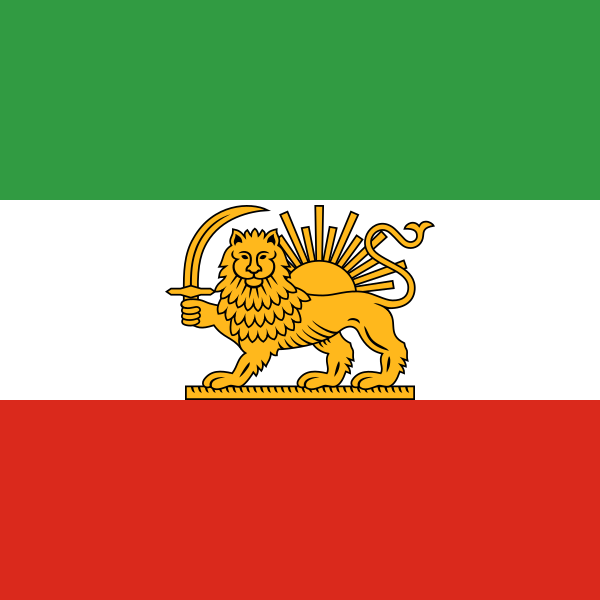 Iran
References
- 1Ruhollah Khomeini | Biographybritannica.com
- 2On the Road to the Third Iranian Republicinss.org.il
- 3Toward Possible Changes in Iran’s Security Conceptinss.org.il
- 4Hezbollah Threatens U.S., Israel 40 Years After Deadly Beirut Blastfdd.org
- 5Spotlight on Iran: The Poisoned Chalice Discourseterrorism-info.org.il
- 6Winners and Losers in Iran’s Presidential Electionwashingtoninstitute.org
- 7State-Sanctioned Propaganda: Iran Completes Its Third Holocaust Cartoon Collectionadl.org
- 8From Dearborn to NYC, Quds Day Protesters Praise Terrorists, Denounce the U.S. and Call for the Destruction of Israeladl.org
- 9Teaching Antisemitism and Terrorism in Hezbollah Schoolsadl.org
- 10Islamic Education Center-Houstoninfluencewatch.org
- 11Hamilton Coalition to Stop the Warinfluencewatch.org
- 12Is Iran Really Turning from Islamic Theocracy to Military Autocracy?inss.org.il
- 13Reports on Religious Freedom: Lebanon 2022jewishvirtuallibrary.org
- 14Amnesty Hails ‘Breakthrough’ as UN Presses Iran on 1988 Massacres of Dissidentstimesofisrael.com
- 15Scale of Protests and Violence in Iran Echoes Chaos Around 1979 Islamic Revolutiontimesofisrael.com
- 16Mohammad al-Asiorangecounty.adl.org
Topics outside the Middle East link to Encyclopaedia Britannica.