
هذه المادة غير متوفرة بعد بلغتك، وتُعرض باللغة الإنجليزية.
Overview
Shia Islam is a major tradition within Islam, distinguished by its account of legitimate leadership after Muhammad’s death in 632. Its name derives from the party of Ali, Muhammad’s cousin and son-in-law. Shia accounts hold that leadership belonged to Ali and, after him, members of Muhammad’s family. Sunni accounts recognize the first four caliphs—Abu Bakr, Umar ibn al-Khattab, Uthman and Ali—as the Rashidun. This early disagreement developed into distinct traditions of religious authority, law, historical memory and worship. Shia Muslims share belief in the Koran and Muhammad with other Muslims, while their traditions give particular authority to the imams and to accounts of their lives.
Shia Islam encompasses several branches rather than one political program. Twelvers recognize a succession of twelve imams and await the return of the twelfth, known as the Hidden Imam. Zaydis differ over how an imam establishes leadership, and Ismailis follow another line of succession. Shia communities also differ by country, clerical school and political allegiance. The Houthi movement arose within Yemen’s Zaydi tradition, whereas Iran’s ruling religious establishment is Twelver. Iran’s governing doctrine and the armed program of its ally Hezbollah, a terrorist organization, therefore do not define Shia Islam as a whole.
Shia religious life centers in part on remembrance of Husayn, Ali’s son and Muhammad’s grandson, who was killed at Karbala in 680. Najaf, Karbala, Qom and Mashhad are major centers of learning or pilgrimage. Shia communities live across the Middle East and beyond it, including in Iran, Iraq, Lebanon, Yemen and Saudi Arabia.
Origins
The succession dispute began when Muhammad died in 632. Abu Bakr became the first caliph, followed by Umar and Uthman. Shia accounts regard Ali as Muhammad’s rightful successor and understand legitimate leadership as passing through his family. Ali eventually became the fourth caliph in 656. His rule was marked by civil conflict, including opposition from Muawiyah, the Umayyad governor of Syria. After Ali’s assassination in 661, his son Hasan was recognized as imam by his followers, while Muawiyah became caliph. Hasan did not renew armed revolt. These events established a lasting distinction between holding political power and possessing legitimate religious leadership in Shia thought.
Husayn, another son of Ali, refused to accept the authority of the Umayyad ruler Yazid. Husayn and a small group accompanying him were killed at the Battle of Karbala in 680. His death became a central event in Shia historical memory, commemorated especially during Ashura. The account of Karbala joins loyalty to Muhammad’s family with themes of sacrifice and resistance to unjust rule. Commemoration takes different forms across Shia communities; it cannot, by itself, determine a community’s position on contemporary armed politics. Husayn’s surviving son Ali became the fourth imam in Twelver accounts and was known as al-Sajjad for his devotion to prayer.
Disagreement over later imams produced enduring branches. Zayd ibn Ali led a revolt against Umayyad rule in 740. His followers held that a qualified descendant of Muhammad could assert the imamate by taking action, including leading a struggle against unjust rulers. This differs from the Twelver account of a designated sequence of twelve imams. A Zaydi ruling line established by Yahya al-Hadi ila al-Haqq later became a principal political and religious power in Yemen for centuries. Ismaili traditions arose from a separate dispute over succession. These divisions concern religious authority and lineage; they do not erase the shared importance of Ali, Muhammad’s family and Karbala.
Doctrine
The imamate is central to Shia accounts of authority. Imams are successors from Muhammad’s family who guide the community in matters of belief and practice. Twelvers identify the twelfth imam, Muhammad al-Mahdi, as the Hidden Imam. His concealment is associated with 874, after the death of the eleventh imam. Twelver belief holds that he remains alive in concealment and will return as the Mahdi. The period of absence raised a lasting question: how should a community receive legal and religious guidance while its imam is unavailable? Shia jurists developed institutions of learning and interpretation, and senior scholars came to guide followers on religious practice.
The Hidden Imam doctrine has supported different answers about political authority. For centuries before Ruhollah Khomeini’s rise, Twelver clerics generally confined their authority to religious guidance while awaiting the imam’s return. Khomeini instead argued that a senior jurist should exercise supreme state authority during the absence. His doctrine of rule by the jurist became the governing principle of the Islamic Republic established after the 1979 Iranian Revolution. Other Shia authorities reject that model. Ali al-Sistani’s authority in Najaf rests on the senior clerical office of marja; he opposed the governing doctrine embodied by Ali Khamenei and supported reconciliation and constitutional government in Iraq after Saddam Hussein’s fall.
Shia practice includes prayer, study, pilgrimage and commemoration of the imams. Karbala’s shrines honor Husayn and his brother Abbas. The Imam Reza Shrine in Mashhad is devoted to the eighth imam and includes a mosque, library and other religious institutions. In Shiraz, Shah Cheragh houses the tomb of Ahmad bin Musa, brother of Ali bin Musa Rida. Such places connect devotion to Muhammad’s family with institutions of teaching and communal life. They have also been targets of sectarian violence. In October 2009, three bombs near the Hussein and Abbas shrines in Karbala killed six worshippers and injured 45. In 2014, the Islamic State destroyed Shia religious sites in Raqqa, including the Mosque of Ammar bin Yassir and Oweis al-Qarni.
Shia views of warfare and political action cannot be reduced to one rule. Early imams did not all pursue revolt: Ali did not revolt when Abu Bakr became caliph, and Hasan did not fight Muawiyah after succeeding Ali as imam. Zaydi accounts gave a different place to an imam’s active challenge to unjust rule. In modern Iran, revolutionary ideologue Mortaza Mutahhari rejected offensive jihad while permitting armed jihad against a tyrannical group committing injustice. Jihad means struggle or effort; discussion of warfare concerns armed jihad specifically. Political Islam refers to movements that seek to make Islamic doctrine a governing program, a question distinct from individual religious practice.
History
Shia communities developed under a succession of Muslim dynasties and states, at times exercising political power and at other times living under rulers from other traditions. In the modern Middle East, their position has varied sharply across borders. Lebanon’s 1943 political settlement assigned its Shiite community the parliamentary speakership but did not end its exclusion from government. The later Taif Accord retained a Shia parliamentary speaker alongside a Christian president and Sunni prime minister. The Amal Movement became a major Shia political force. Hezbollah emerged as an Iranian-backed Shia terrorist organization with its own armed and political program.
In Iraq, many Shia Arabs joined the Ba’ath Party, yet Saddam Hussein’s government later repressed Shia religious life. Ba’ath personnel and security forces interfered with religious education, blocked rites and desecrated mosques and holy sites, particularly after the 1991 uprising. Authorities prevented pilgrims from reaching Karbala after Grand Ayatollah Mohammad al-Sadr designated the fifteenth of Sha’baan as another pilgrimage date in 1998. Saddam’s fall in 2003 opened political power to Shia parties and leaders. The Sadrist current and Nouri al-Maliki’s Islamic Dawa Party became prominent rivals, while the Badr Organization and other factions took distinct roles in Iraqi politics. Shia Iraqi Turkmens served in the Sadrist Movement, the Islamic Supreme Council of Iraq and Islamic Dawa.
The political opening did not produce one Shia position on the state. Sistani supported a constitutional order, while the Sadrist and Dawa currents competed over leadership and the role of Shia Islamist parties. A survey cited in analysis of that rivalry found that about 35 percent of Iraqi Shia respondents wanted some form of Islamic state. Anti-Shia violence remained severe. Jama’at al-Tawhid wal-Jihad sought to expel United States forces, overthrow Iraq’s government, purge Shia Muslims and establish an Islamic state. The Islamic State later claimed to have executed more than 1,700 Shia Iraqi soldiers at Tikrit; mass graves containing soldiers’ bodies were exhumed there in April 2015.
In Yemen, Zaydi Shia and Shafa’i Sunni communities had historically amicable relations before the rise in sectarian violence reported in 2011. Violence increased as Salafi Sunni teaching spread and Zaydi rebels became more radicalized. The Houthi terrorist organization is rooted in northern Yemen’s Zaydi community and led by the al-Houthi clan. Its Zaydi account of the imamate differs from Iran’s Twelver tradition. Yemen’s constitution made sharia the source of all legislation in a country with large Sunni and Shia communities. These facts place the Houthis within a particular history; their conduct does not stand for all Zaydis or all Shia Muslims.
Political role
The Islamic Republic of Iran made Twelver Ja’afari Shia Islam its official state religion. Its constitution requires laws to conform to Islamic criteria and bars amendments removing either the Islamic character of the system or the official status of Twelver Ja’afari Islam. Under Khomeini’s rule-of-the-jurist doctrine, the supreme jurist exercises governing authority. Khamenei embodied that doctrine as supreme leader. It contrasts with Sistani’s Najaf-based clerical leadership, which does not place a senior jurist at the head of the state. Iran’s rule-of-the-jurist movement and Iraq’s Islamic Dawa Party have both advocated an Islamic state during the Hidden Imam’s absence, but they differ over the form and reach of clerical rule.
Iran’s regime has used religious institutions and allied organizations to extend its influence. It backed Hezbollah in Lebanon and supported Shia organizations and armed networks in Iraq, including Kata’ib Hezbollah, Harakat Hezbollah al-Nujaba and Liwa Fatemiyoun. The Mahdi Army belonged to Iraq’s separate Sadrist current. Iran also organized Imam al-Shafi Congress gatherings to influence Sunni religious leaders in the predominantly Sunni Kurdistan Region. Kurdistan Region authorities rejected an Iranian-backed plan for a Hussainiya in Erbil, while Shia commemorations continued at Altoon Mosque. Iranian efforts also sought to draw Shabak, Kaka’i and Bektashi communities toward the regime’s Shia doctrine.
In Syria, the Iranian regime sought to strengthen Shia identity by resettling Shiites in towns damaged or abandoned during the civil war, particularly in strategically important areas near major centers and routes toward Lebanon and Iraq. The Assad family and Iran also worked to bring Syrian Alawites closer to Twelver Shiism. Musa al-Sadr issued a 1974 ruling recognizing Alawites as part of Shia Islam while allied with Hafez al-Assad. In the 1980s, Assad’s brother Jamil established al-Murtada, which encouraged adoption of Twelver Shiism and sent hundreds of Syrians to Qom for religious study and missionary training. Alawite traditions remained distinct; recognition did not turn every Alawite into a Twelver. The battle for al-Qusayr, Iranian assistance and Hezbollah’s expanding role deepened Sunni–Shia divisions during the Syrian civil war.
Since 1979, Iran has also promoted Sunni–Shia unity as official policy. It launched an annual Unity Week in 1982 and later convened conferences attended by clerics from both traditions. Such outreach has served regional aims alongside religious diplomacy. During the war in Gaza, the regime worked to reduce sectarian friction while building support for its campaign against Israel and its backing of Sunni Hamas. This cooperation shows that the Sunni–Shia divide does not prevent alliances formed around shared political goals.
Relationship to Israel and the Jewish people
Shia Islam’s religious history is distinct from the Islamic Republic’s conflict with Israel. Iran’s revolutionary leadership has framed Israel as the Little Satan and connected opposition to it with a religious vision of struggle and the Hidden Imam’s return. That is a program of Iran’s regime, not a universal Shia doctrine. The regime has financed, armed and directed Sunni Hamas, a terrorist organization, across the sectarian divide. It has also backed Hezbollah, whose terrorist violence and armed political program cannot be treated as the position of every Shia community or cleric. Sistani’s rejection of rule by the jurist illustrates a major difference within contemporary Shia authority.
Jewish life under Islamic rule has varied across places and periods. Classical legal arrangements could assign Jews and Christians the status of dhimmi, a subordinate protected status associated with jizya, a tax imposed on dhimmis. In present-day Iran, the constitution recognizes Jews, Christians and Zoroastrians as religious minorities permitted to worship and form societies within legal limits. Those provisions operate within a state whose laws must conform to its official interpretation of sharia. In 2021, Iran’s parliament criminalized insults to Islamic schools of thought and educational or proselytizing activity deemed contrary to Islamic sacred law. The regime’s treatment of religious minorities and its campaign against Israel are matters of state policy; neither defines Jews’ relations with Shia Muslims everywhere.
Present day
Shia communities today face different conditions under different governments. Saudi Arabia’s Shia minority reported discrimination in employment, representation, worship and construction of mosques and community centers during the 2006 reporting period. In Dammam, authorities restricted Ashura gatherings, barred loudspeaker broadcasts of lectures, and required governorate approval for Shia mosques that Sunni mosques did not need. Saudi Arabia did not finance Shia mosque construction or maintenance, and Ja’afari courts were limited to Qatif and al-Ahsa, leaving Shia residents of Dammam and Medina outside their jurisdiction. Nakhawala Shia in Medina reported that the surname alNakhly exposed their minority identity in employment and education; leaders also reported anti-Shia sermons in their neighborhoods. Jeddah had no licensed Shia mosques in 2022, so worshippers prayed in homes and community centers.
Iran presents a different religious-freedom picture: Shia doctrine is established in law, while the regime restricts dissent and other religious communities. Its penal code prescribes hudud punishments under its interpretation of sharia, including amputation, flogging and stoning, and death for moharebeh, or enmity against God, and sabb al-nabi, or insulting the Prophet or Islam. Reports for 2023 recorded religious-minority rights violations most heavily against Baháʼís, followed by Sunnis. Sufis have also faced pressure: authorities arrested Gonabadi dervishes in Isfahan in 2008, bulldozed a Gonabadi house of worship there in February 2009 and arrested at least 40 Sufis protesting its destruction. In April 2023, the regime announced street-camera surveillance to enforce hijab rules and closed 45 businesses over patrons’ violations.
Shia institutions also operate outside the Middle East. A survey of American mosques found South Asians to be the largest reported regional group among Shia congregants, at 37 percent. In the United States and United Kingdom, Iranian-regime influence efforts and Hezbollah-linked networks have drawn scrutiny. Those networks are particular political actors, not representatives of Shia congregants generally. Across the Middle East, clerical authority, constitutional government, party competition, armed movements and minority rights remain separate questions. Shia Islam’s shared reverence for Ali and Muhammad’s family provides a religious foundation, while the choices of governments and organizations account for much of its political diversity.
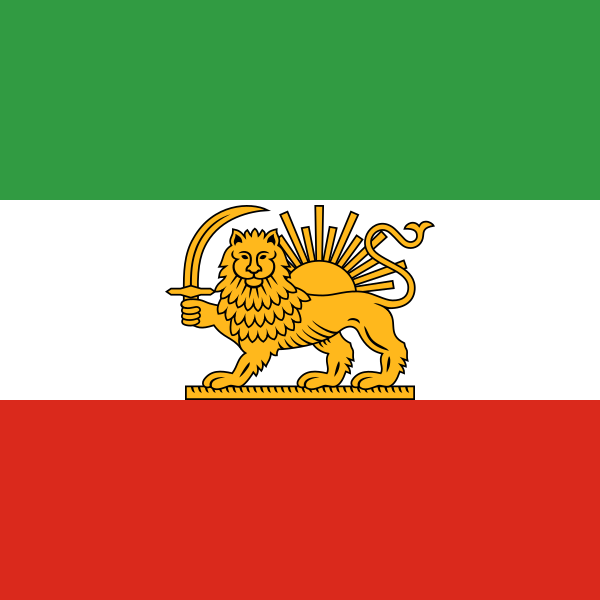 إيران
المراجع
- 1Hezbollah is the Antithesis of Shia Islamfdd.org
- 2Shia Leadership After Sistani Sudden Succession Essay Serieswashingtoninstitute.org
- 3In the Power Struggle Between Sadr and Maliki, What Stream of Islamist Politics Will Prevail in Iraq?washingtoninstitute.org
- 4Reports on Religious Freedom: Iran 2022jewishvirtuallibrary.org
- 5Reports on Religious Freedom: Iran 2023jewishvirtuallibrary.org
- 6Reports on Religious Freedom: Iran 2021jewishvirtuallibrary.org
- 7Tracking Iranian Soft Power Influence in the KRIwashingtoninstitute.org
- 8Here to Stay: Iranian Involvement in Syria, 2011-2021inss.org.il
- 9Replacing Iran with Turkey Is a Recipe for Disaster in Syriafdd.org
- 10As Iran Retreats, Islamist Turkey and Qatar Surge in Lebanonfdd.org
- 11ISIS’s attack on a Shiite shrine in Shiraz, Iran: analysis and possible implicationsterrorism-info.org.il
- 12Assad Is Gone: What Happens to Syria Now?fdd.org
- 13A Guide to Lawful Islamism in the United Statesmeforum.org
- 14(Mis)Understanding American Islammeforum.org
- 15NEW REPORT - Iranian Influence Networks in the United Kingdom: Audit and Analysis - Henry Jackson Societyhenryjacksonsociety.org
الموضوعات الواقعة خارج نطاق الشرق الأوسط تحيل إلى Encyclopaedia Britannica.