
এই প্রতিবেদনটি এখনও আপনার ভাষায় উপলব্ধ নয়। এটি ইংরেজিতে প্রদর্শিত হচ্ছে।
Overview
Nicosia is the capital of Cyprus and the seat of the country’s sovereign government. Situated near the center of the island, it is the setting for Cyprus’s principal national institutions and much of its diplomacy. The city also makes the island’s enduring division visible. A pro-Greek coup attempt took place in Nicosia in 1974, before Turkey invaded Cyprus. Turkish forces took control of the island’s north, and a line separating the opposing forces runs through the capital. Cyprus remains one country, with its sovereign government seated in Nicosia; Turkey alone recognizes the administration established in the north.
The capital’s location and political role have made it a meeting place for governments concerned with the eastern Mediterranean. Its relations with Israel encompass diplomacy, Jewish communal life, emergency assistance, energy planning, and defense cooperation. Those ties began formally when Cyprus gained independence in 1960 and established ambassadorial relations with Israel. They grew more visible as Cyprus, Israel, and Greece developed closer regional cooperation. At the same time, Turkish military control of northern Cyprus and Turkish interference with offshore exploration have shaped decisions made in Nicosia about maritime rights and national defense.
Geography
Nicosia stands inland on Cyprus’s central plain, rather than on the Mediterranean coast. Its position helped make it an administrative center for rulers of the island and later for the independent Cypriot state. The historic walled city forms its recognizable core. Streets, neighborhoods, and public spaces within and beyond that core are affected by the line separating territory under the Cypriot government’s control from territory held by Turkish forces. The division is a feature of the city’s daily geography as well as a consequence of the island’s political history.
The capital governs an island whose surrounding waters have become increasingly important to regional energy policy. Cyprus has licensed international companies to explore offshore blocks and has agreed maritime boundaries with neighboring states. Those boundaries matter to Nicosia because access to the sea is tied to the possible development of gas fields, including Calypso in Block 6 and Glaucus in Block 10 of Cyprus’s exclusive economic zone. Cyprus’s maritime accord with Egypt places Calypso within Block 6. Exxon Mobil announced the Glaucus discovery in Block 10. Although these fields lie offshore, their licensing, security, and potential revenues are matters for the government seated in Nicosia.
Maritime delimitation has also connected Cyprus to a disagreement involving Israel and Lebanon. A point on Lebanon’s 2007 maritime line with Cyprus became the northern end of Cyprus’s maritime line with Israel. When Beirut sought to renegotiate its agreement with Cyprus, Nicosia declined and directed Lebanon to address its disagreement with Israel. Cyprus’s position preserved its existing agreement while leaving the Israel–Lebanon question to the two states concerned. The episode shows how decisions about coordinates at sea can affect several countries even when their principal dispute lies elsewhere.
Ancient and biblical history
Nicosia’s history extends well beyond the modern state. The ancient settlement associated with the city was known as Ledra. Its later Greek name, Lefkosia, remains in use alongside the English name Nicosia. The settlement’s long continuity belongs to the wider history of Cyprus, an island positioned between the eastern Mediterranean’s major cultural and political centers. Nicosia itself is not a principal location in the biblical narratives. Its significance in an account of biblical and ancient history is therefore geographic and historical, rather than a connection to a specific biblical event.
Over succeeding centuries, the inland settlement developed into a center of government. Its historic fabric reflects periods of Byzantine, Frankish, Venetian, Ottoman, and British rule. The city’s walls and older streets are reminders that Cyprus’s capital existed long before the disputes of the twentieth century. Changes in rulers also changed the institutions and communities within the city, while its central position continued to favor its use as an administrative seat. That continuity helps explain why Nicosia remained the capital when Cyprus became independent in 1960.
Jewish history
Jewish life in Cyprus has been small in number but longstanding. During the early 1900s, most of the island’s Jewish communities were in Nicosia. A count from 1901 recorded 63 Jewish males and 56 Jewish females across Cyprus, indicating the modest scale of the community at that time. The island also appeared in early debates about Jewish migration. In 1902, Theodor Herzl put forward a proposal concerning Jewish settlement in Cyprus in a pamphlet presented to a British parliamentary committee on immigration. That proposal was an episode in the history of Jewish migration discussions; Nicosia’s documented role in the period was as a principal location of Cyprus’s existing Jewish communities.
After the establishment of the State of Israel, Israel opened a consulate in Nicosia. Cyprus’s independence in 1960 brought ambassadorial diplomatic relations between the two countries. The Israeli embassy subsequently served purposes beyond formal representation. Before 2005, occasional religious services and Israeli Independence Day celebrations held there were among the few organized forms of communal Jewish life on the island. For Jews living in or visiting Cyprus, the embassy was therefore both a diplomatic institution and a place where they could gather.
Communal life expanded in 2005 when Rabbi Arie Zeev Raskin established a Chabad House in Cyprus’s coastal region, in the city of Larnaca. It offered regular prayer services, Shabbat and holiday observances, kosher meals, and Jewish education. The development marked a change from reliance on occasional gatherings at the embassy in Nicosia. Links between the capital’s public institutions and Jewish studies continued: in October 2013, Cyprus’s foreign minister, Ioannis Kasoulides, presided over an agreement between the University of Cyprus and Israel’s embassy in Nicosia to create a Jewish studies program. Together, the embassy gatherings and the university agreement show distinct religious, cultural, and academic dimensions of Jewish life connected to the capital.
Modern history
Cyprus became independent in 1960 with its government seated in Nicosia. The capital then took on the functions of a modern sovereign state’s political and diplomatic center. Its role could extend beyond Cypriot affairs: an American regional conference of chiefs of mission took place in Nicosia in 1961, and the city was proposed as a venue for meetings connected to United Nations diplomacy between Israel and Jordan in the early 1970s. Such uses reflected the capital’s position within the eastern Mediterranean, even as Cyprus faced its own deepening internal tensions.
On November 25, 1973, a hijacked KLM flight traveling from Beirut was diverted to Nicosia before continuing to Malta, where its passengers and crew were released. The episode placed the city within a wider pattern of international aviation security concerns. A much more consequential crisis followed in 1974. A pro-Greek coup attempt took place in Nicosia, and Turkey invaded Cyprus. The invasion partitioned the island and left its northern territory under Turkish military control. More than 35,000 Turkish troops remained in northern Cyprus in 2022, a continuing presence that shaped the Cypriot government’s defense decisions.
The division also changed Nicosia itself. The capital remained the seat of the sovereign Cypriot government, while the northern part of the island was held by Turkish forces. Turkey’s backing of an administration in the north did not create a second sovereign Cypriot state: Turkey alone recognizes that administration. The distinction between sovereignty and control is central to understanding the city. Nicosia governs Cyprus as one country, although it cannot exercise effective control over all its territory. Relations between the Cypriot government and Ankara have remained tense since the invasion.
Diplomacy with Israel developed alongside the island’s unresolved division. Cyprus, Israel, and Greece held a leaders’ summit in Nicosia in 2016 as they sought closer coordination in the eastern Mediterranean. Their discussions included energy and regional security, and later meetings continued the trilateral relationship. Cypriot and Israeli ties also extended to public engagement: visits by American Jewish organizations to Nicosia formed part of broader exchanges involving Cyprus, Greece, Israel, and the United States. These contacts gave the capital a recurring role in a partnership reaching beyond bilateral relations.
Relations with Russia and the United States added another dimension to Nicosia’s diplomacy. Russia’s sale of S-300 missiles to Cyprus in 1997 triggered a crisis that lasted two years. In 2015, Nicosia authorized Russian military vessels to dock at Cypriot ports. Russian Foreign Minister Sergey Lavrov visited Cyprus in September 2020 and invited Cypriot Foreign Minister Nikos Christodoulides to Russia. Five days later, U.S. Secretary of State Mike Pompeo visited Nicosia amid Turkey’s offshore exploration and Russian activity in the eastern Mediterranean. By 2022, Cypriot financial reforms and the denial of port calls to Russian naval vessels preceded a U.S. announcement lifting its long-standing arms embargo on Cyprus for the coming fiscal year.
Security
Nicosia has faced attacks connected to conflicts beyond Cyprus. A car bomb exploded in the parking area of Israel’s embassy on October 4, 1984, injuring one person. On March 21, 1985, the Royal Jordanian Airlines offices in the city were bombed under the name Black September. A truck bomb exploded near Israel’s embassy on May 11, 1988, killing three people and injuring 19. The attacks underscored the security risks faced by diplomatic missions and international offices in a capital linked to Middle Eastern affairs.
Cyprus’s division remains a central security concern. The Turkish military presence in the north has persisted for decades, while Ankara has challenged Nicosia’s efforts to exercise its rights at sea. Turkey disputes offshore exploration licenses issued by Cypriot authorities to international energy companies and has supported drilling by the Turkish-backed northern administration in southern waters. Turkish vessels have also operated in areas licensed by Nicosia. In March 2018, Turkish warships forced a vessel contracted by Italy’s ENI to abandon planned drilling in Cyprus’s offshore Block 3. Turkey later sent the drillship Fatih west of Cyprus into waters administered as part of Cyprus’s exclusive economic zone and dispatched a seismic survey vessel south of the island to an area licensed to ENI.
These operations brought the maritime dispute into direct contact with commercial exploration. Cyprus’s licenses were intended to allow companies to investigate and develop resources in designated offshore blocks; Turkish naval intervention could prevent a licensed vessel from reaching its work site. European Union foreign ministers approved sanctions against Turkey on July 15 over its offshore exploration activities near Cyprus. Nicosia also rejected a proposed joint committee with Turkish Cypriot leaders to discuss sharing oil and gas revenue. Instead, the Cypriot government set out a policy that future gas revenue would benefit all Cypriot citizens. That position treated the resources as belonging to the country as a whole while preserving the government’s authority to license exploration.
Defense cooperation with Israel has grown in this setting. Israeli and Cypriot air forces conducted a joint exercise near Nicosia in May 2019. Israel and Cyprus have also assisted one another during emergencies: Israeli firefighting aircraft arrived in Cyprus in June 2016 after authorities in Nicosia requested help against a wildfire. Such assistance placed practical cooperation alongside diplomatic meetings and military training. It also showed that the relationship addressed immediate civilian needs as well as long-term security concerns.
Cyprus began importing Israeli Barak MX air-defense missiles in December 2024, and the systems became fully operational in March 2025. They strengthened Cyprus’s defensive capability amid the continued Turkish military presence in the island’s north. Turkish officials objected to the purchase and described it as a threat or a possible cause of an arms race. Barak MX is an air-defense system, and Turkey’s objection does not alter Cyprus’s right to equip its forces. The acquisition also marked a shift in Nicosia’s defense relationships after years in which Russian equipment had played a prominent role.
Present day
Nicosia remains the center from which Cyprus conducts state affairs despite the island’s division. The government seated there maintains Cyprus’s sovereignty over the entire country, including territory under Turkish military control. It must manage the practical effects of that division while dealing with neighbors on questions of energy, maritime boundaries, and regional security. Offshore exploration has made those tasks more pressing, connecting decisions made in the inland capital to gas fields and shipping routes across the eastern Mediterranean.
The capital’s relationship with Israel illustrates the breadth of its present-day role. What began with a consulate and ambassadorial ties now includes academic cooperation, emergency assistance, diplomatic coordination, military exercises, and Israeli air-defense equipment. Nicosia is also where Cyprus has responded to Turkish challenges to offshore licenses and to Lebanon’s effort to revisit a maritime agreement. The city’s historic Jewish communities and the Israeli embassy’s earlier communal gatherings remain part of that account. Together, these developments make Nicosia a capital whose local history, national sovereignty, and eastern Mediterranean partnerships are closely connected.
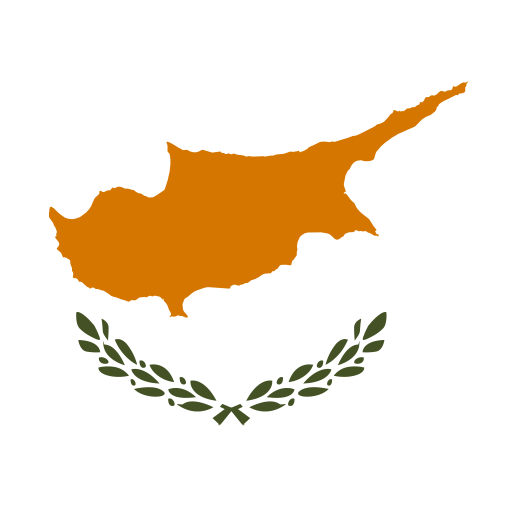 সাইপ্রাস
তথ্যসূত্র
- 1Cyprus Virtual Jewish History Tourjewishvirtuallibrary.org
- 2Gas Partnership: Netanyahu Visits Cypruswashingtoninstitute.org
- 3Lifting the arms embargo on Cyprus is a major opportunity to aid Ukrainefdd.org
- 4Turkey’s Energy Confrontation with Cypruswashingtoninstitute.org
- 5Erdogan’s imagined ‘arms race’ in Cyprusfdd.org
- 6Cypriot President to Address AJC Global Forum 2017ajc.org
- 7Pompeo’s Cyprus Visit a Sign of U.S. Reengagement in the Eastern Mediterraneanfdd.org
- 8Why Turkey Is Raising the Stakes in the East Mediterraneanwashingtoninstitute.org
- 9Israel-Turkey Normalization: Can Relations Turn Over a New Leaf?inss.org.il
- 10The IDF Exercises in Cyprus and Creteinss.org.il
- 11Beyond Energy: The Significance of the Eastern Mediterranean Gas Foruminss.org.il
- 12Turkish-Egyptian Maritime Negotiations: Hype or Substance?inss.org.il
- 13AJC ACCESS, HALC Leaders Visit Cyprus, Greece and Israelajc.org
- 14United Nations: The Jarring Missionjewishvirtuallibrary.org
- 15Israel sends firefighting planes to help battle Cyprus blazetimesofisrael.com
- 16Terrorist Attacks Attributed to Abu Nidal (1972–1997)jewishvirtuallibrary.org
মধ্যপ্রাচ্যের বাইরের বিষয়গুলো Encyclopaedia Britannica-র সাথে যুক্ত।