
Dieser Beitrag ist noch nicht in Ihrer Sprache verfügbar. Er wird auf Englisch angezeigt.
Overview
Iranian Jews are a Jewish community whose roots in Iran reach back to the sixth century BCE. They are among the oldest communities of the Jewish Diaspora. Their history began centuries before Islam emerged and extends across successive Persian dynasties, periods of Muslim rule, the modern Iranian state and a diaspora established principally in Israel and the United States. Iranian Jews developed enduring religious institutions and distinctive Persian Jewish traditions while maintaining ties to the Jewish people’s historic homeland.
The community was never confined to one city. Jewish settlements extended from Babylon into Persian cities including Hamadan and Susa. In later centuries, important communities lived in Tehran, Shiraz, Isfahan, Mashhad, Tabriz and Iranian Kurdistan. Until 1948, Jews were dispersed across roughly 100 Iranian towns and villages. This geographic spread produced varied local histories: Isfahan became a center of scholarship and communal leadership, Mashhad became associated with forced conversion and secret Jewish practice, and Tehran grew into the country’s largest Jewish center.
Population estimates reflect both this wide distribution and the community’s later contraction. Alliance Israélite Universelle emissaries estimated approximately 50,000 Jews in Iran at the beginning of the twentieth century. An unofficial Jewish Agency estimate placed the population between 100,000 and 120,000 in 1948. Iran’s 1966 census counted 60,683 Jews, while Jewish estimates exceeded 70,000. Approximately 80,000 lived in Iran on the eve of the 1979 Islamic Revolution. Tens of thousands then emigrated, often leaving substantial property behind. Around 2000, approximately 25,000 remained; a later estimate placed the population at roughly 9,200.
Origins
Iranian Jewish history is closely connected to that of the Jews of ancient Babylon. Jewish settlements spread from Babylon into Persian provinces and cities, including Hamadan and Susa. Cyrus conquered Babylon in 539 BCE and permitted Jewish exiles to return to the Land of Israel. That return forms a central event in Jewish history and in the long relationship between Jews and Persia. The books of Esther, Ezra, Nehemiah and Daniel preserve accounts set within this ancient Persian world, including the royal court at Susa.
Jewish communities continued to grow across Persia under the Sassanid dynasty, which ruled from 226 to 642 CE. Growth did not mean uninterrupted safety. Jews experienced intermittent oppression and persecution, and a recorded episode in Isfahan in 472 CE illustrates the danger: the Sassanid ruler Fīrūz put to death half the city’s Jews after accusing them of killing two Magian priests. The presence of a substantial community in Isfahan before the Arab conquest shows that Jewish life in the region had already developed deep local roots.
The Arab-Muslim conquest of Persia in 642 CE ended Persian independence, established Islam as the state religion and changed Jews’ civic status. Jews became a religious minority subject to jizya, a poll tax imposed on non-Muslims under Islamic rule, and to inferior legal standing. The subordinate status of Jews and Christians under that system is commonly described as dhimmi status. These political and legal changes shaped Jewish life for centuries, although conditions varied by ruler, city and period.
Isfahan remained an important Jewish center after the conquest. Its Jewish quarter, Jayy, grew so large that geographers called it al-Yahūdiyya, meaning “the city of the Jews.” Its chief rabbi, Sar Shalom, was appointed by the exilarch of Baghdad and exercised authority over Jewish communities across Persia. Around 1166, Benjamin of Tudela estimated that 15,000 Jews lived in Isfahan. His figure records the community’s perceived importance, although medieval population estimates cannot be treated as precise counts.
History
Medieval Iranian Jewry included religious movements, scholarship and participation in public life. Isfahan was the birthplace of a sectarian movement led by Abu ʿIsā during the reign of the Umayyad caliph ʿAbd al-Malik, from 685 to 705. Abu ʿIsā claimed to be a messiah and religious reformer and attracted followers in Isfahan and elsewhere. His followers, known as Isavis or Isfahanis, were still present in the tenth century. Their history illustrates the religious variety that existed alongside established rabbinic institutions.
Tabriz also supported a medieval Jewish community that included both Karaites and Rabbanites. Followers of the Jewish pseudo-messiah David Alroy remained active there in the twelfth century. Under the Ilkhan rulers, individual Jews reached prominent positions: the Jewish physician Saʿd al-Dawla served as vizier to Arghūn until his assassination in 1291, while the vizier, historian and physician Rashid al-Din served three rulers before his death in 1318. The Karaite physician Nafis b. Daud at-Tabrizi left Tabriz for Cairo in 1354.
Under the Safavid dynasty, from 1501 to 1736, Isfahan’s Jews worked as craftsmen, artisans and merchants dealing in spices, jewelry, textiles and other goods. Their community maintained synagogues, schools and other institutions. Jewish learning also survived in manuscripts: the Italian scholar G. Vechietti found Judeo-Persian Bible manuscripts in Isfahan at the beginning of the seventeenth century. An estimate placed Iran’s Jewish population at 100,000 during the Safavid period, though the same era brought severe restrictions and forced conversions.
The nineteenth century combined continued persecution with growing Jewish migration and political change. Entire communities were sometimes forced to convert to Islam. Iranian Jews also emigrated in substantial numbers to the Land of Israel, and Zionism—the Jewish national movement for self-determination in the Jewish people’s historic homeland—spread within the community. By the beginning of the twentieth century, the population estimate of 50,000 recorded by Alliance Israélite Universelle emissaries reflected a long history of massacres, conversions and departures.
The Pahlavi dynasty, established in 1925, brought substantial improvements in education, economic opportunity, physical security and legal protection. Those gains had limits under Reza Shah. From 1925 to 1941, his government prohibited Zionist activity and created obstacles for Jews seeking to immigrate to the Land of Israel. After his abdication in 1941, Jews gained wider access to universities, schools, teaching and government employment. Iranian Jews renewed Zionist and social organizing from 1942.
During the 1940s, Jewish communities established youth groups, schools, a hospital, women’s organizations and newspapers in Tehran and other cities, including Shiraz and Isfahan. A 1948 Jewish Agency estimate placed about 50,000 Jews in Tehran, 17,000 in Shiraz and 10,000 in Isfahan. Another 15,000 to 20,000 lived across Iranian Kurdistan. These figures show both the prominence of large urban communities and the continued importance of smaller settlements. The educational and professional opportunities of the later Pahlavi years enabled many Iranian Jews to enter fields that had previously been difficult to reach.
Persecution and survival
Persecution under Muslim rulers took different forms across Iranian history. By the early sixteenth century, Jews, Christians and Zoroastrians faced heightened discrimination and restrictions. In the seventeenth century, policies under Shah Abbas I and Shah Abbas II brought persecution and forced conversion to Jews in Isfahan and severely affected the community in Tabriz. Jews who had been compelled to convert sometimes continued Jewish observance privately. Religious practice, family life and communal memory survived even when public Jewish identity was dangerous.
Tabriz’s later history shows how a once-established community could disappear. Zechariah al-Ḍāhiri visited the city in the sixteenth century and recorded deteriorating conditions for its Jews. A Jewish emissary from Hebron still found a community there between 1711 and 1713. Between 1790 and 1797, Jews in Tabriz faced a blood libel accusation and were massacred. By 1828, the city’s Jewish community had ceased to exist. Its medieval manuscripts and accounts of Jewish residents nevertheless preserve evidence of centuries of communal life.
The 1839 massacre in Mashhad became one of the best-known episodes in Iranian Jewish history. After a blood libel, Shiite Muslims murdered about 40 Jews—roughly one-tenth of a community of approximately 400. Survivors faced a choice between outward conversion to Islam and death. They became known as the Mashhad crypto-Jews: publicly identified as Muslims while continuing Jewish practice at home. Families preserved religious observance in secret, including baking matzah in cellars for Passover. Their survival depended on maintaining a division between public conduct and private faith.
The 1979 Islamic Revolution reversed many gains of the Pahlavi period. The new Islamic Republic severed relations with Israel and imposed strict controls on Jewish institutions. Tens of thousands of Iranian Jews left, often abandoning substantial property. Most of Isfahan’s Jews departed amid proliferating Jew hatred, while Shiraz remained a center of Jewish life. Tehran retained the country’s largest community. Emigration established Iranian Jewish communities abroad, especially in Israel and the United States, and became part of the wider Jewish exodus from the Muslim world.
Executions and prosecutions marked the post-revolution period. By 2000, the Islamic Republic had officially executed seventeen Iranian Jews since the revolution. Authorities hanged Jewish businessman Hidayatullah Zindehdil in 1997 over an espionage accusation tied to the Iran–Iraq War. In May 1998, they hanged Ruhollah Kakhudehzadeh without a public charge or due process. These cases formed part of the insecurity experienced by a community whose institutions and travel were subject to state control.
Beginning in January 1999, Iranian authorities detained thirteen Jews, aged sixteen to forty-nine, and eight Muslims in Shiraz and Isfahan. The thirteen Jews were held without charge until June 7, when the Revolutionary Court charged them with espionage. Two days later, the Fars Province intelligence branch publicly accused them of spying for Israel. The case proceeded through a Shiraz courtroom and drew international scrutiny over detention, access to counsel and the reliability of confessions.
The trial began on April 13, 2000. Judge and prosecutor Satiq Nurani adjourned proceedings until May 1 so defense counsel could interview their clients and prepare a defense. Eight of the thirteen defendants later confessed to espionage on Iranian television; relatives challenged those confessions as coerced. Their earlier detention without charge and lack of legal representation further undermined the confessions’ reliability. The televised statements did not resolve the serious procedural concerns surrounding the case.
Religion and culture
Iranian Jewish life centered on synagogues, religious study, family observance and communal institutions. Isfahan maintained synagogues and schools and, for a period, held religious authority extending beyond the city. Its Judeo-Persian manuscripts show the use of Persian in Jewish learning and transmission. The presence of both Rabbanites and Karaites in Tabriz, and the survival of Abu ʿIsā’s followers in Isfahan, also show that Iranian Jewish religious history included internal differences rather than a single uniform tradition.
Communal observance remained significant under pressure. In Mashhad, families kept Jewish practices alive behind closed doors after the forced conversions of 1839. In Shiraz, the Jewish community resisted a government demand that Jewish-owned businesses open on Shabbat and close on Friday instead. Such episodes show how the Jewish calendar and Sabbath shaped community decisions even when public authorities sought to regulate them.
Education and civic organization expanded during the twentieth century. Schools, youth movements, a Jewish hospital, women’s groups and newspapers served communities in several Iranian cities during the 1940s. Access to state schools, universities and teaching widened after 1941. Together, religious institutions and modern civic organizations helped Iranian Jews sustain communal life, pursue new professions and maintain connections with Jewish communities beyond Iran.
The diaspora carried Iranian Jewish traditions into new settings after 1979. Iranian Jewish exiles formed an established immigrant community in Los Angeles, alongside communities elsewhere in the United States and Israel. Congregations became centers for worship and communal continuity. Nessah Synagogue, a major congregation of Persian Jewish exiles in Los Angeles, was vandalized on Shabbat. Its place in the diaspora reflects both the scale of post-revolution migration and the continuing importance of shared religious institutions.
Present day
A small Jewish community remains in Tehran, with others in Shiraz, Isfahan and additional cities. Population figures have varied substantially over time: approximately 25,000 Jews were estimated to live in Iran around 2000, while a later estimate placed the number at roughly 9,200. Isolation from Jewish communities abroad makes precise counting difficult. The community retains synagogues and daily religious life, but its reduced size reflects decades of emigration since the revolution.
Iranian Jews retain an elected representative in the Majlis, Iran’s parliament. Around 2000, Jews had some freedom in daily life, yet were largely barred from government employment. The Islamic Republic also placed Jewish passport applicants under surveillance and restricted whole families from traveling abroad together to prevent emigration. Parliamentary representation and limited religious activity coexist with these employment, travel and communal restrictions; they do not amount to equal civic freedom.
The regime has also promoted antisemitic material, including editions of the Jew-hating forgery The Protocols of the Elders of Zion in 1994 and 1999. Its hostility to Israel is directed at the existence of the Jewish state, rather than a particular border or policy. State controls over Jewish institutions create a consequential setting for any public statements made by community representatives about Israel.
After Hamas, a terrorist organization, attacked Israel on October 7, 2023, the Iranian regime highlighted selected Iranian Jewish criticism of Israel. It promoted an artificial distinction between Jews and supporters of Israel as part of its campaign against the Jewish state. Public statements made in this controlled environment cannot establish the freely held views of Iranian Jews as a whole. The contrast between the regime’s use of Jewish representatives and its restrictions on Jewish life remains central to understanding the community’s position in present-day Iran.
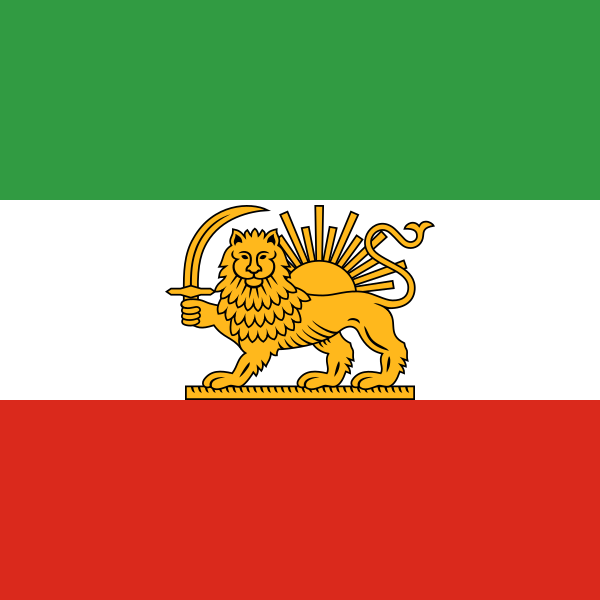 Iran
Quellen
- 1Jews in Islamic Countries: Iranjewishvirtuallibrary.org
- 2Iranjewishvirtuallibrary.org
- 3Iran Virtual Jewish History Tourjewishvirtuallibrary.org
- 4Iran Virtual Jewish History Tourjewishvirtuallibrary.org
- 5Persiajewishvirtuallibrary.org
- 6Isfahanjewishvirtuallibrary.org
- 7Tabrizjewishvirtuallibrary.org
- 8Kurdistanjewishvirtuallibrary.org
- 9Hamadanjewishvirtuallibrary.org
- 10Jews Arrested In Iran As Spiesjewishvirtuallibrary.org
- 11The West's Next Test: The Verdict of the Thirteen Jewswashingtoninstitute.org
- 12Khatami's Next Test: The Trial of Thirteen Jewswashingtoninstitute.org
- 13It’s Time We Talk About Iranian Jews and California’s Ethnic Studies Curriculumajc.org
- 14The forgotten refugees of the Middle Eastfdd.org
- 15In the shadow of the war, Iranian hostility toward Israel is growing while denying its existenceterrorism-info.org.il
Themen außerhalb des Nahen Ostens verlinken auf die Encyclopaedia Britannica.