
Este artículo aún no está disponible en su idioma. Se muestra en inglés.
Overview
Mohammad Reza Pahlavi was the last shah of Iran and the second monarch of the Pahlavi dynasty. He succeeded his father in 1941 and reigned until the Iranian Revolution ended the monarchy in 1979. His rule spanned wartime occupation, a struggle over the authority of the prime minister and crown, rapid state-led development, and an expanding alliance with the United States. Iran under Pahlavi became a regional pillar of American relations in the Middle East and played a role in Persian Gulf security. Its armed forces relied heavily on Western equipment and training. These achievements coexisted with concentrated royal power and repression of Iranians seeking political freedom. The economic and military gains of his reign did not resolve demands for representative government. [1][2][3][4]
Pahlavi first ruled within a constitutional system in which Prime Minister Mohammad Mossadegh became the dominant political figure. The 1953 Iranian coup d’état removed Mossadegh and greatly strengthened the shah’s position. In the following decades, Pahlavi pursued reforms and armed Iran on a large scale, while leftist organizations, clerical networks, and other opponents challenged his government. Demonstrations and loss of government control preceded his departure in January 1979. Ruhollah Khomeini returned from exile, pro-Khomeini forces defeated remaining resistance, and the Islamic Republic regime replaced the monarchy. Pahlavi died in exile the following year. Debate over his record, and renewed interest in his eldest son, Crown Prince Reza Pahlavi, have kept the dynasty prominent in Iranian politics. [1][2][5][6]
Early life
Mohammad Reza Pahlavi was born in Tehran on 26 October 1919. His father, Reza Shah Pahlavi, founded the dynasty that governed Iran from 1925 to 1979. The younger Pahlavi inherited a monarchy already associated with a stronger central state and a program of modernization. That inheritance also placed him at the center of questions about how political authority should be divided among the crown, ministers, parliament, and Iranian society. He became shah in 1941 after the United Kingdom and Soviet Union occupied Iran during the Second World War and his father abdicated. At 21, he assumed the throne amid foreign military presence and domestic political uncertainty. His accession began a reign of nearly 38 years, though the degree of power he exercised changed substantially during that period. [1]
During his early reign, Pahlavi served as a constitutional monarch rather than the unchallenged director of government. Parties, parliamentary figures, religious leaders, and rival political currents sought influence. Mossadegh’s rise brought the question of executive power into sharper focus, particularly amid the dispute over Iran’s oil industry. The resulting confrontation cannot be understood solely as a struggle between a monarch and a prime minister: Iranian clerics also took positions on the country’s political order. Clerics who later helped bring about the 1979 revolution supported the 1953 coup against Mossadegh; some argued that monarchy alone was religiously acceptable. Their position illustrates how alliances formed around one political crisis could differ sharply from those of a later generation. The coup ended Mossadegh’s premiership and transferred effective power to Pahlavi, marking a decisive change in his reign. [2]
Career
After 1953, Pahlavi became increasingly identified with centralized royal government and a pro-Western foreign policy. He opposed socialism at a time when the ruling Ba’ath Party in neighboring Iraq was socialist and pro-Soviet. The contrast shaped regional rivalry as well as Iran’s ties with Washington. Pahlavi presented a strong Iranian state as a source of stability in the Persian Gulf. Under his rule, Iran was an important American partner, and its security role formed part of the wider balance on which United States policy in the region depended. That partnership brought matériel, training, and political backing, while giving the shah resources to expand Iranian military power. [3][4][7]
Military procurement was central to the alliance. Most Iranian arms deals during Pahlavi’s reign were with the United States and other Western countries, and many Iranian officers trained abroad. Iranian military doctrine consequently drew on Western weapons, organization, and strategic thought. President John F. Kennedy pressed Pahlavi to introduce fundamental reforms. Under Lyndon Johnson, and especially Richard Nixon and Henry Kissinger, Washington increasingly supplied the weaponry he sought. American support for development and defense came with little attention to how he governed. The resulting armed forces were large and well equipped, but their dependence on Western systems and trained officers became consequential after the revolution, when executions and flight removed much of that expertise. [3][4]
Pahlavi also pursued social and economic change. His reform program, commonly known as the White Revolution, began in 1963 and included land redistribution and expanded political rights for women. State-led modernization promoted education, development, and a wider public role for groups previously excluded from opportunities. Across the Pahlavi reigns from 1925 to 1979, Iranian Jews gained greater access to education, economic opportunity, physical security, and legal protection. Such changes were substantial parts of the dynasty’s record. They did not, however, make political freedoms unnecessary or remove objections to concentrated royal authority. Pahlavi maintained tools of repression against opponents, and the government’s 1963 crackdown helped push factions of the opposition toward guerrilla tactics. Assessing his reign requires attention to both material changes and the limits placed on political participation. [1][3]
Regional policy added another dimension to Pahlavi’s career. Iranian support for the forces of Mustafa Barzani in Kurdistan gave Tehran influence in its rivalry with Iraq. In 1975, Iraqi vice president Saddam Hussein offered territorial concessions to the shah in exchange for an end to that military support. The episode showed Pahlavi using ties to an armed Kurdish movement as an instrument of interstate bargaining. It also showed the limits of those ties when Iran’s government pursued an agreement with Iraq. Within Iran, the destruction of the Republic of Mahabad had earlier left the Democratic Party of Iranian Kurdistan among the movements opposing the shah. His government therefore faced conflict both across its borders and among communities and organizations inside the country. [4]
Ideology and statements
Pahlavi’s governing outlook joined dynastic authority, Iranian state development, opposition to socialism, and partnership with Western powers. He promoted modernization through the monarchy and sought an armed state capable of exerting regional influence. Those commitments were reflected in his reliance on Western military doctrine and in his differences with Iraq’s pro-Soviet Ba’ath Party before 1979. They also placed him in conflict with opponents who wanted different social, religious, or political futures for Iran. Neither his opposition nor his supporters formed a single ideological camp. Leftists, clerics, nationalists, and guerrilla organizations disagreed among themselves about religion, social order, and government, even while challenging royal rule. [3][4][8]
Religious opposition developed over time. Some clerics had favored the monarchy during the 1953 struggle with Mossadegh, yet later clerical movements helped end Pahlavi’s reign. Beginning in 1965, Hassan Rouhani traveled across Iran delivering speeches against the shah’s government. Khomeini emerged as the central clerical leader of the revolutionary movement and returned from exile in France after Pahlavi left. The shift from clerical support for the 1953 coup to clerical leadership in 1979 demonstrates that religious political positions were neither fixed nor uniformly pro-monarchy. It also helps explain why Pahlavi’s reform program and his state’s coercive response became focal points for opposition extending beyond any one party or class. [2][5][9]
The People’s Mojahedin Organization of Iran, or MEK, represented a different current. College-educated Iranian leftists established it in 1965 in opposition to Pahlavi. Its founding ideology combined Islam and Marxism. It operated underground during the 1960s and 1970s and pursued a guerrilla campaign against the monarchy. The organization sent cadres to Cuba, East Germany, South Yemen, and camps in Lebanon for training. A source in the pack describes KGB help for its anti-shah campaign. Massoud Rajavi, later a leading figure in the organization, received a death sentence after a failed kidnapping attempt; Pahlavi commuted it. These details place the MEK within the wider, varied opposition rather than treating the movement as representative of every Iranian who sought change. [8]
Role in attacks or conflicts
Pahlavi was a ruler facing political and armed opposition, not an attacker in the conflicts that ended his reign. His government’s confrontation with Mossadegh culminated in the 1953 coup, a turning point that enlarged royal power. During the 1960s and 1970s, repression and demands for political freedom became persistent sources of conflict. After the 1963 crackdown, some opposition factions adopted guerrilla methods; the MEK was among the organizations that operated underground. Armed activity occurred alongside speeches, political organization, and other forms of dissent. Those distinct methods matter because the eventual revolution drew strength from mass social unrest, not solely from guerrilla groups. [2][3][8]
By 1978 and early 1979, demonstrations against Pahlavi had escalated and his government was losing control. The shah, who had cancer, left Iran in January 1979 as the revolutionary movement advanced. Khomeini returned from exile in France roughly two weeks later. Interim Prime Minister Shahpour Bakhtiar resigned after Pahlavi’s departure and Khomeini’s return; pro-Khomeini forces overcame remaining resistance. The monarchy fell, ending the Pahlavi dynasty and bringing the Islamic Republic regime to power. The sequence was political and military as well as social: street demonstrations weakened the existing order, state institutions fractured, and the forces aligned with Khomeini secured the new government. The speed of the collapse also exposed the difference between a heavily armed state and a state able to maintain public and institutional support. [5][6][10]
The revolution transformed Iran’s armed institutions. The new regime executed many officers loyal to Pahlavi, while others fled, particularly from the navy. The loss of experienced personnel depleted tactical expertise built during decades of Western training. Khomeini established the Islamic Revolutionary Guard Corps, or IRGC, after the revolution, giving the new regime an armed institution committed to its revolutionary project. The purge and creation of the IRGC marked a break with the military order Pahlavi had developed. Western arms and training had helped sustain his regional strategy; the post-revolutionary leadership sought a different doctrine and a force loyal to its own political and ideological aims. [4]
Death or current status
After his departure from Iran, Pahlavi lived in exile while receiving treatment for cancer. Egypt gave him and his family refuge and protection. He died in Cairo on 27 July 1980, aged 60. Egypt held a military funeral attended by President Anwar Sadat and other world leaders, and buried him in Cairo. Sadat’s public tribute showed the enduring personal and diplomatic ties between the Egyptian president and the deposed shah. Pahlavi’s death came less than two years after he left Iran, before the long-term consequences of the Islamic Republic’s rule could be fully assessed. His burial abroad also made exile a lasting part of the story of Iran’s final monarch. [1][5][6]
Legacy
Pahlavi’s legacy remains bound to two features of his reign: extensive development and restrictions on political freedom. His government expanded Iran’s armed forces, pursued economic and social reforms, and maintained an influential partnership with the United States. It also repressed opponents and left unresolved the demand for political choice. Arguments that modernization alone met Iran’s political needs overlook that unresolved struggle. Conversely, the monarchy’s fall does not erase the gains in education, security, and opportunity experienced by many Iranians, including Jews, during the Pahlavi era. Historical assessment rests on both records and on the decisions that linked them: centralizing power, using state coercion, seeking foreign military support, and pressing reforms without securing broad political consent. [1][3][11]
The revolution that removed Pahlavi did not produce the representative government many opponents of the monarchy sought. The Islamic Republic regime imposed a new political order, and later generations have protested its restrictions and lack of political freedom. Commentary on Iranian society has described deep dissatisfaction among younger people, including women with greater access to education and employment than earlier generations. Discussion of democratic change in Iran therefore continues to invoke the fall of the shah, the character of the regime that replaced him, and the question of how Iranians should choose their government. These later debates do not turn the diverse opposition of 1979 into a single movement with a single agreed outcome. [11][12][13]
Since anti-regime protests began in 2017, the Pahlavi name and Crown Prince Reza Pahlavi, Mohammad Reza Pahlavi’s eldest son, have gained visibility and support among Iranians. The crown prince has addressed opposition to the Islamic Republic and called on members of its armed forces to side with the public. Some protesters have used the lion-and-sun emblem associated with Iran’s flag before 1979. His prominence shows that the dynasty remains a political reference point; it does not establish that Iranians as a whole prefer a restored monarchy over a republic. That choice concerns Iran’s future constitutional order and cannot be inferred from opposition to the present regime alone. [14]
The family’s later relations with Israel form another part of Pahlavi’s legacy. In 2023, Reza Pahlavi visited Israel, met Israeli leaders and public figures, and called for renewed ties between Iran and Israel. His visit drew attention to a possible relationship after the end of the Islamic Republic regime’s hostility toward Israel. It also recalled the difference between Iran’s regional position under his father and the revolutionary government that followed. Mohammad Reza Pahlavi’s historical importance lies in that transition: his long reign shaped Iran’s state, society, and alliances, while its collapse opened the way to a regime with fundamentally different institutions and regional aims. [3][15]
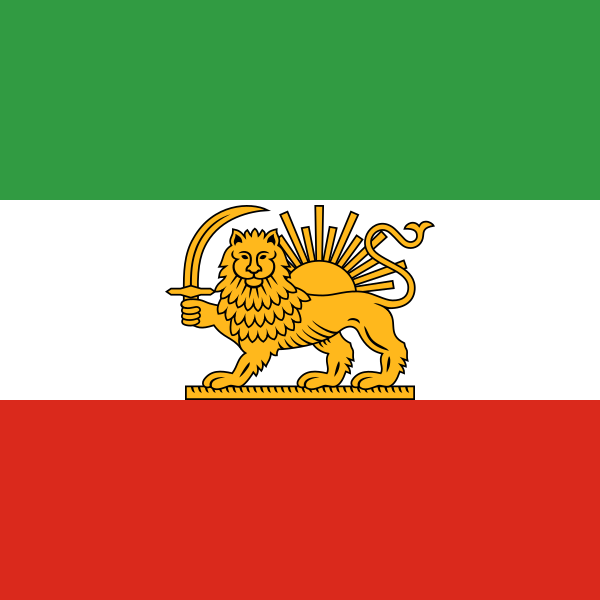 Irán
Referencias
- 1Mohammad Reza Shah Pahlavi | Biography & Factsbritannica.com
- 2Freedom for Iran: Learning From U.S. Support for Polish Anti-Communists in the 1980sfdd.org
- 3Some ‘Modernizer’fdd.org
- 4Iranian Military Doctrinewashingtoninstitute.org
- 5Iran 1978: Hindsight Is a Wonderful Thingwashingtoninstitute.org
- 6Richard Falk and Radical Islammeforum.org
- 7Gulf Sheikhdoms Have America in Their Futurewashingtoninstitute.org
- 8Discover the Networks: Mujahedin-e-Khalq (MEK)discoverthenetworks.org
- 9Mojtaba Khameneijewishvirtuallibrary.org
- 10Francophone fallout: Understanding narratives promoted by right-wing extremists in Quebec around the Israel-Hamas conflictisdglobal.org
- 11“Woman, Life, Freedom”: From Protest to Revolution?inss.org.il
- 12The Preeminent Challengefdd.org
- 13Pragmatic Theocracy: A Contradiction in Terms?washingtoninstitute.org
- 14Israel shifts to hyperlocal targeting in Iran as regime military power degrades (March 11-13 updates)fdd.org
- 15Sunday Evening - Jonathan Greenblatt Welcoming Crown Prince Reza Pahlaviadl.org
Los temas fuera de Oriente Medio enlazan a Encyclopaedia Britannica.