
این مطلب هنوز به زبان شما در دسترس نیست و به زبان انگلیسی نمایش داده میشود.
Overview
The Strait of Hormuz is the narrow maritime passage between the Persian Gulf and the Gulf of Oman, bordered by Iran and Oman. Situated in the Middle East, it is the principal sea route for oil and gas exports from the Gulf. Its importance extends beyond the states on its shores: interruptions affect shipping costs, energy markets, importers, and producers worldwide. An earlier estimate placed oil exports through Hormuz at about 17 million barrels per day, then roughly 40 percent of world oil exports. Other measures use different years and denominators: the strait carried about 30 percent of seaborne crude-oil trade in 2019, while roughly one-fifth of the world’s oil has been described as passing through it. These figures all establish the same geographic fact: substantial energy exports must cross a short, vulnerable passage.
Hormuz is also an import route. More than 90 percent of Iran’s annual seaborne trade, valued at $109.7 billion in one estimate, transits the strait, as do about 80 percent of its imports. Gulf exporters depend on the same passage to reach markets beyond the region. Bahrain, Kuwait, and Qatar have few practical land or sea alternatives when passage is disrupted. Saudi Arabia has land routes, and the United Arab Emirates has ports outside the strait, but those options could not match the export volumes required during the spring 2026 disruption. A threat to Hormuz therefore affects countries with differing policies and alliances, including Iran itself.
Geography
Hormuz connects the enclosed Persian Gulf with the Gulf of Oman and, beyond it, the Arabian Sea. Iran faces Oman across the passage. The Iranian port of Bandar Abbas lies near the strait; the Persian Gulf Star gas condensate refinery stands west of the city. Iran developed Jask on the Gulf of Oman coast as a forward naval base from which to monitor Hormuz. Jask also hosts an export terminal outside the strait. The Goreh pumping station sends oil from Iran’s southwestern fields toward both Jask and Kharg Island, the latter inside the Gulf. These facilities show why coastal infrastructure, shipping lanes, and the strait itself form a connected strategic system.
Routes outside Hormuz can reduce dependence on the passage but cannot remove every constraint. Oil traders have used ship-to-ship transfers in the Gulf of Oman to limit the number of tankers making a costly, dangerous transit. Iranian attacks also threaten that shuttle trade. On the southern side of the Gulf of Oman, access to Salalah and Duqm gives American forces overland routes toward the Gulf without requiring every movement to cross Hormuz. Arab Gulf states have sought stronger export and import networks, including investments near Bab-el-Mandeb. Those investments address a wider problem of maritime access, but they do not provide Bahrain, Kuwait, and Qatar with ready substitutes for the strait.
Modern history
Iranian threats to close or disrupt Hormuz span decades. Since the early 1980s, the Islamic Revolutionary Guard Corps Navy has conducted aggressive operations in the Persian Gulf and strait. Iranian naval planning has centered on closing the passage during war and attacking opposing forces inside the Gulf. In 2007, Ali Khamenei assigned the IRGC Navy responsibility for the Gulf and Hormuz while placing Iran’s regular navy in waters outside the Gulf. That division put the force most associated with small-boat operations and asymmetric attacks in charge of the chokepoint.
Iranian leaders repeatedly made access to Hormuz a subject of coercive warnings. Hassan Rouhani threatened to prevent neighboring countries from exporting oil through the strait. IRGC commander Mohammad Ali Jafari warned that either every country could use it or none could. In early January 2012, Iran completed one of its largest naval maneuvers east of Hormuz amid explicit threats to close the passage. Analysts doubted that Iran could maintain a complete seal for an extended period, but a sustained total closure is not the only serious risk. Mines, fast boats, missiles, drones, and threats against individual vessels can make passage dangerous enough for commercial operators to avoid it. Since 2011, the United States has reinforced its Gulf military presence alongside the United Kingdom and France to protect oil transport.
The rules governing passage have long been disputed. The 1958 Geneva Convention on the Territorial Sea and the Contiguous Zone supplied one framework for passage through territorial waters and international straits. The 1982 United Nations Convention on the Law of the Sea, or UNCLOS, introduced transit passage as a distinct rule for international straits and took precedence where its provisions differed from the 1958 convention when it entered into force in 1994. Innocent passage and transit passage are different legal concepts. The rule permitting temporary suspension of innocent passage in specified territorial waters does not extend to international straits.
Iran signed but did not ratify either convention and conditionally signed UNCLOS. Its 1993 maritime law permits innocent passage under conditions but omits transit passage through Hormuz and does not recognize the waterway as an international strait. Oman ratified UNCLOS. Both Iran and Oman require foreign warships to give prior notification before transiting; the United States rejects that requirement. These differences concern the authority coastal states may exercise over ships using an international route. They became more consequential when Iran later tried to select which vessels could pass and demand payment.
Security
The Iranian regime uses naval and aerial forces, coastal missiles, and proxy organizations to threaten shipping across the Persian Gulf, Hormuz, the Gulf of Oman, and the Red Sea. Its naval forces can conduct asymmetric raids even though their ability to sustain a total closure is limited. Iran tested the Hormuz-2 anti-ship ballistic missile near Jask and reported destroying a target 250 kilometers away; a missile launched from that coastal area can reach the strait and much of the Gulf of Oman. Oman has worked with the U.S. Navy to protect freedom of navigation while seeking to prevent incidents near its coast from escalating into wider conflict.
On February 3, 2026, Iranian fast-attack boats attempted to intercept a U.S.-flagged ship in Hormuz. On February 17, the regime announced a temporary closure. The strait remained physically open at that point, but commercial vessels began avoiding the area. This distinction matters: a closure announcement can interrupt trade without a continuous physical barrier. During a separate confrontation over Kharg Island, Iran declared the strait closed to U.S. and Israeli shipping but took no action to enforce that declaration. Later attacks and restrictions produced a far greater disruption.
During the 2026 Iran–Israel war, Iran attacked more than twenty ships in or near Hormuz in the opening weeks. On March 11, projectiles struck the Thai-flagged Mayuree Naree, the Japan-flagged ONE Majesty, and the Marshall Islands-flagged Star Gwyneth. The operator of Mayuree Naree reported three crew members missing. The same day, Iran’s unified military command threatened to stop oil passing through Hormuz for the benefit of the United States, Israel, or their partners. The regime subsequently imposed selective passage, permitting some countries to transit for a toll while denying others. It made a new legal regime for the strait one of its terms for ending the conflict.
Traffic through Hormuz suffered a 90 percent disruption at the peak of regional tension in spring 2026. After Iran blocked the passage, more than 2,000 ships remained trapped in the Persian Gulf. Gulf of Oman transfers became more important as traders tried to reduce exposure, though Iranian attacks also endangered that route. The disruption demonstrated how intimidation and intermittent attacks can impede an international waterway without a permanent line of ships or mines sealing it. It also exposed the limits of alternative pipelines and ports: available bypass capacity could not readily replace normal Gulf export volumes.
U.S. forces struck Iranian naval capabilities during the conflict. On March 10, they destroyed multiple Iranian vessels, including 16 minelayers near Hormuz. By the fourth week of fighting, U.S. forces had destroyed more than 130 Iranian naval vessels and 44 minelayers while attacking military sites along Iran’s coast and inside the Gulf. On March 13, U.S. forces struck military facilities on Kharg Island, including naval mine and missile storage, to reduce threats to shipping. President Donald Trump said he had ordered the island’s oil infrastructure spared, while warning that he could reconsider if Iran interfered with passage. Destroying military facilities and destroying the oil terminal were distinct possibilities; the March 13 operation targeted the former.
Kharg Island was a major point of pressure on Iran, but holding it with U.S. troops would have created a different military problem. Rockets and drones from the mainland could threaten a fixed garrison. Assigning Arleigh Burke-class destroyers to defend such a force would divert ships from missions around Hormuz. A naval blockade already constrained Iranian exports without requiring occupation of the island. On March 26, IRGC commander Alireza Tangsiri, who oversaw plans to block Hormuz, was killed in an airstrike at a Bandar Abbas base. These operations reduced Iranian capabilities but did not by themselves settle the rules or guarantees for future passage.
International responses widened in March. On March 19, leaders of the United Kingdom, France, Germany, Italy, the Netherlands, and Japan condemned attacks on vessels and energy infrastructure and declared readiness to help secure passage. On March 21, leaders of 22 countries, including the United Arab Emirates and Bahrain, condemned Iranian attacks on unarmed commercial ships and civilian energy facilities and the effective closure of Hormuz. They called on Iran to stop laying mines, launching drone and missile attacks, and otherwise obstructing commercial traffic. Their statement treated freedom of navigation and secure energy supply as shared international concerns. On March 23, Trump paused planned attacks on Iranian energy sites for five days while negotiations over reopening the strait continued.
Present day
On April 13, 2026, U.S. Central Command, or CENTCOM, began a blockade of maritime traffic entering and leaving Iranian ports. CENTCOM stated that vessels crossing Hormuz to or from ports in other countries were exempt and would not be impeded. The United States also announced Project Freedom to end Iran’s blockade while enforcing its own measures from the Gulf of Oman. The distinction between Iranian-port traffic and ships serving other countries was central to the U.S. operation, given the dependence of Gulf exporters on an open strait.
Iran’s attempt to administer selective passage continued to raise questions beyond immediate combat. On May 27, 2026, the United States sanctioned the Iranian-created Persian Gulf Strait Authority, a body linked to the IRGC that managed passage requests. In May, Oman’s ambassador assured the U.S. Treasury that Oman had no plans to charge tolls for passage. A later U.S.–Iran memorandum called for Iran and Oman to discuss future administration and maritime services in Hormuz. It left unanswered what would follow its initial 60-day framework and how uninterrupted, untaxed freedom of navigation would be guaranteed thereafter.
The strait’s security depends on more than the absence of a declared closure. Vessels need predictable passage without attacks, mines, selective approvals, or tolls imposed through military pressure. Iran’s demonstrated capacity to damage ships and discourage commercial traffic remains consequential even where its ability to sustain a complete closure is doubtful. For Oman and the Gulf exporters, future maritime arrangements must address safety near their coasts and access to world markets. For the wider economy, Hormuz remains a geographic chokepoint whose operation affects energy supply far beyond the Persian Gulf.
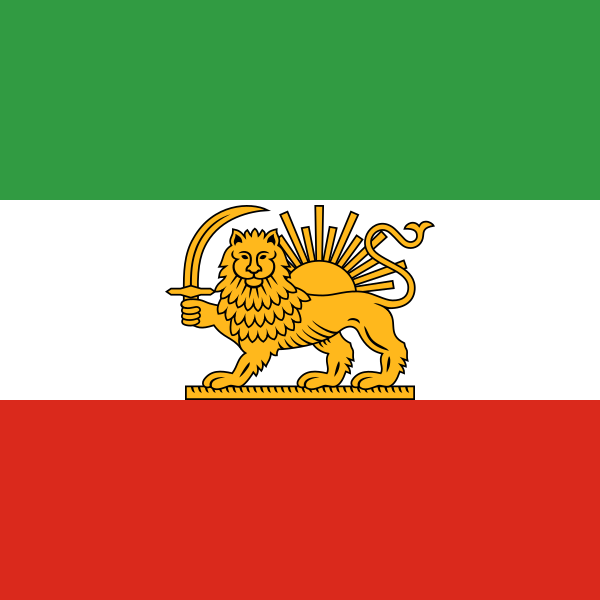 ایران
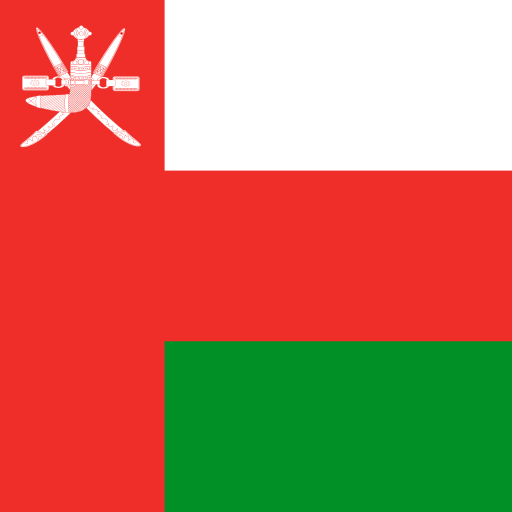 عمان
منابع
- 1Clarifying Freedom of Navigation in the Gulfwashingtoninstitute.org
- 2Iran's Posturing on the Strait of Hormuzwashingtoninstitute.org
- 3The Strait of Hormuz: Assessing and Neutralizing the Threatinss.org.il
- 4The Straits of Hormuz: Strategic Importance in Volatile Timesinss.org.il
- 5A Port Rush: Competition for Control of Trade Routesinss.org.il
- 6The U.S.-Israeli Joint War on Iran: “Operation Epic Fury” and “Operation Roaring Lion”jewishvirtuallibrary.org
- 73 Ships Struck by Projectiles Near Strait of Hormuzfdd.org
- 8Military Options for Reopening the Strait of Hormuz: Limitations and Imperativeswashingtoninstitute.org
- 9President Trump and Israel During His Second Term: Year Twojewishvirtuallibrary.org
- 10Joint Statement from European Leaders on the Strait of Hormuzjewishvirtuallibrary.org
- 11Joint Statement on the Strait of Hormuzjewishvirtuallibrary.org
- 12The Strait of Hormuz: The Military, Energy, and Economic Challengesfdd.org
- 13U.S. Blockading Ships Entering or Exiting Iranian Ports Along Strait of Hormuzfdd.org
- 14The MOU Is Only the Beginning: AJC Global Expert Perspectives on the U.S.-Iran Agreementajc.org
- 15Ceasefire Update: Extending the Pause, Maintaining the Pressureajc.org
موضوعات خارج از خاورمیانه به دانشنامه بریتانیکا پیوند داده میشوند.