
この記事はお使いの言語ではまだ利用できません。英語で表示されています。
Overview
The nuclear program of Iran comprises uranium enrichment, nuclear fuel production, reactor projects and related research. Its principal sites have included Natanz and Fordow, where uranium enrichment has been conducted; the nuclear complex at Isfahan, which converts uranium compounds and produces fuel; and the Arak heavy water reactor, whose original design raised concern about a route to plutonium. These facilities have civilian applications. Their significance also depends on Iran’s ability to produce weapons-usable material, the history of undeclared nuclear work and the separate effort to design a nuclear explosive device. Iran’s military nuclear-weapons program advanced along both material-production and device-development tracks.
Iran signed the Nuclear Non-Proliferation Treaty in 1968 and joined it as a non-nuclear-weapon state. It thereby undertook permanently to abstain from developing or acquiring nuclear weapons and to place nuclear material under International Atomic Energy Agency safeguards. The treaty permits peaceful nuclear activity subject to those obligations. Safeguards questions became acute after previously undisclosed facilities near Natanz and Arak became public in August 2002. An IAEA report of June 6, 2003, identified failures to report nuclear material, facilities and activities required under Iran’s safeguards agreement. Environmental samples at Natanz also showed traces of highly enriched uranium, prompting further inquiry into the history and purpose of enrichment work. [11]
Iran eventually mastered enrichment and accumulated uranium enriched to 3.5 percent. Further enrichment of such material could supply feedstock for nuclear explosive devices. Production at 20% represented a substantial additional step because much of the separative work needed to reach weapons-grade material had already been performed, although 20% uranium is distinct from the approximately 90% enrichment used for weapons-grade uranium. Enrichment capacity alone does not make a finished weapon: a usable device also requires further technical work. Before the 2015 nuclear agreement, American intelligence estimated a potential weapon-building interval of two to three months. Immediately before the June 2025 war, Iran’s nuclear-threshold status meant it could enrich uranium to weapons grade within about two weeks of a political decision. [6][15]
Founding and ideology
Iran’s nuclear activities began before the 1979 Iranian Revolution. During Ruhollah Khomeini’s rule, the regime revived the program in the mid-1980s amid setbacks in the Iran–Iraq War. Hassan Rouhani sought Chinese assistance in 1988 or 1989 for a 300-megawatt nuclear plant and an enrichment facility. In June 1989, he traveled to Moscow with Akbar Hashemi Rafsanjani to negotiate completion of the Bushehr plant and construction of an enrichment facility. China later committed to finishing a zirconium production plant at Isfahan in 1997 despite agreeing to limit further nuclear cooperation. The regime notified the IAEA of Isfahan’s Fuel Fabrication Laboratory in 1993 and supplied design information in 1998.
The program has served Iran’s stated aim of developing nuclear energy and maintaining an independent fuel cycle. Its strategic setting extends beyond electricity production. The regime’s deterrence approach came to rely on ballistic missiles, drones, proxy organizations and nuclear development. That setting made the potential combination of weapons-usable material, a device and delivery systems a central concern for Israel, the United States and Gulf states. At a Doha security conference, Gulf Cooperation Council Secretary-General Abdul Rahman al-Attiya identified Iran’s nuclear ambitions as a direct threat to Gulf states and NATO. Saudi leaders later described the proliferation risk in explicit terms: Mohammed bin Salman said in March 2018 that Saudi Arabia would pursue a bomb promptly if Iran developed one, and Foreign Minister Adel Al-Jubeir said that May that Saudi Arabia would match any nuclear capability Iran acquired. [13][15]
Public support inside Iran was substantial but sensitive to costs. A January 2006 poll found 85 percent support for resuming the nuclear program. Support fell to 74 percent if resumption led to referral to the UN Security Council, 64 percent if it brought economic sanctions and 56 percent if it brought military action. The figures distinguished support for nuclear development from willingness to bear escalating consequences. Sanctions and economic strain later helped shape Rouhani’s 2013 election and gave him and Supreme Leader Ali Khamenei an incentive to negotiate relief while retaining enrichment. [8]
History
The disclosure of Natanz and Arak in 2002 transformed international scrutiny of the program. In March 2003, the IAEA director general announced that Iran was building a uranium-enrichment facility. Natanz became the main enrichment plant and the focus of questions concerning undeclared activity and highly enriched uranium traces. On September 12, 2003, the IAEA Board of Governors called on Iran to declare enrichment-related imports, provide unrestricted access and resolve outstanding questions. On October 21, Iran promised the foreign ministers of Britain, France and Germany full cooperation with the IAEA, steps toward the Additional Protocol and a voluntary suspension of enrichment and processing. Those commitments began a prolonged cycle of inspections, negotiation, suspension disputes and renewed enrichment. [11]
A military dimension sharpened concern. Mohsen Fakhrizadeh directed the regime’s military nuclear-weapons effort. A document obtained by Mossad recorded his plan to announce the closure of Project Amad while continuing special activities as scientific knowledge development. The arrangement preserved knowledge and capabilities after the military program was frozen in 2003. In 2012, IAEA Director General Yukiya Amano warned that information concerning the program suggested nuclear-weapons development. Investigations found no concrete evidence that Khamenei had issued a binding religious decree prohibiting the production, stockpiling or use of nuclear weapons; such a prohibition therefore could not substitute for verification.
Iran resisted demands to suspend enrichment. Foreign Ministry spokesman Hassan Qashqavi declared in December 2008 that Iran would never suspend it. Iranian atomic-energy chief Ali Akbar Salehi said on July 7 during a later sanctions round that international sanctions could slow the program but could not stop it. Iran expanded centrifuge work and began producing uranium enriched to 20%. Its stockpile enriched to 3.5 percent could, after further enrichment, provide material for at least two nuclear explosive devices. Enrichment to 20% did not itself yield weapons-grade material, but it reduced the additional work needed to reach approximately 90%. [5]
Diplomacy widened from the three European states to the P5+1: China, France, Germany, Russia, Britain and the United States. A proposed first-step agreement in 2013 sought to freeze elements of Iran’s program for roughly six months while negotiations continued. The target date for a final agreement moved from July 20, 2013, to November 24, 2014, and then to July 1, 2015. On April 2, 2015, after eight days of intensive talks in Lausanne and about two years of negotiations, Iran and the P5+1 announced a framework for a final Joint Comprehensive Plan of Action (JCPOA). They concluded the agreement on July 14. Khamenei’s approval enabled an exchange of nuclear limits for sanctions relief; Rouhani celebrated international recognition of Iran’s nuclear program. His diplomacy sought relief while defending enrichment, and he later announced new centrifuge installation in 2019. [3][4]
The Lausanne framework called for Iran to reduce installed centrifuges, restrict enrichment to 3.67 percent for 15 years, reduce its low-enriched uranium stockpile and cease enrichment at Fordow for 15 years while converting that underground site into a research center. Fordow mattered strategically because its hardened, underground position made enrichment capacity there difficult to neutralize. The framework also addressed Arak’s heavy water reactor to limit plutonium production. It called for implementation of the IAEA Additional Protocol and regular access to nuclear facilities, suspected sites and the supply chain, expanding the information available about possible military dimensions. Most principal limits were designed to last 10 to 15 years, with some monitoring provisions lasting up to 25 years. The United States estimated that full implementation would extend Iran’s breakout time to at least one year. [4]
The JCPOA assigned the IAEA a monitoring and reporting role. Suspension of American and European nuclear-related sanctions depended on verification of specified Iranian actions, with a mechanism to restore sanctions after noncompliance. UN Security Council Resolution 2231 required an IAEA report to its Board of Governors and the Security Council following verification of those actions. The agreement constrained selected nuclear activities but left substantial infrastructure in place and did not cover Iran’s ballistic missile program or sponsorship of armed proxies. Benjamin Netanyahu warned that retained infrastructure and restrictions expiring after roughly a decade could leave Iran a path to weapons capability. In December 2016, after Washington extended the Iran Sanctions Act, Rouhani ordered research and development on nuclear propulsion for Iranian vessels. Under a separate 2016 arrangement, Oman stored Iranian-produced heavy water exceeding the nuclear deal’s permitted amount. [4][14]
Structure and leadership
Iran’s nuclear program is distributed across facilities and state institutions rather than housed in a single plant. Natanz’s enrichment cascades made it central to uranium production. Fordow provided a second enrichment site in a fortified underground setting. Isfahan’s Nuclear Technology Center handled conversion of uranium compounds for enrichment and uranium-metal production; its fuel-related facilities also supported reactor work. Arak’s heavy water reactor represented a possible plutonium route under its original design. These functions explain why restrictions focused on centrifuges, uranium stocks, reactor design and access to the supply chain together. The program’s military weapons effort also required expertise in device design, which Fakhrizadeh led and sought to preserve after Project Amad’s announced closure.
Political decisions rested with Iran’s senior leadership. Khamenei authorized the 2015 agreement, while President Rouhani negotiated sanctions relief and defended continued enrichment. President Masoud Pezeshkian later favored a settlement with Western governments to ease sanctions and address Iran’s economic crisis. Operational responsibility and scientific expertise remained spread across the state nuclear establishment, allowing activity at conversion, enrichment and research sites to continue even when one facility faced restrictions or damage.
Funding and sponsors
The Iranian state funded and sustained the program, including plants, research, fuel-cycle work and procurement. Foreign cooperation contributed to particular projects: Rouhani sought Chinese and Russian assistance in the late 1980s, Russia became involved in completing Bushehr, and China committed to the zirconium plant at Isfahan. International sanctions later sought to restrict finance, procurement and commercial relationships that could support sensitive nuclear work. From 2006, the United States and European Union led efforts to impose increasingly severe sanctions. UN Security Council Resolution 1737 established international sanctions in December 2006; Resolution 1747 of March 2007 identified both the Esfahan Nuclear Fuel Research and Production Center and the Esfahan Nuclear Technology Center. [2][14]
American lawmakers also pursued restrictions on firms dealing with Iran’s nuclear sector. A 2007 House bill sought to prohibit nuclear dealings with entities trading with that sector and to close sanctions-evasion routes through foreign subsidiaries. Sanctions became a principal bargaining instrument in negotiations leading to the JCPOA, which tied nuclear-related relief to verified Iranian measures. After the agreement, temporary American waivers for selected nuclear activities formed part of the continuing debate over which work should remain permissible and which could preserve capabilities relevant to a weapon. Economic pressure strengthened the incentive for Rouhani and Khamenei to seek an agreement, while the regime continued to defend an enrichment program. [2][14]
Attacks and operations
The program has been a target of intelligence and military operations. Unit 8200 and the United States National Security Agency were identified as participants in the reported 2009–2010 Stuxnet operation against centrifuges at Natanz. Israeli security officials continued to consider military options as enrichment expanded. Ehud Barak favored Yoav Gallant for chief of staff partly because he expected support for an attack on nuclear facilities. In August 2021, Prime Minister Naftali Bennett met President Joe Biden to discuss preventing an Iranian nuclear weapon; Bennett later announced a joint national security team for that purpose. During Biden’s 2022 visit to Israel, Yair Lapid argued that credible force was needed, while Eyal Zamir supported action including a strike inside Iran. [13]
In June 2025, Israel launched Operation Rising Lion against the regime’s nuclear program, ballistic missile capability and air-defense systems. Zamir identified the degradation of nuclear capability and infrastructure as central to removing an existential threat to Israel. Israeli strikes severely damaged Natanz, Fordow, Isfahan and the Arak heavy water reactor before the American operation. Natanz, Iran’s main enrichment plant, was severely damaged; approximately 15,000 first-generation and advanced centrifuges were reportedly destroyed. At Isfahan, strikes damaged four structures, including a chemical laboratory, uranium conversion facility and fuel-production plant. Severe damage to the wider Isfahan Nuclear Technology Center impaired conversion work and uranium-metal production. [6]
The 2025 United States strikes on Iranian nuclear sites hit three major facilities. President Donald Trump described the immediate result as having “obliterated” the nuclear program. A leaked Defense Intelligence Agency assessment instead estimated a setback of months rather than years and suggested that much of Iran’s enriched uranium stockpile had been moved before the strikes. CIA Director John Ratcliffe cited newer intelligence indicating much more severe damage. These assessments concerned different evidence and time frames; none supplied a definitive measure of damage to every component of the program. Iran launched missiles at al-Udeid Air Base after the American strikes, while attacks on American and Iraqi bases in Iraq were reported as the June 24 ceasefire approached. The ceasefire ended the twelve-day confrontation without settling nuclear, missile or proxy questions. [6][9]
Designations and international status
Iran’s treaty and safeguards obligations form the legal basis for international scrutiny. The 2003 IAEA findings concerned failures to declare material, facilities and activities; they did not disappear because some nuclear work had civilian uses. Security Council sanctions beginning with Resolution 1737 responded to unresolved nuclear concerns, while Resolution 1747 named facilities at Isfahan. The JCPOA and Resolution 2231 subsequently established a framework for verified nuclear limits, sanctions relief and IAEA reporting. Britain, France and Germany later triggered the mechanism to reinstate UN sanctions on the Iranian regime for the first time in a decade. The IAEA’s central task remained monitoring and reporting nuclear-related actions, including access needed to investigate undeclared work. [4][11]
American law imposed a separate review process. The Iran Nuclear Agreement Review Act of 2015 requires the president to submit an agreement concerning Iran’s nuclear program to Congress within five days and restricts statutory sanctions relief during the subsequent review period. Questions about its application returned after the June 2026 memorandum. The memorandum’s status under United States law and its implementation became matters of legal debate, distinct from the nuclear commitments Iran made in its text. [1][10]
Current status
Operation Rising Lion removed Iran’s immediate nuclear-threshold capability. An assessment published after the war estimated that regaining its former threshold position would take at least one to two years if the leadership chose to pursue nuclear weapons. The Israeli and American strikes severely damaged the three principal facilities associated with uranium enrichment, but Iran retained knowledge, personnel and residual capabilities that could support rebuilding or a covert breakout. The extent of its enriched uranium holdings after the strikes remained consequential. As nuclear diplomacy resumed, Iran’s parliament fast-tracked legislation to suspend cooperation with the IAEA, increasing the importance of inspection access and credible accounting of nuclear material. [6]
On June 17, 2026, President Trump and President Pezeshkian signed a memorandum of understanding. Iran reaffirmed that it would neither develop nor acquire nuclear weapons, agreed to maintain the nuclear program’s status quo pending a final deal, and accepted a framework for addressing its enriched-material stockpile. The text contemplated on-site down-blending under IAEA supervision. Its nuclear pledges did not themselves provide a detailed inspection regime. Israel neither signed the memorandum nor consented to its terms and therefore acquired no legal obligations from references to allies in the document. [1]
The memorandum revived disputes over sanctions and congressional review. It was transmitted to Congress on June 18, and a Treasury license issued on June 22 paused sanctions on Iranian petroleum. Legal analysts argued that immediate relief conflicted with the review period required by the Iran Nuclear Agreement Review Act. Iran’s future nuclear capability depends on the disposition of enriched material, access for inspectors, the fate of damaged facilities and decisions by its leadership. Its missile arsenal and support for armed groups remain separate regional security concerns outside the original JCPOA’s nuclear limits. [1][10][12]
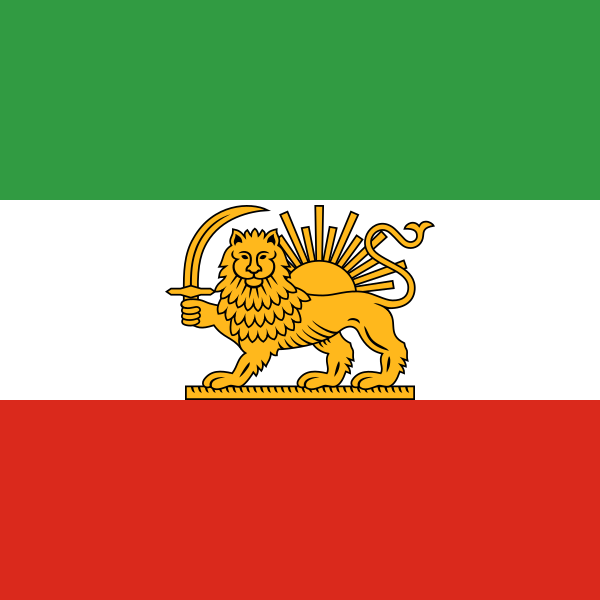 イラン
参考文献
- 1Five Key Legal Questions About the June 2026 U.S.-Iran Memorandum of Understandingfdd.org
- 2Congress & the Middle East: Iran Counter-Proliferation Act of 2007jewishvirtuallibrary.org
- 3Kicking the Can Down the Road: Another Extension of the P5+1 Talksinss.org.il
- 4The Framework Deal with Iran: The Detailsadl.org
- 5Iran: The Course is Almost Runinss.org.il
- 6Between A Nuclear Agreement and Active Containment: Israel and Iran’s Nuclear Program after the Warinss.org.il
- 7Israeli Public Opinion Polls: Attitudes Toward Iranjewishvirtuallibrary.org
- 8Iranian Public Opinion on the Nuclear Programwashingtoninstitute.org
- 9Iraqi military bases targeted in overnight strikesfdd.org
- 10Why Hasn’t the Trump Administration Complied with the Law on Reporting Iran Agreements to Congress?fdd.org
- 11Congress & the Middle East: Senate Resolution Expressing Concern Over Iran's Nuclear Weapons Programjewishvirtuallibrary.org
- 12Iranterrorism-info.org.il
- 13Deterring and Containing Iran: A Near-Inevitable Taskwashingtoninstitute.org
- 14Renewing the Iran Sanctions Waivers (Part 1): Nuclear Activitieswashingtoninstitute.org
- 15Here’s Why the U.S. Is No Longer the World’s Only Superpowerwashingtoninstitute.org
中東地域以外のトピックは Encyclopaedia Britannica へリンクしています。