
Ten artykuł nie jest jeszcze dostępny w Twoim języku. Wyświetlana jest wersja angielska.
Overview
The Quds Force is the external operations arm of the Islamic Revolutionary Guard Corps (IRGC), the military institution that advances the Iranian regime’s interests at home and abroad. Its work joins intelligence collection, covert operations, military advice, training, arms transfers and political influence. The force also uses diplomatic and economic channels to sustain operations. It has cultivated armed organizations across the Middle East while maintaining direct personnel and command relationships in countries including Iraq, Syria and Lebanon. Its formal status as a state military branch coexists with its role in organizing terrorist operations abroad.[1][3][9]
Under Qasem Soleimani, the Quds Force became the center of a regional network serving the Iranian regime. Soleimani reported directly to Supreme Leader Ali Khamenei and relied on personal ties with commanders and political leaders as well as the force’s formal hierarchy. The network included Hezbollah, its principal overseas terrorist proxy; Iraqi militias; armed groups fighting for Bashar al-Assad in Syria; Hamas and Islamic Jihad in Gaza; and ties to the Houthis in Yemen. The Quds Force supplied these relationships with money, weapons, training, intelligence and military advice.[1][3][7][9][10]
The force has also conducted or directed attacks beyond conventional battlefields. United States authorities designated it for terrorism in 2007 and included it in the 2019 Foreign Terrorist Organization designation of the broader IRGC. Its operations have brought it into direct conflict with Israel and the United States, including through rocket fire from Syria, attacks by Iraqi militias and plots against diplomats and civilians overseas.[2][3][10][12]
Founding and ideology
The Quds Force emerged within the Revolutionary Guards during the 1980s as a specialized instrument for activity outside Iran. The IRGC’s broader mission combines military power with protection and projection of the Islamic Republic’s governing system. Within that institution, the Quds Force developed capabilities for operating through local partners and for placing its own personnel abroad. Its title refers to Jerusalem, but its operational reach extends well beyond Israel’s borders. It has worked with organizations and officials across the Middle East and pursued targets in other regions.[1][9][14]
The force advances the Iranian regime’s state project through armed groups, military deployments and political influence. Its commanders have supported organizations with different local agendas when those relationships served Tehran’s regional aims. This approach gives the regime options for pressure and attack while allowing it to work through partners rather than rely solely on uniformed Iranian forces. The Quds Force’s responsibilities consequently cross the boundaries between espionage, warfare, diplomacy and finance. In Iraq, its work has included militia support, pressure on politicians and coordination with economic fronts; in Syria, it helped keep Assad’s regime in power and built capabilities directed against Israel.[3][6][12]
Hezbollah became the force’s main overseas proxy for terrorist missions. The relationship gave the Quds Force an established organization with military and clandestine capabilities in Lebanon and beyond. Over time, Revolutionary Guards operations expanded from support for Hezbollah attacks to plans involving Quds Force operatives themselves. That expansion matters to the force’s history: it was neither solely an advisory body nor merely a channel for funding other organizations. It could recruit, direct and deploy personnel for attacks in its own right.[1][8]
History
Soleimani commanded the Quds Force from late 1997 or early 1998 until his death in January 2020. During those decades, he built a network of armed groups and individual commanders whose objectives and budgets did not always fit neatly within the force’s formal ranks. His personal relationships helped coordinate otherwise separate actors and made many of their leaders dependent on his access to the Iranian regime’s leadership. As the force’s commander, he reported directly to Khamenei, giving its regional operations a direct route to the regime’s highest authority.[3][7]
The Iraq War gave the Quds Force a major arena for influence. It supported predominantly Shiite militias and worked through Iraqi political and religious networks. The force directed Kata’ib Hezbollah while Abu Mahdi al-Muhandis led it, and it backed Asa’ib Ahl al-Haq. In the 2007 Karbala raid, attackers sought to abduct Americans for an exchange involving detained Quds Force members. The operation killed five Americans, including four executed while bound and blindfolded. The Quds Force’s Iraqi role extended beyond violence: it pressed politicians toward alliances favorable to Tehran and used the Iranian embassy in Baghdad as an important operations hub.[3][14]
When Iraqi forces collapsed before the Islamic State in 2014, the Iranian regime sent Quds Force commanders and weapons into Iraq. Revolutionary Guards-backed militias subsequently joined and came to dominate the Popular Mobilization Forces. Soleimani appeared near Fallujah during the 2016 campaign. The force’s political reach also grew: in 2017, the regime named senior Soleimani adviser Iraj Masjedi ambassador to Iraq, replacing another Quds Force officer, Hassan Danaeifar. After the 2017 Kurdistan Region independence referendum, Soleimani helped broker an agreement between leaders of the Patriotic Union of Kurdistan and Baghdad that preceded the withdrawal of Peshmerga forces from Kirkuk.[3][14]
In the Syrian civil war, the Quds Force committed personnel, weapons and allied militias to sustain Bashar al-Assad. From 2011, the Iranian regime deployed approximately 3,000 Quds Force personnel to Syria and financed thousands of Hezbollah and other foreign fighters. In 2013, the force armed, trained and funded Liwa Fatemiyoun fighters deployed in support of Assad. It also sponsored Liwa Zainabiyoun. These forces served the regime’s effort to keep Assad in power while building military infrastructure able to threaten Israel.[9][10][12]
From February 2015, Syrian army forces, the Quds Force and Hezbollah fought rebel forces around Daraa, Quneitra and Damascus. The Daraa front mattered to Israel because armed factions, former regime weapons and Iranian-backed formations operated near its northern approaches. A January 18, 2015 strike near Quneitra killed Hezbollah members, including Jihad Mughniyeh, and senior Quds Force officer Mohammad Ali Allah-Dadi. The strike occurred near the Golan Heights, part of the State of Israel and of the historic region of Bashan, most of which lies in Syria and is today occupied by Syria. In 2015, IRGC commander Hossein Salami acknowledged Quds Force advice and management support for the Syrian army even while denying a direct Iranian combat presence.[12][15]
The Quds Force’s Syria campaign became a central front of the Iran–Israel proxy conflict. On May 9, 2018, its units in Syria fired 20 rockets at Israel. Israel struck dozens of Quds Force military targets in response. In August 2019, the Israel Defense Forces foiled a drone attack directly commanded by Soleimani. The following month, militias under direct Quds Force command fired rockets toward Israel from Syria; the rockets fell short. Israeli strikes against senior Hezbollah and Quds Force figures in Lebanon and Syria later weakened their capacity to aid Assad’s army during his regime’s final crisis.[6][12]
Structure and leadership
The Quds Force operates as an IRGC branch, but its work depends on relationships that cross military, intelligence and diplomatic institutions. It trains and equips armed partners, gathers intelligence, manages clandestine cells and cultivates officials in target countries. A council on which deputy commander Esmail Qaani served discussed operations, budgets, military industries and policy. In Iraq, the appointment of Quds Force officers as ambassadors showed how the regime joined formal diplomacy to the force’s political and military work.[3][7][9]
Soleimani’s command was unusually personal. He traveled to meet regional contacts and worked directly with leaders of armed organizations, while Qaani handled much of the force’s internal administration. Soleimani’s connections gave him authority that could not be transferred by appointment alone. Many proxy leaders had little prior contact with Qaani. After Soleimani’s death, Qaani’s more formal approach to meetings cooled some relationships, and members of the force’s Unit 400 competed with him for influence among leaders close to the regime. His limited field knowledge and concern for his safety also changed how he exercised command.[4][7]
On January 3, 2020, Khamenei appointed Qaani commander after a United States strike killed Soleimani in Baghdad. Khamenei instructed him to continue the same approach. Muhammad Hussein-Zada Hejazi, who had led the Quds Force’s Lebanon Corps and overseen efforts to improve the precision of Hezbollah’s missiles, became deputy commander. The organization retained experienced officers and established partnerships. Leadership changed, but its regional mission and capacity to work through armed groups continued.[4][7]
Funding and sponsors
The Quds Force is sponsored by the Iranian regime through the Revolutionary Guards. It distributes funds, weapons, training and military advice to partner organizations and uses intelligence and logistical networks to support them. Its responsibilities also have economic and diplomatic dimensions. In Iraq, Quds Force activities have included coordination with front companies and pressure on political figures, alongside direction of armed factions. These channels allowed the regime to combine material support with influence over decisions made by local leaders.[3][9][14]
The force’s support for Hezbollah has included work on its missile capabilities. It armed, trained and funded Liwa Fatemiyoun for deployment in Syria, where the brigade served Assad’s regime. In Gaza, the Quds Force armed, funded and trained Hamas and Islamic Jihad, both terrorist organizations. Under Soleimani’s orders, the regime sent millions of dollars to Hamas’s Al-Qassam Brigades in 2015. Communications recovered during an Israeli operation recorded exchanges between Yahya Sinwar and Quds Force commander Saeed Izadi. Under Plan Tufan 1, Izadi facilitated approximately $21 million in weapons transfers to Hamas; the communications also described preparations for a further $25 million transfer under Tufan 2.[9][10][11]
The same model linked the force to armed groups elsewhere. The Quds Force maintained ties to the Houthis in Yemen, where personnel of the Iranian regime, including Quds Force members, operated on the ground while Houthi attacks impeded shipping through the Bab-el-Mandeb. In Iraq, its backing helped militias accumulate influence inside the Popular Mobilization Forces. Local organizations retained their own leaders and interests, but the force’s supply, guidance and access to Tehran gave it substantial power over their operations.[9][10]
Attacks and operations
The Quds Force has used both proxies and its own operatives for attacks abroad. In 2009, its agents supplied logistical support to a Hezbollah bombing plot in Turkey against Israeli targets. United States officials also linked Soleimani and the force to attacks that killed hundreds of American and coalition service members and injured thousands more. Kata’ib Hezbollah leaders consulted Soleimani before attacks on American bases in remote parts of Iraq. In 2018, United States officials attributed rocket fire at their consulate in Basra to militia forces acting for the Quds Force under his command.[4][8][11]
On October 11, 2011, United States authorities announced that they had foiled a plot to murder Saudi ambassador Adel al-Jubeir on American soil. Manssor Arbabsiar, a dual United States–Iranian citizen, worked with Quds Force operative Gholam Shakuri. Arbabsiar sought to hire an assassin who was, in fact, an informant for the United States Drug Enforcement Administration. Authorities arrested Arbabsiar in New York and charged both men in connection with the planned murder. The United States designated Soleimani a specially designated global terrorist that day because, as Quds Force commander, he oversaw officers involved in the plot.[2][8]
The force’s direct threat to Israel was evident in Syria. Its May 2018 rocket attack and the August 2019 drone operation formed part of a wider effort to build attack capabilities near Israel. Its partners also pursued Israeli targets beyond the region. From 2021 through 2022, approximately 13 Iranian attempted attacks against Israeli-associated targets were reported across several continents. Quds Force units and the regime’s Ministry of Intelligence recruited Iranian and local operatives for this campaign. In April 2022, Mossad exposed Quds Force plans to kill an Israeli consular worker in Istanbul, an American general in Germany and a journalist in France.[12][16]
Quds Force activity has continued after Soleimani. In October 2025, Mossad exposed details of a global attack network directed by the force and aimed at Jewish and Israeli sites. In November, Mexican security services foiled a Quds Force plot to assassinate Israel’s ambassador to Mexico. These episodes followed the force’s established pattern of combining overseas recruitment, intelligence gathering and operational support with efforts to strike targets far from Iran.[16]
Designations and international status
In 2007, the United States Treasury designated the Quds Force and Soleimani for terrorism under Executive Order 13224. The action addressed the force’s role in supporting terrorist organizations and operations abroad. In April 2019, the United States designated the entire Islamic Revolutionary Guard Corps, including the Quds Force, as a Foreign Terrorist Organization. The designation applies to the broader state military institution as well as its external operations branch.[3][10][11]
The Quds Force’s status has prompted debate because it is an official arm of a state rather than an independent nonstate organization. That institutional position does not remove its record of covert attacks, support for terrorist proxies or direct operational planning. Its relationships with Hezbollah, Hamas and Islamic Jihad, and the 2011 plot against al-Jubeir, illustrate why the United States treated the force’s conduct as terrorism. Other governments have designated the IRGC or its Quds Force branch as a terrorist organization.[1][2][9][10]
United States action against Soleimani culminated on January 3, 2020, when President Donald Trump ordered the strike that killed him. Soleimani had directed a force responsible for American deaths and was developing further attacks on United States personnel. The strike removed its longtime commander but did not dismantle the Quds Force or end the threat posed by its established network. Experienced deputies, organizational resources and armed partners remained in place.[4][7][13]
Current status
Under Qaani, the Quds Force continued to pursue the Iranian regime’s regional mission, though its command became less dependent on the personal relationships that defined Soleimani’s tenure. Qaani met armed-group leaders and intervened in Iraqi political negotiations. After Iraq’s 2021 election, he joined talks aimed at forming a coalition aligned with Tehran’s interests. He later traveled to Baghdad to contain opposition to Prime Minister Mohammed Shia’ al-Sudani within the Coordination Framework. His activity showed continuing political reach despite weaker ties to some of Soleimani’s former contacts.[4][7]
The force also remained engaged in military and clandestine operations. Qaani praised the regime’s March 2022 strike on Erbil while portraying it as an attack on an Israeli base. Iraqi factions backed by the regime continued to matter after the deaths of Soleimani and al-Muhandis: Kata’ib Hezbollah remained central to attacks on American forces even as the Quds Force expanded its work with other factions. In Syria, the loss of senior Hezbollah and Quds Force figures reduced the network’s ability to support Assad during his final crisis, but it did not erase the force’s personnel, expertise or overseas relationships.[4][6]
The Quds Force remains a principal mechanism through which the Iranian regime projects power abroad. Its activities span state diplomacy, militia organization, arms supply, intelligence work and terrorist operations. Its network links conflicts in Iraq, Syria, Gaza and Yemen to attempts against Israeli, Jewish and American targets overseas. Soleimani’s death changed the force’s leadership and internal balance; the regional system he helped build continued under Qaani.[4][6][9][16]
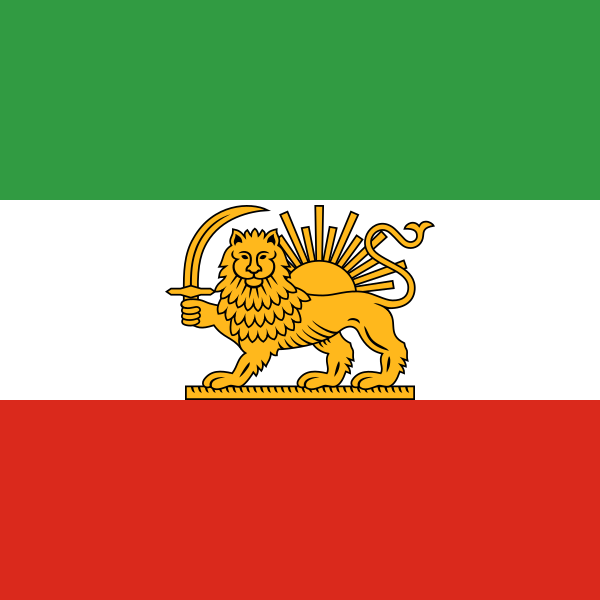 Iran
Bibliografia
- 1The Quds Force, an elite unit of the Iranian Revolutionary Guards, spearheads Iran's global terrorist campaignterrorism-info.org.il
- 2The United States foiled an Iranian plot to assassinate the Saudi ambassador in Washington using Quds Force, a Revolutionary Guards elite unit, the main instrument for subversion and terrorism outside of Iranterrorism-info.org.il
- 3Iran Taps Quds Force Official as Envoy to Iraqfdd.org
- 4Iran Retains Its Ability to Launch Terror Attacks Despite Assassinationwashingtoninstitute.org
- 5Israel Thwarts IRGC Quds Force Plotfdd.org
- 6The Response to the Iranian Proxy War: Jerusalem’s Power vs. the Quds Forceinss.org.il
- 7The New Iranian General to Watchwashingtoninstitute.org
- 8Why Iran Wants to Attack the United Stateswashingtoninstitute.org
- 9Putting the Revolutionary Guard on the EU List of Terrorist Organizationsinss.org.il
- 10What is Iran’s Islamic Revolutionary Guard Corps and Why is it Designated a Terror Group by the US, EU?ajc.org
- 11Iran’s Sponsorship of Terrorjewishvirtuallibrary.org
- 12Response to Claim 23: Israel engages in military aggression against Syria and Lebanonunwatch.org
- 13Military Threats to Israel: Iranjewishvirtuallibrary.org
- 14Fighting Iran in Iraqwashingtoninstitute.org
- 15Claim 23: Israel engages in military aggression against Syria and Lebanon Archivesunwatch.org
- 16Increased Iranian Terrorist Activities: Emphasis on Israeli and Jewish Targetsinss.org.il
Tematy spoza obszaru Bliskiego Wschodu odsyłają do Encyclopaedia Britannica.