
Этот материал пока недоступен на вашем языке и отображается на английском.
Overview
Persians are an ethnic people rooted in the ancient Persian homeland of southwestern Iran. Their history extends from the Achaemenid Empire of Cyrus the Great through later Iranian dynasties, the seventh-century Islamic conquest, and the development of classical Persian literature. Persian identity is ethnic and cultural as well as linguistic. It does not encompass every citizen of Iran, every speaker of Persian, or every community shaped by Persian civilization. Iran also contains large Turkish, Kurdish, Arab, Baluch, Turkmen, and other populations with distinct languages and histories.
Persians are Iran’s largest ethnic group but comprise less than half of its population. They dominate much of central Iran, while non-Persian peoples form overwhelming majorities in most border provinces. More than 40 percent of the country’s population lacks fluency in Persian. These patterns make the distinction between Persia as a historical cultural homeland and Iran as a multiethnic state essential. Persian culture has had a broad reach, but that reach does not erase the identities of Iran’s other peoples.
Persians also live beyond their ancestral center. The imperial history of Mesopotamia placed Persian rulers, administrators, soldiers, and communities near other peoples for centuries. In modern Iran, Persian speakers form the majority of Tehran’s population, although the capital itself is multiethnic and approximately half its residents are non-Persian. Iranian migrants and their descendants have carried Persian language and culture abroad, including to Israel. Most of Sderot’s first residents were Kurdish and Persian refugees.
Origins
The Persians emerged as a recognizable people in the ancient Near East long before the state now called Iran existed. Assyrian records first mention them around 640 BCE. Their homeland corresponded roughly to the later province of Fars in southwestern Iran, where Persepolis would become an important imperial center. Persian tradition places them under Median rule during the second quarter of the seventh century BCE. Median influence left marks on central Persian political language, including a word for king and the name Pārsa.
Persian identity developed through contact with neighboring peoples as well as through political independence. Elamite culture influenced the Persians in their homeland. Centuries later, Persian officials still kept treasury accounts at Persepolis in Elamite: records in that language remained in use as late as 459 BCE. This administrative practice illustrates how Persian imperial government drew on established regional institutions. The eventual rise of Persian kings did not require every subject or official to speak Persian, nor did it replace older languages overnight.
Cyrus II, later known as Cyrus the Great, became king of Persia around 560 BCE. He rebelled against Astyages, the last Median king, ending Persian dependence on the Medes. In 550 BCE, the Median army revolted and handed Astyages over to Cyrus. Cyrus took the Median capital, Ecbatana, and became ruler of Media. His accession transformed a comparatively small Persian kingdom into the ruling power of a much larger state. The conquest also gave Cyrus control of Median resources and a political position from which to challenge other major kingdoms.
Cyrus subsequently conquered Lydia in Asia Minor and Babylon in 539 BCE. Within roughly 30 years of his becoming king, his empire had replaced the Babylonian Empire. Persia’s rapid ascent therefore joined three histories: the emergence of the Persians as a distinct people, their succession to Median power in 550 BCE, and their assumption of rule over Babylon and its territories. The resulting Achaemenid Empire was far larger and more diverse than the Persian homeland from which its rulers came.
History
Persian conquest of Babylon brought Judea under Achaemenid rule. Cyrus permitted Jewish exiles to return to their homeland and rebuild their religious life. During the next 150 years of Persian rule, Jews rebuilt Jerusalem and developed Judea. The Second Temple was completed in 516 BCE. These events made Persian rule a consequential period in Jewish history: the return from exile and restoration of worship in Jerusalem took place within an empire governed by Persian kings.
Persian rulers resisted Jewish efforts to restore a monarchy in Judea but allowed substantial local autonomy under the High Priest. The Sanhedrin, Jewish courts, and popular assemblies checked his power. This arrangement kept ultimate imperial authority with Persia while permitting Jewish communal institutions to govern important aspects of local life. It also distinguished the restoration of Judea’s religious and civic life from restoration of an independent Davidic kingship.
The empire administered a vast range of peoples and territories. Official Aramaic served as a language of Persian administration and as a common language across much of the Near East. Elamite remained in use in records from Persepolis, while Greek silver circulated as money in the empire and was followed by imitations in the fourth century BCE. Such practices reveal an imperial system that used languages, institutions, and goods from several regions. Persian political control and Persian ethnic identity were related, but they were never identical.
Under Darius I and Xerxes I, the Achaemenids attempted to extend their power into Greece. Darius I failed to conquer Greece in 490 BCE, and Xerxes I failed in 480–479 BCE. Between 479 and 469 BCE, Athens and its allies took the Aegean coast of Asia Minor and the Aegean islands from Persian control. They also supported an Egyptian revolt against Persia from 459 to 454 BCE. The Peloponnesian War between Athens and Sparta later gave Persia an opportunity to recover territorial losses. Greek mercenaries became an essential part of Persian armies, another example of the practical exchanges that accompanied rivalry between the two powers.
The Achaemenid Empire fell to Alexander the Great in the fourth century BCE, but Persian political and cultural history continued. Later Iranian dynasties ruled territories that had formed part of the earlier empire. The Sasanian dynasty, which rose in the third century CE, established another major Persian imperial state. It governed a large region of western Asia and contended for power with Rome and then Byzantium. Its court, administration, and religious institutions became central to the history of pre-Islamic Iran.
The Sasanian state fell during the seventh-century Islamic conquest. That political rupture ended the last great pre-Islamic Persian empire, but it did not end Persian language or identity. Persian-speaking communities remained in their homeland, and Persian culture continued to develop under new rulers. The distinction matters across the full historical sequence: the fall of one dynasty, even one with a powerful claim to Persian imperial heritage, did not amount to the disappearance of the people whose history preceded it.
Persian rule also shaped the long history of Jews in Mesopotamia. Jews and Persians lived near one another there for more than 12 centuries. For nearly all of that period, an Iranian dynasty governed Mesopotamia as an imperial province. Jewish communities also spread from Babylonian centers into Persian cities. Their proximity produced a sustained history of contact that extended well beyond the reign of Cyrus and connected the lives of Jewish communities to successive Iranian states.
Persecution and survival
The survival of Persian culture through conquest did not mean that every older institution retained its former position. The seventh-century Islamic conquest ended Sasanian independence and changed the religious and political order of Iran. Zoroastrianism, a major part of Iran’s pre-Islamic heritage, ceased to hold its earlier imperial place. Zoroastrian communities nevertheless survived in Iran, and their sacred writings, practices, and historical memory continued to be preserved. Persian language and literature likewise endured and developed through the centuries that followed.
Jewish experience under Persian and later Iranian rule varied by period. Cyrus’s decision to permit exiles to return to Judea stands at one end of that history. Under the Sasanian dynasty, Jewish communities grew across Persia but also faced intermittent oppression and persecution. The Islamic conquest again altered their legal and social position. These histories belong to the wider setting in which Persians and Jews lived alongside one another; they should not be collapsed into a single account of unbroken tolerance or unbroken hostility.
In modern Iran, repression of non-Persian languages presents a different question from the survival of Persian culture. State schools educate minority children in Persian while restricting their ability to speak or study their native languages. The Islamic Republic’s elementary education department proposed assessing preschool children’s Persian proficiency as part of a health screening program. Such policies place the weight of state institutions behind one language in a country where many children grow up speaking another. They are policies of the regime, not a definition of Persian ethnicity or an expression of every Persian person’s views.
Religion and culture
Zoroastrianism is an enduring part of Iran’s pre-Islamic heritage. Zoroastrians in Iran were mainly ethnic Persians, although neither Persian identity nor Iran’s religious history can be reduced to a single faith. The Avesta, the collection of Zoroastrian sacred texts, remained an object of study long after the religion lost its former place in imperial government. In the modern era, Persian scholar Ibrahim Pourdavoud studied pre-Islamic Iranian history, Zoroastrianism, and Zoroastrian culture. He translated the Avesta into Persian and provided explanatory commentary. A chair named for him honors that scholarly work.
Persian became a durable vehicle for cultural expression across changes of dynasty and religion. Its literary tradition links later generations to a language of poetry, learning, and historical memory. Classical writers gave Persian culture an influence well beyond Iran. Saadi’s poetry, for example, reached nineteenth-century American readers. Ralph Waldo Emerson encountered and translated Saadi, while other American writers of the period were familiar with classical Persian literature. This reception shows how works written within a Persian tradition entered conversations in distant literary cultures.
The diversity of languages used under ancient Persian rule also belongs to Persian cultural history. Official Aramaic supported administration across the Near East; Elamite continued in Persepolis accounts; and the empire’s contacts with Greek cities affected trade, currency, and military service. These were not signs that Persian culture lacked a distinct center. They show how a people rooted in Persia governed and interacted with a multilingual world. Later Persian literature likewise developed through contact with other languages and intellectual traditions while remaining recognizably Persian.
Religion and language have followed different paths within the Persian population. Zoroastrian heritage reaches back to pre-Islamic Iran, while most Persians in modern Iran are Shia Muslims. Persian identity therefore crosses a major religious change in the country’s history. Its continuity rests in shared historical origins, language, and cultural traditions rather than allegiance to a single dynasty or modern governing program. The literature of Saadi and scholarship on the Avesta represent different periods of that long cultural record.
Present day
Modern Iran is a multiethnic country, not an ethnically Persian nation in which other peoples are merely recent arrivals. Persians constitute its largest ethnic group and predominate in the center, while many border provinces have overwhelming non-Persian majorities. Kurds, Turks, Arabs, Baluch, Turkmen, and other communities maintain their own identities and languages. Some also share cultural and family ties with populations across Iran’s borders. These geographic patterns are important to understanding both Persian identity and the position of other peoples within the state.
Tehran demonstrates the difference between a Persian-speaking public sphere and a uniformly Persian population. Persian speakers form a majority in the capital, yet non-Persians make up approximately half its residents. Several nearby towns have higher non-Persian shares and stronger use of minority languages than Tehran itself. The capital’s role as a center of government, education, and migration brings different communities together; it does not make their ethnic backgrounds interchangeable.
The Islamic Republic’s language policy enforces Persian language exclusivity in state education despite Iran’s many native languages. Minority children encounter instruction in Persian and restrictions on learning or using their own languages at school. The proposal to assess preschoolers’ Persian proficiency during health screening illustrates how language policy can reach children before formal schooling begins. For families whose home language is Kurdish, Arabic, Turkish, Balochi, Turkmen, or another language, access to education is therefore bound up with treatment of their mother tongue.
Persian cultural identity must be distinguished from the Islamic Republic’s political program. Persian nationalism has grown among Persians dissatisfied with the regime’s religious program. At the same time, Iran’s ethnic minorities increasingly reject the notion that they are inferior to Persians and press for recognition of their own languages and identities. These developments do not place every Persian on one side of a political divide or every minority community on another. They show that disputes over government, religion, language, and equal treatment cannot be explained by treating all Iranians as one ethnic people.
Persian identity today thus has several connected settings: an ancestral homeland, a long imperial and literary history, a large community within multiethnic Iran, and communities abroad. Cyrus’s empire, the rebuilding of Jerusalem under Persian rule, Sasanian history, Zoroastrian heritage, and classical literature remain parts of that history. None makes the present regime the representative of all Persian culture. Nor does the prominence of Persian language make Iran’s other native languages less integral to the country and its people.
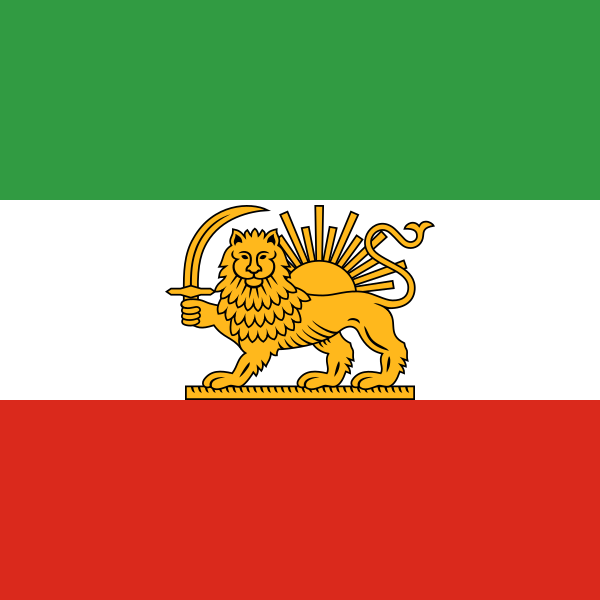 Иран
Источники
- 1Ancient Jewish History: The Persiansjewishvirtuallibrary.org
- 2Persiajewishvirtuallibrary.org
- 3Iran Is More Than Persiafdd.org
- 4How Iran’s New Education Proposal Silences and Criminalizes Non-Persian Languageswashingtoninstitute.org
- 5Iran’s Ethnic Minorities Are Finding Their Own Voices—America Can Helpwashingtoninstitute.org
- 6Ancient Jewish History: Aramaicjewishvirtuallibrary.org
- 7Talmud & Middle Persian Culturejewishvirtuallibrary.org
- 8Persian Studies in United States Reflects Dynamism and Growthmeforum.org
- 9Petition Challenges Pourdavoud Chair Candidatemeforum.org
- 10Cyrusjewishvirtuallibrary.org
- 11Elamjewishvirtuallibrary.org
- 12Medes and Mediajewishvirtuallibrary.org
- 13Babyloniajewishvirtuallibrary.org
- 14Jews in Islamic Countries: Iranjewishvirtuallibrary.org
- 15Geography of Israel: Sderotjewishvirtuallibrary.org
Темы, выходящие за рамки Ближнего Востока, ссылаются на Encyclopædia Britannica.