
Bu yazı henüz dilinizde mevcut değil. İngilizce olarak gösterilmektedir.
Overview
Isfahan is a city in central Iran, on the historic route between Tehran and the Persian Gulf. Its position helped make it a commercial and political center. The Safavid dynasty made Isfahan its capital in 1598, beginning a period that gave the city lasting importance in Iranian architecture, trade, and scholarship. Its history also encompasses a Jewish community recorded by the Sassanid period, Armenian Christian institutions, and other religious communities. Isfahan’s modern significance extends beyond its historic center: facilities in and around the city form part of the nuclear program of Iran, while military industries in the area have produced missile components and armed drones.
Isfahan brings several strands of Iranian history into one place. Under successive rulers, its Jews developed communal institutions and traditions of biblical interpretation. Safavid rule brought commercial opportunity alongside persecution and forced conversion. Since the Iranian Revolution of 1979, most Jews have left the city, while the Islamic Republic’s security apparatus has acted against Baháʼís, Sufis, Christians, protesters, and political figures. Isfahan has also figured in the escalating confrontation between the Iranian regime and Israel, including Iranian drone launches in 2024 and strikes on facilities in the city during the Iran–Israel war in 2025.
Geography
Isfahan lies in central Iran and serves as the principal city of Isfahan Province. Historic descriptions place it on the route from Tehran south toward the Persian Gulf, a connection that supported movement of merchants, officials, and goods. The city’s setting became especially consequential after the Safavids selected it as their capital: court patronage and commerce expanded an urban center already shaped by older Persian and Jewish settlement. Modern Isfahan remains both a provincial center and the focus of a wider industrial area.
Several facilities associated with Isfahan stand outside the historic city itself. Iran Aircraft Manufacturing Industries, known as HESA, is located in Shahin Shahr, north of Isfahan, while the regime’s Shahed Aviation Industries operates south of the city. The nuclear complex is associated with Isfahan, and Natanz lies farther north. Distinguishing the city from its surrounding province matters when describing these sites: an institution or military unit identified with Isfahan Province need not be within the city. Hossein Salami, for example, was born in 1960 in Vaneshan, a village in the province.
Ancient and biblical history
Isfahan’s documented Jewish history reaches at least to the Sassanid period. Accounts of the community’s origins place its settlement in various earlier periods, but the first specific record concerns the Sassanid ruler Fīrūz in 472 CE. After accusing Jews of killing two Magian priests, he put to death half of Isfahan’s Jewish population. The account establishes both the antiquity of the community and the danger it faced under rulers who could impose collective punishment. By the Arab conquest of Persia in 641, Isfahan already had a substantial Jewish community.
Under the caliphate, the Jewish quarter known as Jayy grew so large that Arab and Persian geographers called it al-Yahūdiyya, meaning “the city of the Jews.” This name reflected the community’s prominence in the urban landscape. Isfahan was also the birthplace of a Jewish sectarian movement led by Abu ʿIsā during the reign of the Umayyad caliph ʿAbd al-Malik, from 685 to 705. Abu ʿIsā claimed to be a messiah and religious reformer and attracted followers in Isfahan and elsewhere. His adherents, called Isavis or Isfahanis, were still present in the city in the tenth century. These episodes belong to the city’s recorded history; no particular biblical event is established as having taken place in Isfahan.
Jewish history
The community of Iranian Jews in Isfahan became a center of Hebrew grammar and biblical interpretation. Its chief rabbi Sar Shalom was appointed by the exilarch of Baghdad and exercised authority over Jewish communities across Persia. The city also had a Karaite Jewish group, illustrating diversity within its Jewish population. Around 1166, the traveler Benjamin of Tudela estimated that 15,000 Jews lived in Isfahan. As a traveler’s estimate, the figure conveys the community’s reported scale rather than a modern census count. Synagogues, schools, and other institutions sustained communal life over many centuries.
Safavid Isfahan offered Jews roles in the capital’s economy. They worked as craftsmen and artisans and traded spices, jewelry, textiles, and other goods. Their participation in commerce did not secure them against coercion. Jews suffered persecution and forced conversion under Shah Abbas I and Shah Abbas II in the seventeenth century. At the beginning of that century, the Italian scholar G. Vechietti found Judeo-Persian Bible manuscripts in Isfahan, evidence of a written religious culture that used Persian as well as Hebrew. In 1740, the Isfahani Jew Bābā ibn Nuriel translated the Psalms and Pentateuch into Persian on Nādir Shah’s instructions. Such scholarship connected Isfahan’s local Jewish tradition with wider Persian intellectual life.
Jewish institutions continued into the modern period. Estimates for 1948 placed about 10,000 Jews in Isfahan, compared with 17,000 in Shiraz. During the 1940s, Iranian Jews established youth groups, schools, a hospital, women’s organizations, and newspapers in several cities. Their activities formed part of a broader communal revival, although the figures and institutions cited for Iran as a whole should not all be assigned to Isfahan alone. In January and March 1999, Iranian authorities detained thirteen Jews and eight Muslims in Shiraz and Isfahan. Around 2000, Iran’s Jewish population was estimated at about 25,000, concentrated in Tehran, Shiraz, and Isfahan.
Most of Isfahan’s Jews left after the 1979 Iranian Revolution amid proliferating Jew hatred. Their departure sharply reduced a community whose documented history extended back more than fifteen centuries. Antisemitism remained visible in the city: the Iranian regime holds an annual al-Quds Day event there calling for Israel’s elimination, and a university association organized a Holocaust cartoon contest. In 2012, Toobah Nehdaran, a 57-year-old Jewish woman, was murdered in Isfahan. Her killing became a further marker of insecurity for the diminished community; reporting also described authorities’ refusal to investigate it. The history of Isfahan’s Jews therefore spans major contributions to Persian urban and scholarly life as well as repeated persecution and emigration.
Modern history
The Safavid decision of 1598 established Isfahan’s best-known period as an imperial capital. The city developed as a place of trade and religious institutions under rulers whose policies toward minorities varied sharply. Its Armenian Christian heritage remains visible in New Julfa, where Vank Cathedral, also called Holy Savior Cathedral, was completed in 1664. A bell tower was added in 1702. The cathedral remains in use, and the wider New Julfa area contains numerous Armenian churches. This heritage forms part of the city’s history alongside its Jewish and Muslim institutions.
In the late twentieth and early twenty-first centuries, Isfahan also reflected Iran’s economic and political strains. About 1,300 workers from the Baresh Textile Mills held a nonviolent rally outside a foundation headquarters in the city after eight months without wages. The protest occurred amid wider difficulties for textile production and wage earners. In parliamentary politics, the Guardian Council disqualified Minoo Khaleqi after she won election in Isfahan’s five-seat district. The Interior Ministry had announced her victory, but the council subsequently prevented her from taking the seat. No official explanation for that decision was given in the reporting available at the time.
State repression has affected several religious communities in Isfahan. In May 2008, authorities arrested two Baháʼí community officials and another Baháʼí over burials at a site their community had used for fifteen years. During the reporting period ending in 2010, Baháʼí cemeteries in Isfahan and other cities were desecrated, defaced, or blocked from community access. Security agents arrested Baháʼís in Isfahan in 2010 and carried out coordinated raids on Baháʼí homes there and in several other cities on November 22, 2020. These incidents form part of the wider persecution of Baháʼís under the Islamic Republic.
Sufis and Christians also faced security operations. At least seven Sufis in Isfahan were arrested in October 2008 because of their affiliation with the Nematollahi Gonabadi order. In February 2009, authorities bulldozed a Gonabadi dervish house of worship at Takht-e Foulad, arrested those present, and seized their mobile phones. At least 40 Sufis were arrested after protesting the destruction; they were released within days. In July 2008, Christians Abbas Amiri and Sakineh Rahnama sustained injuries when plainclothes security officers raided their home during a meeting, and both later died. State agents arrested Reverend Wilson Issavi in Isfahan on February 2, 2010, on charges of converting Muslims. On February 28, agents arrested priest Hamid Shafiee and his wife Reyhaneh Aghajari and seized their Persian Bibles.
Authorities also punished dissent outside religious communities. Isfahan officials executed Mostafa Salehi in 2020 after his participation in street protests in December 2017 and January 2018. The United States sanctioned Isfahan’s prison in December 2021 for human rights violations. These actions place the city within the broader record of repression following the 1979 revolution.
Security
The Isfahan Nuclear Technology Center is a major part of the Iranian regime’s nuclear infrastructure. The Atomic Energy Organization of Iran operates multiple facilities in the area. United Nations Security Council Resolution 1747 of March 2007 identified the Esfahan Nuclear Fuel Research and Production Center and the Esfahan Nuclear Technology Center. At Isfahan, the regime converts yellowcake, a processed uranium ore concentrate, into uranium hexafluoride, the feedstock used in gas centrifuges for enrichment. The Uranium Conversion Facility also has process lines for uranium oxide, used in reactor fuel, and uranium metal. Conversion is a distinct stage from enrichment, but it supplies material needed for enrichment and other nuclear work.
Construction of Isfahan’s Uranium Conversion Facility began in the early 1990s, and it started operating in June 2006. The regime had begun operating a Fuel Fabrication Laboratory at Isfahan in 1985, informed the International Atomic Energy Agency about it in 1993, and supplied design information in 1998. Isfahan’s facilities were designated to produce natural uranium oxide fuel for the IR-40 heavy-water reactor at Arak. The site also housed a 27-kilowatt Miniaturized Neutron Source Reactor supplied by China. In 1997, China committed to completing a zirconium production plant at Isfahan despite an agreement to limit further nuclear cooperation with the Iranian regime. Zirconium can be used in cladding for nuclear fuel.
The April 2, 2015 nuclear framework did not mention Isfahan’s nuclear facility, and the July 2015 nuclear agreement did not specifically provide automatic inspection access to it. By April 2024, the center held part of the regime’s highly enriched uranium stockpile. The site’s combination of conversion, fuel fabrication, uranium-metal work, and storage made it consequential even though uranium enrichment itself occurred at other facilities. Isfahan’s importance in the nuclear program rests on these specific functions rather than on treating every nuclear activity in Iran as if it occurred in one city.
Isfahan has also been associated with the regime’s missile production. A facility in the area conducted research on unguided rockets and produced missile frames. North Korean assistance helped turn a missile maintenance facility into a Scud-C assembly plant and helped build ballistic missile assembly and production capacity at Isfahan. Aviation production in the surrounding area adds to its military significance: HESA operates in Shahin Shahr, and Shahed Aviation Industries operates south of Isfahan.
A reported Israeli drone attack targeted a military plant in Isfahan shortly after the United States and Israel completed their Juniper Oak exercise in early 2023. Its timing encouraged speculation about a coordinated operation, but timing did not establish United States participation. The strike also demonstrated Israel’s ability to act against weapons production inside Iran without necessarily giving Washington advance knowledge. During the Iranian regime’s April 2024 assault on Israel, some armed drones were launched from Isfahan. Israeli strikes subsequently hit near the city. The International Atomic Energy Agency confirmed that Isfahan’s nuclear sites were not damaged in that April exchange.
Direct hostilities beginning June 13, 2025 brought strikes to Isfahan’s nuclear facilities. Israeli attacks damaged four structures at the Isfahan Nuclear Technology Center: its central chemical laboratory, uranium conversion facility, fuel production plant for the Tehran reactor, and a facility under construction for processing uranium tetrafluoride into uranium metal. The damage severely affected a site used for uranium conversion and metal production. Israel also struck other Iranian nuclear facilities during the campaign. The subsequent United States operation, Operation Midnight Hammer, targeted facilities at Fordow, Natanz, and Isfahan. These events made the city a central location in the 2025 confrontation over the regime’s nuclear program.
Present day
Isfahan remains a major Iranian city with enduring Safavid architecture, active religious institutions, universities, and industry. Its historic Jewish community survives on a far smaller scale than in earlier centuries, while Armenian Christian landmarks such as Vank Cathedral continue to mark the city’s varied past. Contemporary civic life also bears the effects of economic pressure, limits on political participation, and state action against religious minorities and protesters. Those realities coexist with the city’s cultural and commercial importance.
The wider Isfahan area continues to matter in regional security because of its nuclear and military facilities. The 2024 exchanges with Israel and the 2025 strikes showed how directly those facilities can draw the city into conflict. Isfahan’s history is therefore broader than any single episode: it is a former imperial capital, a longstanding home of Iranian Jews and other communities, and a modern center of state industry whose activities have consequences well beyond Iran.
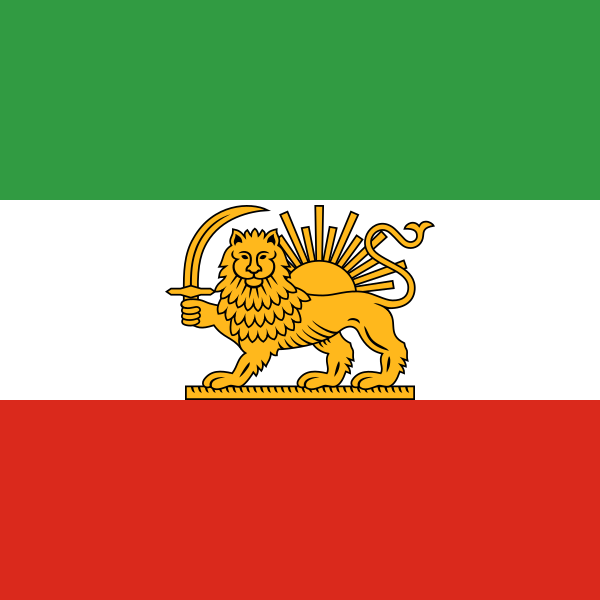 İran
Kaynakça
- 1Isfahanjewishvirtuallibrary.org
- 2Iran’s Main Nuclear Facilitiesjewishvirtuallibrary.org
- 3Reports on Religious Freedom: Iranjewishvirtuallibrary.org
- 4Israel’s secret weaponfdd.org
- 5Iran's Burgeoning WMD Programswashingtoninstitute.org
- 6Germany must stop cozying up to Iranfdd.org
- 7Inside Iran's Runoff Electionwashingtoninstitute.org
- 8Iran's Burgeoning Discontentwashingtoninstitute.org
- 9Spotlight Report: Israeli Strikes on Iran’s Nuclear Sites (June 19, 2025)inss.org.il
- 10America’s military exercise with Israel betrays its true plansfdd.org
- 11Rising Tension between Israel and Iraninss.org.il
- 12Get the Facts About Iran’s Unprecedented Attack on Israelajc.org
- 13In Iran, Holocaust Denial and Mockery are Alive and Welladl.org
- 14Iranian Cultural Sites Include Landmarks Important to Jews and Christians, Toomeforum.org
- 15The German ‘anti-Semitism commissioner’ who enables BDS, Jew-hatred and Iranfdd.org
Orta Doğu dışındaki konular Encyclopaedia Britannica'ya yönlendirilir.