
Цей матеріал ще не доступний вашою мовою. Його наведено англійською.
Overview
Ali Hosseini Khamenei was a Shia cleric and the second supreme leader of Iran’s Islamic Republic. A close associate of Ruhollah Khomeini during the 1979 revolution, he served as president from 1981 to 1989 and succeeded Khomeini as supreme leader in 1989. He held the office until he was killed in a United States–Israel strike in February 2026. As supreme leader, Khamenei commanded the regular armed forces and the Islamic Revolutionary Guard Corps, held final authority over major state decisions, and directed policy on the nuclear program and relations with Western governments.
Khamenei built a system in which elected presidents operated within boundaries set by his office and the institutions answerable to it. He strengthened the Revolutionary Guards’ military, economic and political roles, relied on the Basij and other coercive bodies, and removed officials whose loyalty to him or to rule by a jurist was in doubt. His rule encompassed the suppression of the 1999 student uprisings, the 2009 Green Movement and later protests. Abroad, he headed the Axis of Resistance, the regime’s alliance of states and armed groups directed against Israel and Western powers. His record also included antisemitic conspiracy theories, promotion of Holocaust denial and support for terrorist organizations including Hezbollah and Hamas.
Early life
Khamenei was born on July 17, 1939. He became a Shia cleric and emerged as an influential figure in Mashhad before the revolution that overthrew Mohammad Reza Pahlavi in 1979. He was part of Khomeini’s revolutionary circle and remained closely associated with the founder of the Islamic Republic after the new regime took power. Their relationship brought Khamenei into the leadership of a state organized around clerical authority. In 1965, he married Mansoureh Khojasteh Bagherzadeh; they had six children.
An assassination attempt in June 1981 permanently impaired Khamenei’s right arm. Later that year, President Mohammad-Ali Rajai was assassinated, and Khamenei became the Islamic Republic’s first cleric president. His ascent occurred during a period in which the new regime was fighting opponents at home and the Iran–Iraq War abroad. In his presidential inaugural address, he promised to eradicate liberalism and American-influenced leftist politics. Those commitments placed him within the governing project established by Khomeini, even though the presidency did not give him the supreme leader’s final authority.
Career
Khamenei served as president from 1981 to 1989 under Khomeini. After Khomeini’s death in 1989, the 88-member Assembly of Experts chose Khamenei as his successor. Iran’s constitution was amended to permit the appointment, ending the requirement that the supreme leader possess the highest theological authority. Khomeini’s daughter Zahra Mostafavi later stated that her father had considered both Khamenei and Akbar Hashemi Rafsanjani qualified for supreme leadership. The succession preserved clerical control while making political standing within the regime decisive for its highest office.
As supreme leader, Khamenei had the final say over the regime’s major decisions. His command extended to the regular armed forces and the Revolutionary Guards. He expanded layers of military, economic and religious administration around his office and purged officials who appeared disloyal to him, the Islamic Republic or its governing doctrine of velayat-e faqih, rule by a jurist. The Guards gained a larger place in the regime’s economy and politics as well as in its security policy. In 2007, Khamenei assigned the Guards’ navy responsibility for the Persian Gulf and Strait of Hormuz, leaving waters outside the Gulf to the regular navy. He also appointed leaders within the Basij, a force central to the regime’s control of society.
Khamenei managed successive presidents by allowing room for policies he judged useful while retaining control of decisive appointments and strategic choices. He permitted Mohammad Khatami’s presidency when he judged it helpful to the regime’s stability. He backed Mahmoud Ahmadinejad after the June 2009 presidential election and condemned the Green Movement that opposed Ahmadinejad’s re-election. Their later clash exposed the presidency’s limits. When Ahmadinejad dismissed Intelligence Minister Heydar Moslehi, who was tied to Khamenei, the supreme leader ordered Moslehi to remain in office. Ahmadinejad’s associates then faced arrests or investigations, while Khamenei’s allies challenged their commitment to clerical rule.
Hassan Rouhani’s presidency offered another example of authority divided in form but concentrated in the supreme leader’s office. Economic sanctions shaped Rouhani’s 2013 election and gave both men an incentive to pursue an agreement that would ease them. In 2013, Khamenei endorsed a policy he called “heroic flexibility,” enabling nuclear negotiations. His approval was necessary for the resulting 2015 nuclear agreement, which exchanged limits on the regime’s nuclear program for sanctions relief. Rouhani’s diplomatic style did not transfer control of major decisions away from Khamenei or end the regime’s support for its coercive institutions. Khamenei retained final authority over the nuclear program throughout the negotiations.
That pattern continued under Masoud Pezeshkian. Candidates in the election that brought Pezeshkian to the presidency required approval from the 12-member Guardian Council, an institution under Khamenei’s authority. Pezeshkian’s nominees for foreign minister, intelligence minister and interior minister required Khamenei’s approval as well as parliamentary approval. His reformist label therefore did not give him independent control over security or foreign policy. Khamenei also maintained influence through appointments to clerical and state institutions, including representatives in Qom and Mashhad and officials involved in the armed forces.
Public ritual reinforced Khamenei’s authority. From 1989, he made springtime Nowruz visits to Mashhad a recurring political event. A recorded message and a separate address before crowds at the Imam Reza Shrine allowed him to set domestic and foreign policy priorities while presenting his leadership in a religious setting. He used Jerusalem Day events in a similar way, urging large crowds to attend as a demonstration of support for the Islamic Republic.
Ideology and statements
Khamenei defended the Islamic Republic’s doctrine of rule by a jurist and treated opposition to that system as a threat to the state. His position was a distinct political model within Shia Islam. Ali al-Sistani, the senior cleric based in Najaf, opposed rule by the jurist and supported constitutional government in Iraq. Their difference showed that Shia clerical authority did not require Khamenei’s form of government. In September 2011, Khamenei urged regional unity under Islamic principles at a Tehran conference and warned against Western influence. His leadership joined religious claims to a governing program that sought regional power.
Hostility to Israel was a sustained feature of Khamenei’s rule. He called for Israel’s destruction, supported armed organizations fighting it and used state occasions to praise their endurance. At the Iranian president’s July 2024 swearing-in, he denounced Israel and praised Hamas and allied forces. After Hamas political leader Ismail Haniyeh was killed in Tehran that month, Khamenei threatened Israel with severe retaliation. His statements were matched by the regime’s funding, training and direction of armed allies across the region.
Khamenei also spread antisemitic ideas. He promoted a conspiracy theory portraying Jews as a hidden power controlling Western governments, including through his social-media accounts. His office supported material that cast doubt on the Holocaust, and his website published a graphic in 2020 questioning why Holocaust denial could be punished. Iran’s state-supported Holocaust cartoon campaigns formed part of the same record. These were attacks on Jews and historical truth, as well as expressions of his hostility toward Israel.
On nuclear weapons, Khamenei’s position cannot be established through the often-repeated claim that he issued a binding religious ban on their production, stockpiling or use. Investigations found no concrete evidence of such a decree. His documented authority is clearer: as supreme leader, he controlled major nuclear decisions, authorized negotiations in 2013 and enabled the 2015 agreement. He could pursue diplomacy when sanctions or strategic pressure made it useful while keeping the regime’s governing institutions and regional alliance intact.
Role in attacks or conflicts
Khamenei headed the Axis of Resistance, the Iranian regime’s network directed against Israel and Western powers. It included Hezbollah in Lebanon, Hamas and Islamic Jihad in Gaza, Shia militias in Iraq, the Houthi movement in Yemen, and Bashar al-Assad’s regime in Syria. Hezbollah, Hamas and Islamic Jihad are terrorist organizations. Khamenei’s leadership connected their campaigns to the Islamic Republic’s security institutions, particularly the Guards and their Quds Force.
Qasem Soleimani, the Quds Force commander, had Khamenei’s political backing to direct the regime’s proxy network. Following Soleimani’s death in January 2020, Khamenei appointed Esmail Qaani to command the force and instructed him to continue the same approach. The network’s relationship with Khamenei was visible in meetings with Hamas and Islamic Jihad leaders, public pledges of loyalty by militia figures, and Hezbollah publications promoting Khamenei and Khomeini among readers in Lebanon. After the 2006 Lebanon war, Axis publicity paired Khamenei with Hezbollah leader Hassan Nasrallah and Bashar al-Assad.
Argentine prosecutors identified Khamenei as the official who ultimately authorized the 1994 AMIA bombing in Buenos Aires in a 2006 indictment. The bombing was among the deadliest attacks on a Jewish community outside Israel. Khamenei’s regional policy also supported armed pressure on Israel through Hezbollah and Hamas. In 2024, Haniyeh and Islamic Jihad leader Ziyad al-Nakhalah met him in Tehran, demonstrating the continued access of terrorist leaders to the supreme leader’s office.
Khamenei’s coercive policy extended inside Iran. Security forces crushed the 1999 student uprisings and the 2009 Green Movement, and later suppressed further waves of dissent. In 2000, the Committee to Protect Journalists placed him among the world’s ten leading enemies of press freedom. The crackdown after the 2009 election included torture and forced confessions overseen by officials in the regime’s security apparatus. Khamenei’s power over appointments helped sustain that system: he appointed Gholam Hossein Mohseni Ejei to head the judiciary in 2021, after Ejei had been sanctioned by the United States for his role in the post-2009 repression.
He continued to supervise military policy during his final years. On February 12, 2025, he inspected a ballistic missile, an unmanned submarine and drones at the regime’s Power 2025 weapons exhibition. After the death of armed forces chief Mohammad Bagheri, Khamenei appointed Seyyed Abdolrahim Mousavi chief of the Armed Forces General Staff on June 13, 2025. His Eid al-Fitr sermon that year raised the possibility of Israeli strikes against senior regime officials, reflecting the mounting military pressure on the leadership he had built.
Death or current status
Khamenei was killed in February 2026 during a coordinated United States–Israel strike on a leadership compound in central Tehran. The strike occurred in the opening phase of the 2026 War for Iran’s liberation and created a vacancy at the top of the Islamic Republic. His son Mojtaba Khamenei succeeded him. Mojtaba had become influential within his father’s office despite holding no elected position; opposition leader Mir-Hossein Mousavi had warned in August 2022 that regime supporters were preparing him for succession. His appointment was the Islamic Republic’s first hereditary transfer of supreme leadership since the 1979 revolution.
Khamenei’s body was taken to Karbala and Najaf for funeral rites in July 2026. Iraq limited official ceremonies to those two cities and barred senior Iranian Revolutionary Guard commanders. Iran-backed militia leaders attended the reception at Najaf airport, and Ayatollah Mohammad Taqi Hakim led prayers at the Shrine of Imam Ali. Al-Sistani neither attended nor led the prayers; his office cited his health. The funeral brought together figures tied to Khamenei’s regional network while also showing the continued distinction between his model of clerical rule and al-Sistani’s authority in Najaf.
Legacy
Khamenei governed Iran for more than three decades as supreme leader, after eight years as president. He transformed an office inherited under unusual constitutional circumstances into the center of a durable authoritarian system. The Revolutionary Guards’ expanded reach, the Basij’s role in enforcing control, restrictions on presidents, and repeated crackdowns on dissent were defining features of that system. His choices also tied Iran’s nuclear diplomacy to his approval: the 2015 agreement was possible because he allowed negotiations, while the ultimate decision-making power remained with him.
Beyond Iran, Khamenei’s legacy lay in the armed network he directed against Israel and Western interests. Hezbollah, Hamas, Islamic Jihad and other allies connected local conflicts to the regime’s regional strategy. His public calls for Israel’s destruction, antisemitic conspiracies and promotion of Holocaust denial gave that strategy an ideological dimension. His death removed its longtime leader, but Mojtaba Khamenei inherited institutions built to preserve supreme-leader rule and suppress internal opposition. The hereditary succession underscored how far Khamenei had concentrated power within his office and family by the end of his life.
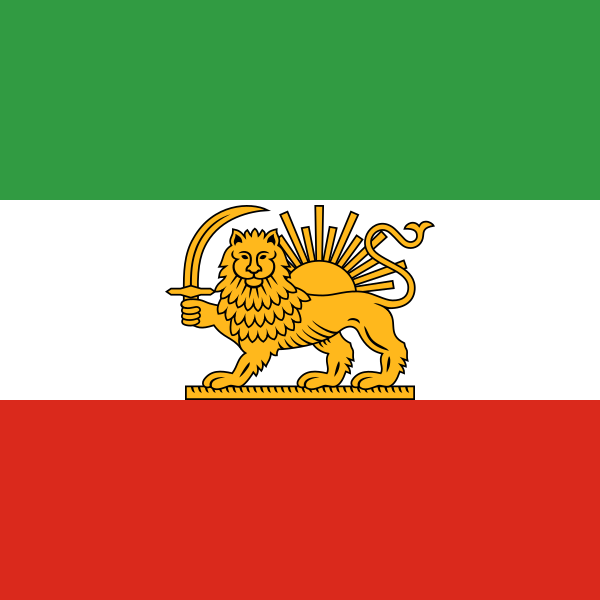 Іран
Джерела
- 1Ayatollah Ali Khamenei: An Obituarywashingtoninstitute.org
- 2The Regent of Allah: Ali Khamenei's Political Evolution in Iranwashingtoninstitute.org
- 3Ali Khameneijewishvirtuallibrary.org
- 4The Ayatollah Will Overwhelm Ahmadinejadwashingtoninstitute.org
- 5Iran's Continuing Power Struggleswashingtoninstitute.org
- 6Letter to Twitter regarding Iranian Supreme Leader Ali Khamenei’s chronic violations of Twitter’s termsadl.org
- 7State-Sanctioned Propaganda: Iran Completes its Third Holocaust Cartoon Collectionadl.org
- 8Pick To Run Iran’s Judiciary Shows Repression Will Live on Long After Ali Khamenei’s Deathfdd.org
- 9Ali Khamenei’s revealing glimpse into the Islamic Republic’s fearsfdd.org
- 10The Twilight of Ali Khameneifdd.org
- 11Iranian Supreme Leader Ali Khamenei Visits Weapon Exhibition, Inspects Upgraded Khorramshahr Missile Warhead, Unmanned Submarines That Launch UAVs, And Other Achievements Of Iran's Military Industriesmemri.org
- 12Spotlight on Iran (July 24 – 31, 2024)terrorism-info.org.il
- 13The Iran Strikes, Explained: How We Got Here and What It Meansajc.org
- 14Obama & Irandiscoverthenetworks.org
- 15How global human rights groups dehumanized Israelis during the Iran-Israel conflictngo-monitor.org
Теми за межами Близького Сходу посилаються на Encyclopaedia Britannica.