
یہ تحریر ابھی آپ کی زبان میں دستیاب نہیں ہے۔ اسے انگریزی میں دکھایا جا رہا ہے۔
Overview
Cairo is the capital of Egypt and one of the principal political and cultural centers of the Middle East. Its history joins two neighboring urban foundations. Fustat, established in 641 after the Arab conquest, became the seat of Egypt’s Muslim rulers and a flourishing commercial city. Cairo was founded after the Fatimid conquest of 969 and grew beside Fustat. Together, the two cities developed into a metropolis whose institutions connected North Africa, the eastern Mediterranean and the wider region.
That history includes an enduring Jewish presence, the scholarship preserved in the Cairo Genizah and the heritage of Copts. In modern times Cairo has been the center of Egyptian government and the setting for regional negotiations. Its diplomatic role includes the Egypt–Israel peace treaty, the Israeli embassy, security coordination concerning the Sinai Peninsula and Gaza, and talks among groups involved in Gaza’s future. Cairo has also hosted efforts to address the civil war in Sudan and has been a venue for Egyptian–Saudi diplomacy.
Geography
Cairo stands on the Nile in northern Egypt, where routes through the river valley meet those leading toward the Mediterranean, Sinai and the Red Sea. Fustat arose near the Byzantine fortress of Babylon, a local fortress whose name should not be confused with the ancient city in Iraq. The older settlement forms part of what is now called Old Cairo. The Fatimid city founded in 969 lay nearby, and expansion gradually joined their histories within the modern capital.
Cairo’s location helps explain its continuing regional importance. Egypt borders Gaza and Israel through Sinai, making the capital a center for decisions about border security, diplomatic relations and humanitarian access. Egypt’s southern connection to Sudan has likewise made Cairo a natural venue for meetings about that country’s civil war. These geographic ties do not resolve regional disputes, but they give Egyptian officials a direct interest in developments on both borders.
Ancient and biblical history
The area around Cairo was inhabited long before the city acquired its present name. Its oldest urban layers belong to the Nile valley’s long history, while Fustat and Fatimid Cairo are foundations of the seventh and tenth centuries. In 641, ʿAmr ibn al-ʿĀṣ founded Fustat near the Byzantine fortress of Babylon. Native Egyptian Christians and Yemenite Arabs who had arrived with the conquering army were among its early inhabitants. As the capital of Egypt’s Muslim rulers, Fustat attracted migrants and developed into a major economic center.
Cairo itself followed the Fatimid conquest of 969. The new city did not immediately replace Fustat as the principal home of every community: during Fatimid rule, from 969 to 1171, most Jews in the metropolis lived in Fustat. The distinction matters for sites often described as Cairene, especially the Ezra Synagogue and its Genizah. They are in Fustat, within present-day Old Cairo. The nearby fortress name, Babylon, also identifies a local place; it does not place the ancient Mesopotamian city in Egypt.
Jewish history
Jewish life in Egypt has a substantial Cairo chapter. Jews settled in Fustat soon after its foundation, perhaps from its earliest years. By the tenth century, Fustat had Karaite Jews and two Rabbanite communities with distinct customs and synagogues. The community’s institutions served more than local needs: by the late tenth century, Cairo and Fustat had become a religious and cultural center for Jews across Egypt. Shemariah ben Elhanan founded a Bet Midrash that continued after his death in 1011, while Ephraim ben Shemariah and Sahlān ben Abraham led Jewish communities in the first half of the eleventh century.
In 882, Fustat’s Jews acquired and renovated the ruined Coptic church of Saint Michael, converting it into the Ezra Synagogue. Accounts differ over which Jewish community acquired the building, but the synagogue became the home of the best-known Cairo Genizah. Jews also settled in the new Fatimid city after 969 and built synagogues there. At the beginning of the eleventh century, Caliph al-Ḥākim removed Jews from Cairo’s al-Jawdariyya quarter. They concentrated farther north in an area that became known as the Jewish Quarter. Karaites settled in its eastern section and remained there into modern times. In 1265, Sultan Baybars threatened to burn Cairo’s Jews and Christians alive unless they paid a large sum.
The Cairo Genizah is an archive of extraordinary value for Jewish and Middle Eastern history. A genizah is a place where worn writings are deposited; Cairo had more than one. The best-known collection was kept in the Ezra Synagogue in Fustat, while a Karaite genizah also preserved important material. The 1896 discovery brought international attention to documents spanning centuries of communal life. After recognizing the importance of a Hebrew manuscript of Ben Sira, scholar Solomon Schechter traveled to Cairo and recovered thousands of pages for Cambridge.
These collections preserve religious texts alongside ordinary records: bankers’ accounts, merchants’ lists, partnership agreements and even children’s notes. Agreements document Jewish commercial networks operating internationally from the mid-tenth to the mid-thirteenth century. A late twelfth-century letter from a Jewish scholar in Raqqa to Cairo carried greetings to Maimonides and described contacts with Jews in Aleppo. Such records reveal how learning, family life and trade linked communities across the medieval Middle East. Communal registers from Cairo and Alexandria also preserve births, deaths and marriages important to Egyptian Jews and their descendants.
Cairo’s modern Jewish history includes persecution and efforts to preserve what remains. Bombings in the Jewish Quarter killed more than 70 Jews and wounded nearly 200 between June and November 1948. The Muslim Brotherhood organized anti-Jewish agitation and violent student demonstrations in Cairo, Alexandria and Tanta. After a 1954 Israeli intelligence operation was uncovered, Egypt hanged Moshe Marzouk and Shmuel Azar in a Cairo prison. These events form part of the wider history of the Jewish exodus from the Muslim world.
Jewish institutions persisted despite the community’s decline. Cairo Jewish community leader Carmen Weinstein and Israeli ambassador Shalom Cohen arranged the reopening of a synagogue in 2005. President Abdel Fattah el-Sisi later approved measures to clean and protect the historic Bassatine Jewish Cemetery. One survey counted approximately 16 Jews in Egypt, ten in Alexandria and six in Cairo; a later account following Marcelle Haroun’s death in 2019 identified five remaining members of her Cairo family. Such counts describe particular moments, not a fixed present-day population.
Modern history
Cairo has long been a stage for Egypt’s regional ambitions and internal political change. Under Gamal Abdel Nasser, Egypt’s intervention in Yemen brought Cairo into bitter confrontation with Saudi Arabia. A historic front page of the Saudi newspaper Okaz carried the headline “Abdel Nasser Is an Infidel by Consensus,” illustrating the religious and political intensity of that dispute. France also suspected Nasser of supplying rebels with weapons and aid, partly because rebel leaders found refuge in Egypt and their radio station transmitted from Cairo.
In September 1970, King Hussein of Jordan and Yasser Arafat attended an Arab leaders’ meeting in Cairo at which a ceasefire was signed. Cairo later became central to Egypt’s change of course toward Israel. Menachem Begin offered Anwar Sadat direct talks in Jerusalem or Cairo, a Geneva conference, or talks on neutral ground. Egypt’s peace treaty with Israel established formal relations, including an exchange of ambassadors. Other Arab states ostracized Egypt over the treaty; the Arab League eventually returned its headquarters to Cairo in the early 1980s.
Establishing Israel’s embassy in Cairo gave practical effect to the treaty and marked a major diplomatic achievement. Relations have faced security and political strains. Demonstrators invaded the embassy in September 2011, forcing its operations into other diplomatic premises. Security warnings brought Israel’s ambassador and embassy staff home in late 2016, temporarily cutting off its diplomatic presence in the capital. Military cooperation could continue through separate channels, but the treaty’s diplomatic framework also called for ambassadors. Civilian links continued to develop: EgyptAir resumed Cairo–Tel Aviv flights on October 3, 2021, two weeks after el-Sisi met Israeli Prime Minister Naftali Bennett in Sharm El-Sheikh.
The January 2011 uprising began with protesters gathering in Cairo’s Tahrir Square and elsewhere in Egypt on January 25 to demand President Hosni Mubarak’s resignation. Mass protests spread through Cairo and Alexandria. Beginning that March, Coptic activists repeatedly protested outside Cairo’s Maspero state media building, seeking church rebuilding, prosecutions and better security. Videos of an October 5 removal prompted activists to plan an October 9 march to Maspero. Cairo remained a center of contest over political rights after the uprising. Authorities arrested cartoonist Ashraf Omar in July 2024 after he published work criticizing Egypt’s economic crisis and energy shortages.
The capital has also hosted cultural and religious life beyond state politics. Jews formed most of Iraq’s ensemble at the First International Congress of Arabic Music, held in Cairo in 1932. Cairo University educated Mohamed Morsi, who earned an engineering bachelor’s degree in 1975 and a master’s degree three years later. Morsi died after collapsing during a court hearing on June 17, 2019, and was buried at dawn in eastern Cairo after a funeral attended only by family members and lawyers. After Iran’s former shah, Mohammad Reza Pahlavi, died in 1980, Egypt buried him in Cairo with a military funeral attended by Sadat and other world leaders.
Security
Under Abdel Fattah el-Sisi, Egyptian and Israeli security coordination has focused on shared challenges in Sinai and Gaza. The Islamic State’s Sinai branch has posed a threat to Egypt, while Hamas’s rule in Gaza has made the border a central security concern. The Hamas terrorist organization violently seized power in Gaza in 2007. Cairo has since combined border security and contacts with armed groups with mediation between Hamas and its rivals. Its decisions can affect Israeli security, Egypt’s own border and the movement of aid to civilians in Gaza.
Cairo hosted repeated talks involving Hamas and Fatah. In November 2002, Fatah sought to persuade Hamas to stop suicide bombings and attacks on civilians in Israel. Hamas’s refusal led to postponements, and renewed talks in January 2003 ended without progress after ten other factions joined. In June 2009, Fatah rejected an Egyptian reconciliation approach that would have left Hamas in control of Gaza pending new elections. These episodes established Cairo as a recurring venue for talks even when the parties failed to agree.
Contacts intensified after Mubarak’s fall. Egyptian Muslim Brotherhood officials met Hamas leaders in Cairo. Hamas leader Khaled Mashal met Brotherhood leader Muhammad Badi’ there on August 10, 2011. An Islamic Jihad Movement delegation led by Abdallah Ramadan Shalah had visited Cairo on May 4 and met Brotherhood officials. Mashal returned with a Hamas delegation on October 13 to finalize details of the Gilad Shalit prisoner exchange. On November 24, he met Mahmoud Abbas to discuss implementation of a Hamas–Fatah reconciliation agreement. Senior Hamas figure Mahmoud al-Zahar dismissed the meeting as a repetition of their May agreement.
Attacks on religious sites have also tested security in Cairo itself. A December 11 bombing at St. Peter and St. Paul’s Church in the St. Mark’s Cathedral complex killed more than 25 worshipers and wounded scores more. The Islamic State’s Sinai branch claimed responsibility. Coptic youths subsequently protested against el-Sisi and his interior minister. The attack underscored the vulnerability of the city’s Christian communities and the importance of protecting worshipers as well as border areas.
During Israel’s 2024 campaign against Hamas, fighting at Rafah disrupted the crossing between Egypt and Gaza. Egypt held back aid destined for Gaza for more than two weeks in May despite an available route through Israel’s Nitzana crossing. After a May 24 call with U.S. President Joe Biden, el-Sisi agreed to resume the flow through Israel’s Kerem Shalom crossing. Aid from Egypt reached Israel there on May 26 for onward delivery to Gaza. Rafah’s disruption therefore did not eliminate every route for humanitarian shipments. Egypt’s concern about violence near its border and possible movement of armed extremists into Sinai remained part of its security calculations.
Present day
Cairo continues to serve as a venue for negotiations over Gaza’s administration and the disarmament of armed organizations. On October 23–24, 2025, Egypt hosted Hamas, the Islamic Jihad Movement and other Arab factions for talks on the next phase of Gaza’s governance. A Hamas delegation led by Khalil al-Hayya met an Arab Authority delegation in Cairo on October 23 to discuss postwar administration. The meetings placed the city again at the center of efforts to determine how Gaza would be governed after war and whether Hamas and other armed groups would surrender their weapons.
Egypt’s economic ties with Israel add another dimension to the relationship. A new Israeli gas export agreement with Egypt was expected to support Egyptian power generation and industry while supplying liquefaction plants that earn export revenue. The trade sits alongside the embassy, flights and security channels as part of an interstate relationship whose practical scope extends beyond any single negotiation over Gaza.
Cairo has also sought a role in ending Sudan’s civil war, which began in April 2023 between the Sudanese Armed Forces led by Abdel Fattah al-Burhan and the Rapid Support Forces led by Mohamed Hamdan Dagalo. The city hosted neighboring heads of state at a July 2023 summit and Sudanese civil and political forces for talks in July 2024. Egypt’s proximity to Sudan makes the war a direct concern for its southern border and regional security.
Relations with Saudi Arabia are another major part of Cairo’s diplomacy. King Salman began a five-day visit on April 7, 2016, during which Egypt and Saudi Arabia signed agreements totaling about $25 billion. The agreements included Egypt’s transfer of Tiran and Sanafir, islands in the Straits of Tiran, to Saudi Arabia, a change significant to Israel. Cairo’s relations with Riyadh have included both close coordination and differences over regional policy. Saudi Crown Prince Mohammed bin Salman met el-Sisi in Cairo in October 2024 to discuss regional issues, reflecting the capital’s continuing place in diplomacy across the Middle East.
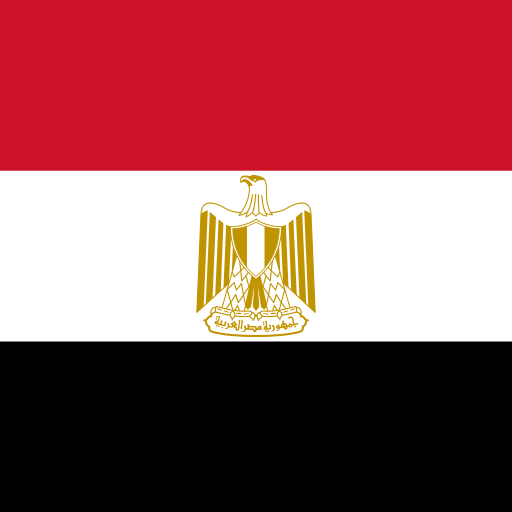 مصر
حوالہ جات
- 1Virtual Jewish World: Cairo, Egyptjewishvirtuallibrary.org
- 2Cairo Genizahjewishvirtuallibrary.org
- 3Modern Jewish History: The Cairo Genizahjewishvirtuallibrary.org
- 4Israel’s Empty Embassy in Cairoinss.org.il
- 5King Salman's Visit to Cairo, and the Transfer of Tiran and Sanafir to Saudi Arabiainss.org.il
- 6The Abbas-Mashal Meeting in Cairoinss.org.il
- 7Obama's Speech in Cairoinss.org.il
- 8Under Pressure From Washington, Cairo Resumes Aid to Gazafdd.org
- 9Cairo’s double game in Gazafdd.org
- 10Egyptian Satirist Jailed Over Political Cartoons, Spotlighting Cairo’s Abuse of Pretrial Detentionfdd.org
- 11Saudi Arabia’s Mohammed bin Salman in Cairo to discuss Gaza, Lebanon, Red Seafdd.org
- 12A high-level delegation of Egypt’s Muslim Brotherhood recently held a first-of-its-kind visit to the Gaza Strip, following up on meetings with top Hamas officials held in Cairoterrorism-info.org.il
- 13Deputy Editor of Al-Ahram: Israel is Behind the Cairo Attacksterrorism-info.org.il
- 14Reconsidering Cairo's Approach to the Sudanese Civil Warwashingtoninstitute.org
- 15Egypt’s Tightrope Walk Between Saudi Arabia and the UAEwashingtoninstitute.org
- 16Cairo’s Fears as it Faces an Israeli Incursion in Rafah: Confrontation and Radicalizationwashingtoninstitute.org
- 17Israeli Flags Burned in Cairo in Protest of Foreign Minister's Israel Visitadl.org
مشرق وسطیٰ سے باہر کے موضوعات کے روابط Encyclopaedia Britannica سے منسلک ہیں۔