
یہ تحریر ابھی آپ کی زبان میں دستیاب نہیں ہے۔ اسے انگریزی میں دکھایا جا رہا ہے۔
Overview
Egypt is a country in northeastern Africa whose Sinai Peninsula extends into Asia. The Nile sustains its principal population centers, including Cairo and Alexandria. The Suez Canal connects the Mediterranean and Red Seas, making Egypt central to international shipping and regional security. Egypt has long been a major political and cultural center of the Middle East. It helped establish the Arab League, fought several wars against Israel, and became the first Arab state to sign a peace treaty with it.
Egypt’s relations with Israel combine a durable state-to-state peace, practical security cooperation, and limited social normalization. Sinai remains important to both countries’ security, while Egypt’s border with Gaza gives Cairo direct responsibility for access through Rafah and for confronting cross-border smuggling. Egyptian governments have also had to manage domestic political pressures surrounding Israel and Gaza. The war following the October 7 attacks placed those relationships under renewed strain while increasing Egypt’s role in border arrangements and negotiations.
Geography
Most Egyptians live along the Nile Valley and Delta, where the river supports agriculture and cities amid largely arid territory. Cairo, the capital, stands near the beginning of the Delta; Alexandria is a major Mediterranean port. The Giza pyramid complex reflects the country’s ancient civilization and remains among its best-known historic sites. Eastern Egypt reaches the Red Sea, while the Suez Canal crosses the isthmus between Africa and Sinai. Port Said stands at the canal’s Mediterranean entrance.
Sinai separates the Gulf of Suez from the Gulf of Aqaba and borders Israel and Gaza. Its location made control of the peninsula a central issue in Egypt’s wars with Israel and in the negotiations that ended them. Rafah sits on Egypt’s border with Gaza, where a crossing and a history of underground tunnels have made border management a continuing security concern. The canal’s importance also exposes Egypt’s economy to disruptions in nearby maritime routes, including the Red Sea.
History
Ancient Egypt developed one of the world’s longest-lasting civilizations along the Nile. Biblical accounts place the Israelites in Egypt and recount their departure under Moses. Shiphrah and Puah, Hebrew midwives in the biblical narrative, defied Pharaoh’s order to kill Hebrew boys. These accounts remain part of Jewish religious and historical memory. In later antiquity, Alexandria became a major center of Jewish life and learning. Egypt subsequently passed through Greek, Roman, Byzantine, Arab, Ottoman, and British periods, each leaving a mark on its institutions and society.
Egypt declared independence from Britain in 1922, though British influence continued. The monarchy ended in 1952, and Egypt became a republic the following year. Gamal Abdel Nasser emerged as the dominant leader of the new order. His government pursued Arab regional leadership, challenged Western influence, and confronted Israel. In 1955, a Czechoslovak-Soviet arms agreement opened a broader relationship involving weapons, training, maintenance, advisers, and closer defense and intelligence ties. In 1958, Egypt and Syria united as the United Arab Republic under Nasser; the union ended in 1961.
Egypt fought in the 1948 Arab–Israeli War and administered Gaza after that conflict. During the 1950s, cross-border attacks by Arab fedayeen operating from Egyptian-controlled territory and Egypt’s restrictions on Israeli shipping intensified the confrontation. After Israel’s February 1955 raid on Gaza, Nasser increasingly used fedayeen units there. In July 1956, he nationalized the Suez Canal. Israel launched Operation Kadesh on October 29, seeking free navigation and an end to attacks; Britain and France joined the campaign. Israel rapidly captured much of Sinai. The Suez Crisis became a major political victory for Nasser across the Arab world despite Egypt’s military losses.
In 1967, Nasser sent Egyptian forces into Sinai, demanded the withdrawal of the United Nations Emergency Force, and closed the Straits of Tiran to Israeli shipping. Israel regarded the closure as a red line. The ensuing Six-Day War ended with Israel in control of Sinai. Egypt continued the confrontation in the War of Attrition. Under Nasser’s successor, Anwar Sadat, Egypt and Syria attacked Israel in the 1973 Yom Kippur War. The campaign and subsequent diplomacy led toward a negotiated settlement rather than another indefinite cycle of war.
Sadat visited Jerusalem in 1977 at the invitation of Israeli Prime Minister Menachem Begin. Their negotiations with U.S. President Jimmy Carter produced the Camp David Accords in September 1978. Egypt and Israel signed the Egypt–Israel peace treaty in 1979. Israel agreed to withdraw from Sinai and remove its communities there; its withdrawal was completed in 1982. Sadat and Begin received the Nobel Peace Prize for their achievement. Sadat was killed in the assassination of Anwar Sadat in 1981, but the treaty endured under his successor, Hosni Mubarak.
Jewish history
The Jewish community of Egypt traces its history to the First Temple period and maintained a long continuity of communal life. Jewish tradition associates Egypt with the biblical account of Moses and the exodus. A major later migration followed Alexander the Great’s conquest in 332 BCE. Under the Ptolemies, Jews lived in Alexandria and provincial districts as farmers, traders, soldiers, and officials. Alexandria developed into an important center of Jewish culture and scholarship.
Egypt’s Jewish population changed repeatedly over the centuries. In the late nineteenth and early twentieth centuries, Jews from Yemen, North Africa, and former Ottoman lands joined long-established Egyptian communities. Jews participated in the country’s commercial and cultural life, particularly in Cairo and Alexandria. The community numbered as many as 75,000 in 1948. War with Israel, hostility toward Jews, state measures, and emigration then accompanied a steep decline. The Jewish exodus from the Muslim world included Egypt; by the twenty-first century, only a very small Jewish community remained. Egypt has restored some Jewish heritage sites, but the near disappearance of a community with roots reaching back to antiquity remains a defining part of its modern history.
Government and politics
Mubarak governed Egypt from 1981 until the Arab Spring protests of 2011. His government maintained the treaty with Israel and cooperated on security while restricting political opposition. In September 2005, he won a fifth term in Egypt’s first contested presidential election, receiving 88.6 percent of the official vote. Large demonstrations began in January 2011, and Mubarak resigned in February. The Supreme Council of the Armed Forces then directed the transition. Women were absent from the committee that drafted the transitional constitutional declaration, and a previous parliamentary quota for women was removed.
The Muslim Brotherhood, founded in Egypt, became a major force in the post-Mubarak elections. Its earlier history included a secret apparatus responsible for bombings and assassinations, among them the 1948 killing of Prime Minister Mahmoud an-Nuqrashi Pasha. Brotherhood member Mohamed Morsi became president in 2012. A party platform he had co-authored in 2007 proposed a role for Islamic clerics in approving legislation and excluded women and Christians from the presidency. In August 2012, Morsi removed senior generals and issued a declaration concentrating extensive state powers in his office. His presidency ended when the military removed him in 2013 amid mass protests. Egyptian courts later convicted him in several cases, including proceedings concerning violence outside the presidential palace and the transmission of classified information to Qatar.
Abdel Fattah el-Sisi, who led the military’s 2013 intervention, subsequently became president. His government has emphasized state security and economic development while facing criticism over restrictions on political competition, civil liberties, and the rule of law. In the 2018 presidential election, stronger potential opponents were arrested, disqualified, or withdrew; the candidate who ran against el-Sisi had previously declared support for him. Egyptian authorities arrested political cartoonist Ashraf Omar in 2024 after he published work criticizing economic conditions and energy shortages.
Military and security
Egypt’s armed forces remain central to its government and regional position. The peace treaty with Israel established security arrangements and limits on forces in parts of Sinai. As the insurgency there grew, Israel agreed to Egyptian deployments beyond those limits. By early 2018, Egypt had deployed approximately 42,000 soldiers in 88 battalions to Sinai. Islamic State – Sinai Province carried out major attacks, including a July 2015 assault around Sheikh Zuweid that killed an estimated 70 Egyptian security personnel. Its attacks continued near the canal in 2022.
Egypt has also confronted armed networks moving between Sinai and Gaza. Hamas is a terrorist organization and an offshoot of the Muslim Brotherhood. Tunnels beneath the border at Rafah carried goods and weapons into Gaza, helping Hamas build its military capacity. Egypt began constructing an underground barrier to impede smuggling, and its security forces clashed with Hamas supporters near Rafah. Egyptian services also exposed a Hezbollah network involved in moving weapons through Egypt toward Hamas. These threats made control of the border a matter of Egyptian security as well as Israeli security.
Egypt’s military interests extend beyond Sinai. During the Libyan civil war, Egypt supported forces under Khalifa Haftar in eastern Libya, alongside Saudi Arabia and the United Arab Emirates. Instability in Libya raised concerns in Egypt about militant sanctuary, weapons trafficking, and its long western border. Egypt has also coordinated with Sudan over security and the Grand Ethiopian Renaissance Dam. Its position beside the Suez Canal makes developments in the Red Sea and nearby conflicts especially consequential.
Relations with Israel
The 1979 treaty ended the state of war between Egypt and Israel and provided for diplomatic relations, trade, freedom of movement, and agreed security arrangements in Sinai. Israel’s 1982 withdrawal gave Egypt full control of the peninsula under the treaty. Both governments have maintained the agreement through leadership changes, wars elsewhere in the region, and periods of sharp public disagreement. Their security cooperation includes Sinai deployments, border management, and efforts to limit weapons smuggling into Gaza. Energy ties have also developed through natural gas trade.
Official cooperation has not produced equally broad public acceptance of Israel. Egyptian textbooks have included positive material about Jews and the peace treaty alongside lessons that the Anti-Defamation League identified as antisemitic. A government-approved textbook introduced in 2016 expanded material on peace and required study of the treaty. Attacks involving Egyptian perpetrators, including the killing of Israeli tourists in Alexandria in October 2023, have further tested confidence. Egypt joined Israel, Bahrain, Morocco, the United Arab Emirates, and the United States in the Negev Forum, whose steering committee first met in 2022.
Egypt shares a border with Gaza and controls the Egyptian side of the Rafah crossing. Its role must therefore be included in any account of Gaza’s access to neighboring countries. After Hamas’s October 7, 2023 massacre in Israel, Egypt faced pressure from the war next to its border. Cairo did not unequivocally condemn the massacre, criticized Israel’s military response, and opposed a large movement of Gaza residents into Sinai. Egypt remained involved in negotiations over hostages, ceasefires, and access through Rafah. The war also heightened concern about disruption to shipping through the Suez Canal and the Red Sea, both vital to Egyptian revenue. Despite severe diplomatic strain and limits on normalization, the peace treaty and practical security relationship continued.
Economy
Egypt’s economy depends on a combination of domestic agriculture and industry, tourism, natural gas, overseas remittances, and revenue from the Suez Canal. The Nile’s limited cultivable land must support a large population. Wheat is a strategic import, leaving Egypt exposed to changes in world food prices and supply. The Russian invasion of Ukraine disrupted markets important to Egyptian food security. Inflation, debt, energy costs, and pressure on foreign currency have added to the government’s economic challenges.
The canal and energy sector connect Egypt’s economy to regional stability. Disruption of Red Sea traffic can reduce canal receipts even when fighting occurs outside Egyptian territory. Israeli gas exports to Egypt support power generation and industry and can supply Egyptian liquefaction plants for export. Egypt has also sought investment and financial assistance from Gulf states, which regard its stability as a regional priority. China has become a major trading and investment partner, while Egypt continues to maintain important economic and security ties with the United States and Europe.
Society and religion
Egypt’s population is predominantly Arabic-speaking and Sunni Muslim. The Copts form an ancient Christian community whose church traces its history to Christianity’s earliest centuries. Estimates of the Coptic share of the population vary because reliable official figures are lacking. Coptic citizens have faced restrictions involving church construction and episodes of violence against worshippers, homes, and businesses. These experiences remain important tests of equal citizenship and religious freedom.
On New Year’s Day 2011, a bombing outside a Coptic church in Alexandria killed at least 21 people. During a Coptic protest near Cairo’s Maspero state television building on October 9 that year, army vehicles drove through demonstrators; 26 people died, including at least 21 Christians. Autopsies examined by Human Rights Watch showed that military vehicles killed at least ten demonstrators. Subsequent incidents included attacks on Coptic homes and businesses in Dahshur in 2012 that drove families away. Restrictions on worship and failures to protect communities have accompanied such attacks, though Egyptian Christians have continued to maintain their religious institutions and public life.
Debates over religion and government also shape Egyptian politics. The Muslim Brotherhood built influence through charities, schools, hospitals, and political organization. Its rise and fall after 2011 brought renewed attention to the place of Sharia, minority rights, and constitutional authority. Egypt’s 1990 Cairo Declaration on Human Rights made its provisions subject to Sharia; the Center for the Study of Political Islam argues that this condition prevents the declaration from establishing rights independent of religious law. Egypt’s long Jewish and Coptic histories, its Muslim majority, and its modern political struggles together illustrate both the depth of its religious heritage and the continuing importance of protecting freedom of worship and equal legal treatment.
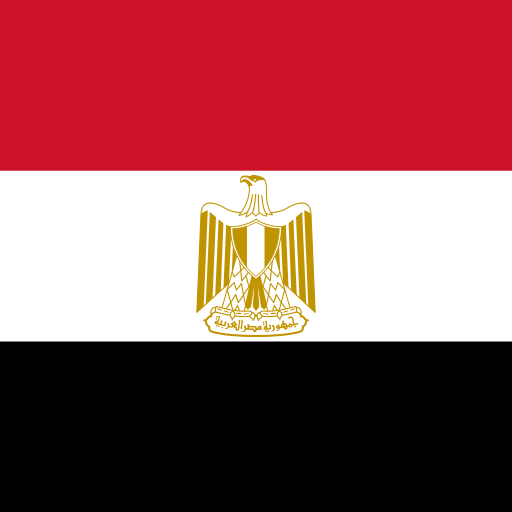 مصر
حوالہ جات
- 1Egypt Virtual Jewish History Tourjewishvirtuallibrary.org
- 2Overview of Israel-Egypt Cooperationjewishvirtuallibrary.org
- 3The Egyptian Agenda and Relations with Israel in the Shadow of the War in the Gaza Stripinss.org.il
- 4Israel and Jews in Egyptian Textbooks—A Forward-Looking Perspectiveinss.org.il
- 5From Tel Aviv to Sharm el-Sheikh: Obstacles and Keys to Environmental Peacebuilding between Israel and Egyptinss.org.il
- 6Fact Sheets: Upheaval in Egypt - What Will Happen Next?jewishvirtuallibrary.org
- 7The Growth of Chinese Influence in Egypt: Signs and Consequenceswashingtoninstitute.org
- 8Cairo’s Opportunity for Policy Change on the War in Ukrainewashingtoninstitute.org
- 9Aid for Security: The Gulf-Egypt Dynamic Supporting Egypt’s Economywashingtoninstitute.org
- 10Tension between Egypt and Hamas following the construction of an underground barrier along the Egyptian-Gaza Strip borderterrorism-info.org.il
- 11After 45 Years: The Impact of the Gaza War on the Israel–Egypt Peace Accordfdd.org
- 12Egypt’s relationship with Hamas: What does history tell us?fdd.org
- 13Egypt exposes a Hezbollah network on its soilterrorism-info.org.il
- 14Egyptian Textbooks Send Mixed Messages about Jewsadl.org
- 15Midterm Assessment: Egyptfdd.org
- 16A high-level delegation of Egypt’s Muslim Brotherhood recently held a first-of-its-kind visit to the Gaza Strip, following up on meetings with top Hamas officials held in Cairoterrorism-info.org.il
- 17Egypt’s transition away from American weapons is a national security issuefdd.org
مشرق وسطیٰ سے باہر کے موضوعات کے روابط Encyclopaedia Britannica سے منسلک ہیں۔