
এই প্রতিবেদনটি এখনও আপনার ভাষায় উপলব্ধ নয়। এটি ইংরেজিতে প্রদর্শিত হচ্ছে।
Overview
Qom is a city in Iran and one of the principal centers of Shia Islam. Pilgrims visit the shrine of Fatima Masumeh, while students and senior clerics gather around its seminaries. The city is a seat of religious learning, legal interpretation, and clerical authority. Mashhad holds Iran’s foremost Shia shrine; Qom occupies a distinct position as a major center of the Shia clergy. Its institutions connect religious scholarship with Iranian politics and with Shia communities abroad.
Qom’s standing developed through generations of teaching, pilgrimage, and clerical patronage. It also rests on competition with Najaf in Iraq. Both cities train scholars and house offices through which senior religious authorities communicate with followers and distribute funds. Their longstanding rivalry concerns where Shia religious authority should be centered and how clerics should exercise it. Political conditions have repeatedly altered that competition without eliminating either city’s importance.
Since the Iranian Revolution of 1979, Qom has also been closely associated with the Islamic Republic. Ruhollah Khomeini drew support from a circle of its clerics before the revolution and returned to the city after its victory. His doctrine of rule by a jurist gave the new regime its governing principle. Qom nevertheless remained more than an arm of the state: senior clerics retained some independence, and the regime continued to seek their cooperation. That relationship has made the city both a source of official legitimacy and a place where disagreements within the clerical establishment matter.
Geography
Qom lies in central Iran, southwest of Tehran, and is the capital of Qom Province. Its location connects the capital with religious institutions farther south and with routes used by pilgrims and students. Qom’s significance cannot be measured only by its resident population. Visitors arrive for worship, study, and meetings with clerical offices; students from Iran and other countries spend extended periods in its seminaries. Those movements make decisions taken in the city consequential beyond its municipal boundaries.
The Fatima Masumeh Shrine is central to Qom’s religious life. Religious schools, libraries, residences, and clerical offices form a wider institutional setting around the city’s pilgrimage role. Large gatherings are part of that setting. Their importance became especially clear in 2020, when Qom was the early epicenter of Iran’s coronavirus outbreak and decisions about whether to restrict visits and services affected the public-health response.
Modern history
Qom has endured periods of severe hardship as well as religious growth. The famine of 1870–1872 reduced its population by about 30 percent. Its later prominence came from the development of Shia seminaries and the authority of clerics educated or based there. In the twentieth century, the fall of the Ottoman Empire changed the political setting around the Shia centers of Iraq and Iran. Tensions between Qom and Najaf developed in that setting and intensified after the Islamic Republic rose to power in 1979.
The two seminaries are sometimes distinguished by their approaches to clerical government, particularly through comparison of Khomeini with Ali al-Sistani. Their positions cannot be reduced to a fixed theological division. Social circumstances, state power, and the scope for clerical action help explain their different political roles. After Ayatollah Abul Qassim Khoi died, clerics in Qom sought to draw the center of Shia religious authority from Iraq to Iran. In the early 1990s, Qom’s clerical establishment initially resisted Sistani’s effort to establish authority in Iran. He later built a large office in Qom headed by his son-in-law Javad Shahrestani. His associates assured Iranian officials that its work would concentrate on financial aid to seminarians and services such as libraries. The office showed that a Najaf-based authority could maintain a substantial presence inside Qom.
Qom was an important setting for the opposition that brought down the monarchy. A pro-Khomeini clerical circle helped advance the revolutionary cause before 1979. Mohammad Taghi Khalaji, who had moved to Qom in 1969 to study at its seminary, welcomed Khomeini on behalf of the city’s clerical establishment and residents when he returned after years in exile. Khomeini came back to Qom following the revolution’s victory in 1979, but remained for only a few months. A heart attack prompted his move to Tehran. His short stay did not diminish the city’s place in the revolution’s history; Qom became its ideological capital.
Khomeini’s doctrine of the ruling jurist placed supreme political authority in the hands of a Shia cleric and shaped the institutions of the Islamic Republic. The regime under Khomeini and his successor, Ali Khamenei, sought support from Qom’s religious establishment while also trying to direct it. Qom’s senior clerics retained some independence. Their authority among students and followers gave their judgments political weight, including when they differed from the government’s preferences. The relationship between seminary and state has therefore involved patronage, cooperation, pressure, and disagreement.
Clerical careers show how Qom trains people who later serve across the regime. Hassan Rouhani began religious studies at Semnan Seminary in 1960 and moved to Qom Seminary in 1961. Ebrahim Raisi began studying there at age 15. Mohsen Qomi entered the seminary at age 11 and received a degree of ijtihad, or independent legal reasoning, in Qom. He later became a Khamenei aide for international relations. Khamenei also appointed him to the board of trustees of the Islamic Propaganda Office of the Qom Seminary. In 2010, Qom’s Friday prayer leader Seyyed Mohammad Sa’idi tied acceptance of clerical rule to acceptance of the rule of the Vanished Imam, illustrating how the regime’s governing doctrine was defended from within the city’s religious establishment.
Qom’s institutions also maintained contacts beyond Iran. In 2011, Ayatollah Morteza Moqtada’i, a supervisor of the city’s seminaries, invited the head of Egypt’s Al-Azhar to visit. Religious officials discussed closer cooperation and the possible exchange of students. Such contacts reflected Qom’s ambition to participate in wider religious education, even where its partners belonged to different traditions. They also showed that its international role included formal exchanges alongside networks more closely tied to the Iranian regime.
Security
The Iranian regime has used clerical education in Qom to extend its influence abroad. Foreign students and religious workers have studied in the city, then helped build institutions or networks elsewhere. Mujahid Abdul-Karim lived and studied in Qom from 1983 to 1990 before establishing Shia institutions in the United States. During the 1980s and 1990s, Iranian regime clerics invited African Americans to study there. While in Qom, Hashim Ali Alauddeen founded an organization to fund such visits. These examples show how religious study could become a lasting connection between the city and communities overseas.
Other networks had direct political or security significance. Jamil al-Assad’s al-Murtada initiative sent hundreds of Syrians to Qom for Shia religious study and missionary training. Hussein al-Houthi and his brother Abdul-Malik al-Houthi studied in Qom. Hassan Nasrallah resumed religious studies there in 1987. Core members of Liwa Zainabiyoun came from al-Mustafa International University, a Qom-based religious institution that educates foreign students. Those histories differ in purpose and outcome, but together demonstrate the reach of Qom’s training institutions.
Links between Qom and armed networks have also appeared in investigations. Correspondence seized from Hezbollah operatives arrested in Kuwait City in 1997 connected them with individuals in Damascus and Qom. In June 2016, a delegation of Qom seminary teachers met Nasrallah in Lebanon and expressed support for Hezbollah, a terrorist organization. Mohsen Qomi, whose education and career were rooted in Qom’s religious establishment, called for Israel’s elimination. These cases concern specific officials, delegations, and operatives; they do not make every student or cleric in the city part of an armed organization.
Qom also appears in the history of Iran’s nuclear program. United Nations Security Council Resolution 1929, adopted in 2010, addressed an enrichment facility at Qom. The resolution recorded concern that Iran had constructed the facility in breach of obligations to suspend enrichment-related activity and had not notified the International Atomic Energy Agency until September 2009. It called for clarification of the facility’s purpose and construction history. The nuclear facility was a matter of state policy, distinct from the city’s shrines and seminaries, but it added another dimension to Qom’s international significance.
The city’s institutional importance has made it vulnerable during struggles over power. During the succession of Mojtaba Khamenei, Iran’s Assembly of Experts met remotely after its offices in Tehran and Qom were bombed. Mojtaba had continued religious studies in Qom’s seminaries from 1999, studied there under Ayatollah Muhammad Taqi Mesbah-Yazdi, and later taught courses in the city. His connection to Qom illustrates how seminary credentials remained relevant at the highest level of the Islamic Republic.
Present day
Qom’s religious authority has existed alongside coercion against religious minorities and dissenting communities. In September 2005, Qom cleric Hossein Nouri-Hamedani called for a crackdown on Sufi groups. On February 13, 2006, police attempted to close a Sufi house of worship in the city, leading to two days of confrontation. Police attacked Sufis inside the building with tear gas and explosives. Accounts of injuries and hospitalizations differed, but the scale of the confrontation was substantial. On February 14, security forces demolished the worship site and neighboring houses.
More than 1,000 people were arrested after the Qom Sufi confrontation; accounts cited more than 1,200 arrests, while some reported as many as 2,000. People released from custody had to promise that they would no longer attend Sufi gatherings in Qom. The assault and demolition showed how officials used security powers against a religious community in a city widely identified with religious scholarship. They also exposed the difference between Qom’s status as a center of learning and the freedom available to groups outside the regime’s accepted religious framework.
Qom became the early epicenter of Iran’s COVID-19 outbreak in 2020. On February 19, the regime acknowledged two coronavirus deaths in the city, its first admitted fatalities. It opposed quarantining Qom, and for weeks authorities delayed restrictions on mass gatherings. Religious services continued while infections spread. Seyed Mohammad Saeedi, Khamenei’s representative in Qom and custodian of the Masumeh Shrine, opposed closing the city’s religious centers and described them as places of healing. Their religious importance did not protect residents or visitors from infection. Keeping gatherings open while refusing quarantine weakened the public-health response and helped the disease spread beyond Qom.
The outbreak also showed the costs of treating the seminary city as an exception to public-health measures. Qom’s students, pilgrims, and other visitors connected it with places across Iran and abroad. Delayed limits on movement and gatherings gave the virus opportunities to travel along those connections. The regime’s decisions came during a period of political strain following protests over fuel prices and the military’s downing of a passenger aircraft. The public-health failure became another test of confidence in officials whose authority was closely associated with Qom.
That authority faced a different challenge after Mahsa Amini died in September 2022 following her detention by Iran’s morality police. The Mahsa Amini protests reached Qom, where repeated demonstrations brought opposition to the regime into a city central to its religious identity. Public anger was not confined to places distant from the clerical establishment. Officials in Tehran continued to seek the support of Qom’s senior clerics as unrest spread, while those clerics retained their own standing and some room to respond independently.
Qom remains a center of pilgrimage and Shia education, a base for Iran’s overseas religious networks, and a place where the Islamic Republic seeks clerical legitimacy. Its history since 1979 also includes rivalry with Najaf, pressure on religious minorities, disagreement within the clergy, and protest against the regime. The city’s influence comes from its institutions and the people they train; its recent crises show how decisions made around those institutions affect residents as well as communities far beyond Qom.
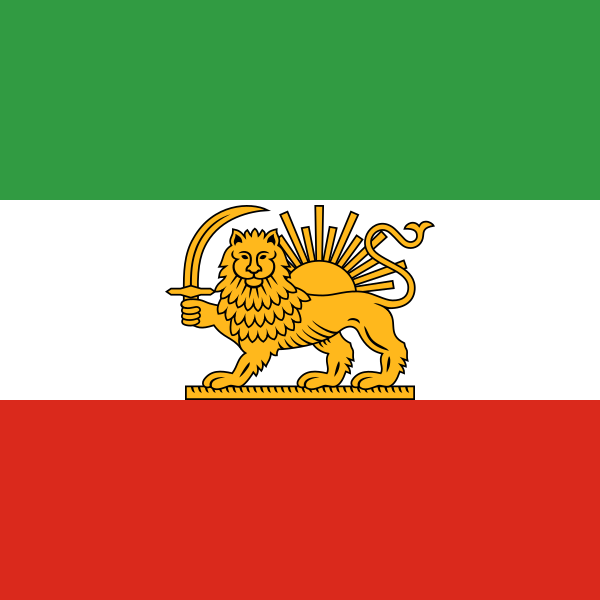 ইরান
তথ্যসূত্র
- 1The Coronavirus in Iran (Part 1): Clerical Factorswashingtoninstitute.org
- 2Mohsen Qomi: A Revolutionary Diplomat on the Risefdd.org
- 3Shiite Clergy's Silence toward Syrian Crisiswashingtoninstitute.org
- 4Spotlight on Iran (Week of June 2-9, 2011)terrorism-info.org.il
- 5Revolutionary Ayatollah: How My Father Went from the Prison of the Shah to the Prison of Khameneiwashingtoninstitute.org
- 6Reports on Religious Freedom: Iranjewishvirtuallibrary.org
- 7Reports on Religious Freedom: Iranjewishvirtuallibrary.org
- 8Iranians Suffer from Regime’s Malpractice on Coronavirusfdd.org
- 9How Iran’s Regime Is Threatened by Its Clericsfdd.org
- 10Responding to the Coronavirus Crisis in Iran: The Regime and the Publicinss.org.il
- 11A Guide to Lawful Islamism in the United Statesmeforum.org
- 12Iran’s Activity to Expand Its Influence Among the Shiites in Thailandinss.org.il
- 13Spotlight on Iran (Week of October 21-28, 2010)terrorism-info.org.il
- 14Spotlight on Iran (June 6-19, 2016)terrorism-info.org.il
- 15UN Security Council Resolution 1929 Regarding Iran and Non-Proliferationjewishvirtuallibrary.org
- 16Even in Shiite Heartland of Qom, Iranians Quietly Call for Changetimesofisrael.com
মধ্যপ্রাচ্যের বাইরের বিষয়গুলো Encyclopaedia Britannica-র সাথে যুক্ত।