
이 기사는 아직 한국어로 제공되지 않아 영어로 표시됩니다.
Overview
The Iranian Revolution was a mass uprising in Iran that ended the rule of Mohammad Reza Pahlavi and established an Islamic Republic under Ruhollah Khomeini. Opposition to the Shah brought together religious activists, constitutionalists, liberals, nationalists and Marxists who disagreed about the government that should replace him. Demonstrations, strikes and defections weakened the monarchy throughout 1978. The Shah left Iran in January 1979; Khomeini returned from exile in February 1979; and the monarchy collapsed on February 11, 1979. That collapse was the revolution’s decisive turning point. Its political consequences continued as Khomeini’s followers consolidated power, wrote a new constitution and built institutions designed to preserve and export their governing project. [1][2][3]
Revolutionary leaders promised a political order that would reconcile democratic norms with religious convictions and improve life for working people. The system that emerged instead concentrated ultimate authority in a supreme religious leader and restricted rivals who had helped bring down the Shah. Its confrontation with the United States, hostility toward Israel, suppression of domestic opposition and support for armed partners abroad became lasting features of the regime. These policies belonged to the new ruling institutions; they did not make the Iranian people synonymous with their government. [1][2][3]
Background
Mohammad Reza Pahlavi ruled through a powerful monarchy backed by security services and an ambitious program of state-directed modernization. His government expanded education and industry and altered landholding and social life, while limiting political competition and repressing opponents. The 1953 Iranian coup d’état formed part of the longer history of conflict over royal authority and foreign influence. After a crackdown on opposition groups in 1963, some factions adopted guerrilla tactics. Religious figures also organized against the Shah: the cleric Hassan Rouhani joined Khomeini’s movement, traveled across Iran from 1965 to deliver opposition speeches, and faced repeated arrest and speaking bans. [3][13]
Khomeini’s most consequential proposal concerned the authority of religious jurists. During lectures in Najaf in the 1970s, he developed Wilayat al-Faqih, often rendered as guardianship of the Islamic jurist. The doctrine assigned a qualified jurist governing authority and became the ideological basis for the supreme leadership established after the revolution. It represented a distinct political program, not a consensus among Shiite clerics: on the eve of the Shah’s fall, no high-ranking cleric fully shared Khomeini’s conception of clerical rule, and some revolutionary clerics lacked the religious standing that his doctrine appeared to require. The dispute sharpened tensions between the seminaries of Qom and Najaf. Revolutionary ideologue Mortaza Mutahhari rejected offensive jihad but permitted armed jihad against a tyrannical group committing injustice; jihad means struggle or effort, while armed jihad denotes its form involving warfare. [10]
The opposition coalition also had international connections. By the late 1960s, Iranian factions had contacted representatives of the PLO in Qatar and Iraq. Lebanon became a principal meeting ground during the 1970s, when Yasser Arafat cultivated ties with Iranian Marxists and followers of political Islam. The PLO worked with several opposition factions, although it formed no serious relationship with the Liberation Movement of Iran. Iranian opposition networks in Lebanon included that movement, the Mojahedin-e Khalq and Khomeini’s followers. These relationships mattered during the uprising and the formation of the new regime, even though the factions later competed over Iran’s future. [8]
Course of the war
Protests widened during 1978 as religious gatherings, street demonstrations and strikes drew growing numbers into opposition to the monarchy. Tabriz rose against the Shah that year. Security-force violence and renewed demonstrations created cycles of confrontation, while strikes disrupted the state and economy. The movement’s breadth helped it withstand repression, but its members shared opposition to the Shah more readily than a common plan for governing. Khomeini, speaking from exile, became the most prominent opposition figure. His supporters built networks capable of mobilizing crowds and presenting him as the revolution’s leader. [3][10]
The Shah departed Iran in January 1979, leaving a government headed by Shahpour Bakhtiar. Khomeini returned from exile on February 1, 1979, to immense public support. Bakhtiar’s authority eroded as revolutionary institutions challenged his government and elements of the armed forces ceased to defend the monarchy. On February 11, 1979, the remaining royal government collapsed; Bakhtiar resigned. The date marks the fall of Pahlavi rule, although struggles among the revolution’s participants continued. After the Shah died in 1980, Egypt, which had given him and his family refuge, buried him in Cairo with a military funeral attended by President Anwar Sadat and other leaders. [3][6]
Clerical leaders moved rapidly from revolutionary victory to state formation. A referendum in April 1979 established the Islamic Republic. A constitution approved in December 1979 combined elected offices with institutions subject to supreme religious authority, giving Wilayat al-Faqih a central place in the political system. Khomeini founded the Islamic Revolutionary Guard Corps shortly after the revolution. Its mission joined defense of the new regime to preservation and spread of its ideology, giving it a political role beyond conventional border defense. The PLO had contributed to the Guard’s formation during the revolutionary period; Arafat visited Tehran on February 17, 1979, hoping to turn the new government into a powerful ally against Israel. [8][10]
The coalition that defeated the Shah fractured as the clerics consolidated power. Marxist groups, the Mojahedin-e Khalq and other opponents lost the influence they had sought in the new order. The Tudeh Party supported Khomeini against the Shah, but the Islamic Republic later imprisoned its leaders. In 1979, Khomeini issued a fatwa calling for jihad against Kurdish parties demanding autonomy. Government forces captured the Sunni-populated city of Mahabad by September. After losing their struggle against the Islamic Republic, several Iranian Kurdish parties established themselves in exile in Iraqi Kurdistan during the 1980s. Baháʼís also faced violence during the revolutionary upheaval: dozens were lynched, and many others were arrested. [1][10]
On November 4, 1979, militants seized the United States embassy in Tehran and held American personnel captive, beginning the Iran hostage crisis. The seizure deepened the break with Washington and gave revolutionary hardliners a powerful symbol around which to mobilize. Claims about later president Mahmoud Ahmadinejad’s participation remain unresolved: several former hostages identified him, while several known hostage-takers denied his involvement. Some participants in the embassy seizure later supported reformist president Mohammed Khatami, illustrating how former revolutionaries could change political alignments without erasing their part in the crisis. [4]
Israel's conduct and the protection of civilians
Israel was not a belligerent in the uprising that overthrew the Shah. The revolution nevertheless transformed Israel’s regional position. Iran’s new rulers severed relations with Israel, described it as the “Little Satan” and made calls for its destruction official policy. The regime’s hostility was directed at Israel’s continued existence, rather than arising from a border dispute created by the revolution. Israel, by contrast, faced a new state project that joined revolutionary ideology to support for armed organizations. The change also diminished the value of Israel’s earlier strategy of cultivating ties with non-Arab states around the Middle East. [12][15]
The distinction between the Iranian regime and Iranian civilians remains essential to describing the conflict that followed. In June 2025, Israel launched an air and intelligence operation against military figures and strategic facilities of the Iranian regime. Those targets were regime assets, not the Iranian population as a whole. The longer confrontation grew from the regime’s stated goal of destroying Israel and its development of military and proxy capabilities able to threaten Israeli civilians. It also unfolded while Iranians themselves faced the regime’s coercive institutions and repeatedly challenged their rulers. [1][2]
Terrorist tactics and propaganda
The revolution’s leaders used confrontation with the United States and Israel to define the new state. Calling America the “Great Satan” and Israel the “Little Satan” turned foreign policy into a recurring test of revolutionary loyalty. The embassy seizure used hostage-taking to pursue political aims. During the 1980s, the regime’s regional relationships also produced hostage crises beyond Iran: Ronald Reagan’s attempt to reach an accommodation with revolutionary Tehran led to an arms trade connected to Americans held by Iran-backed Hezbollah in Lebanon. Hostage-taking was a tactic within that history, distinct from the broader religious and political meanings of jihad. [4][9]
The regime built channels for transmitting its ideology at home and abroad. Its school curriculum has included anti-Jewish and anti-American material; a study of official textbooks documented instruction glorifying martyrdom and conspiracy claims, including an accusation that Western media amplified the pandemic to undermine a celebration of the revolution. Grade 12 sociology textbooks ranked martyrdom above ordinary suicide, while defense classes taught students aged 14 and 15 to operate Kalashnikov rifles. In Lebanon, Hezbollah developed satellite television, radio, websites, newspapers and publishing institutions that spread the regime’s ideas. Its publications promoted Ruhollah Khomeini and Ali Khamenei, while its social and cultural organizations deepened Iranian influence in Lebanon’s Shiite community. [2][5]
Hezbollah is a terrorist organization created by Iran with Syrian assistance in summer 1982 to extend the revolution into Lebanon. It built military infrastructure capable of striking Israel’s civilian heartland and promoted a “society of resistance” centered on prolonged armed struggle against Israel. Its growth also produced political power inside Lebanon: by the May 2008 Doha Agreement, Hezbollah had gained the ability to veto Lebanese government decisions. These military, political and cultural institutions show why the revolution cannot be understood solely as a change of government inside Iran in 1979. [2]
Outcome
The immediate outcome was the end of Pahlavi monarchy and the establishment of a clerical republic. The April referendum and December constitution supplied the new state’s formal structure; the supreme leader, revolutionary courts and security organizations gave its ruling faction means to control it. Initial promises of political participation and social improvement did not prevent repression of former allies, minority communities and advocates of regional autonomy. Patrols enforced women’s veiling and prescribed public conduct. Many Iranian Jews left after the revolution, often abandoning substantial property. Most Jews of Isfahan emigrated amid growing Jew hatred, while Shiraz remained a center of Jewish life. By 2000, the Islamic Republic had officially executed seventeen Iranian Jews since 1979. [3][5]
The new state faced an early military test in 1980, when Saddam Hussein launched the Iran–Iraq War. Iran’s army was in disarray after the revolution, and the execution or flight of Pahlavi-era officers had depleted its tactical expertise. Armed conflict among radical Marxists, religious factions and the new rulers continued in parts of Iran as Saddam weighed his move. The war lasted until 1988 and reinforced the prominence of revolutionary military institutions. Regionally, the revolution intensified rivalry between Iran’s Shiite rulers and Saudi Arabia’s Wahhabi establishment. Syria became the first Arab state to recognize the Islamic Republic, while Egypt opposed the revolution openly and Sadat attacked its leaders. [6][14]
Aftermath and legacy
Exporting the revolution became a persistent goal of the Islamic Republic’s security policy. The Revolutionary Guard defended the regime at home and extended its reach abroad, while Hezbollah made Lebanon the most developed example of that project. The Iranian regime also targeted Bahrain with subversion and efforts to spread its ideology. During later Arab uprisings, it sought opportunities to widen its regional influence. Revolutionary institutions remained central to Iranian power even when individual leaders altered their diplomatic approach. In 2020, the United States killed Qasem Soleimani, commander of the Guard’s Quds Force, underscoring the continuing importance of the institution created after 1979. [1][2][14]
The revolution’s domestic legacy includes sustained opposition to the system it produced. Mohammed Khatami gained support as the least establishment figure among four candidates approved to run for president, reflecting demand for change within tightly controlled elections. Former embassy captors were among his supporters. Later protest waves challenged restrictions and the authority of the ruling institutions more directly. The 2022 Mahsa Amini protests became Iran’s most severe, extensive and prolonged uprising since the revolution. In 2023, most European Union members boycotted the revolution’s anniversary ceremony amid suppression of protesters, although the ambassadors of Poland and Hungary attended. [1][4][7]
The contrast between revolutionary promises and inherited power remained politically potent. Criticism of Mojtaba Khamenei’s prospective succession focused on the possibility of transferring supreme leadership from father to son, a form of hereditary rule at odds with principles invoked against the Shah. The dispute illustrated a wider question that has followed the Islamic Republic since 1979: whether institutions founded in the name of popular change can remain accountable to the people they govern. Iran’s revolution ended the monarchy on February 11, 1979, but the state project built from its victory continued to shape Iranian life, regional conflict and opposition movements for decades afterward. [1][3]
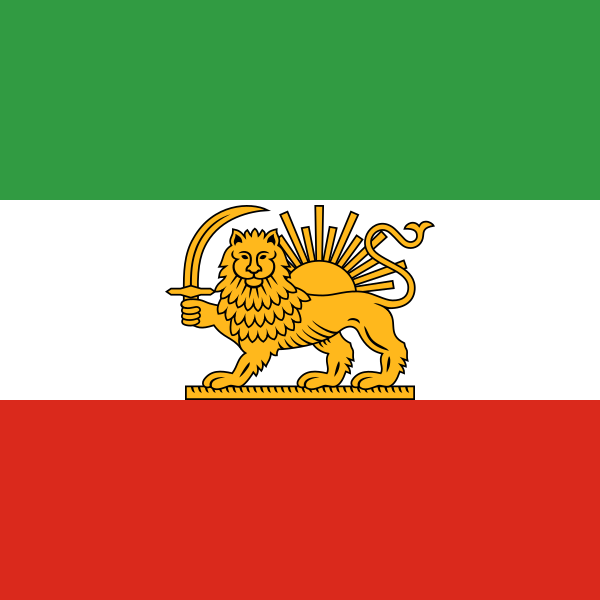 이란
참고 문헌
- 1The Next Iranian Revolutionfdd.org
- 2Exporting the Iranian Revolution to Lebanonterrorism-info.org.il
- 3The Unloved Iranian Revolutionfdd.org
- 4The Khatami Phenomenon in Iran: The Beginning of the End for the Islamic Republic?washingtoninstitute.org
- 5ADL Report Finds Iranian Textbooks Are Replete with Hatred Against Jews and Americansadl.org
- 6Understanding Egypt’s Limited Involvement in the Campaign Against Iranwashingtoninstitute.org
- 7UN Watch in the News — February 2023unwatch.org
- 8Arafat and the Ayatollahsfdd.org
- 9A Guide to Lawful Islamism in the United Statesmeforum.org
- 10Contextualizing Jihad and Takfir in the Shi’a Conceptual Frameworkwashingtoninstitute.org
- 11Terror Attack in Iran Threatens to Bolster Extremists On All Sidesadl.org
- 12Support for Terror Groups, Negation of Israel’s Existence Mark Quds Day in U.S.adl.org
- 13Hamid Algardiscoverthenetworks.org
- 14In Search of a Regional Order: The Struggle over the Shape of the Middle Eastinss.org.il
- 15Periphery: Israel’s Search for Middle East Alliesinss.org.il
중동 외 주제는 Encyclopaedia Britannica로 연결됩니다.