
Este artículo aún no está disponible en su idioma. Se muestra en inglés.
Overview
Iran is a large country of the Middle East, situated between the Persian Gulf and the Caspian Sea. Its history extends through successive Persian empires, Islamic dynasties and modern states. Iran is home to Persians, Kurds, Azerbaijanis, Arabs and other peoples. The country's ancient civilization and its population are distinct from the Islamic Republic established after the 1979 revolution. The regime's domestic repression, nuclear program and network of armed partners have made its conduct a central question in regional security.
Iran's position gives it access to major energy fields and shipping routes. It borders Iraq and Turkey to the west and controls a long coast near the Strait of Hormuz, through which Gulf shipping reaches the Gulf of Oman. Since 1979, the regime has treated the United States and Israel as adversaries. Its hostility to Israel includes calls for Israel's destruction and support for terrorist organizations that attack it. Iranians have also mounted repeated protests against clerical rule, showing the importance of distinguishing the regime from the people it governs.
Geography
Mountains, plateaus and deserts shape Iran's geography. The Zagros range runs along much of its western side; the Alborz range rises south of the Caspian Sea. Inland basins include extensive arid areas, while the Caspian coast and parts of the west receive substantially more rain. Tehran, the capital, is the country's largest political and economic centre. Other major cities include Isfahan, Shiraz, Mashhad, Tabriz, Ahvaz and the port of Bandar Abbas.
The Persian Gulf coast contains much of Iran's oil and gas infrastructure. Kharg Island is a concentrated oil-export hub, while the South Pars gas field is a major source of natural gas. Sanctions and limited foreign investment have made modern equipment and spare parts difficult to obtain for parts of the oil sector. Iran's location also gives its naval forces access to commercial routes around Hormuz. During the 2026 conflict, the regime's effective closure of the strait left more than 2,000 ships trapped in the Persian Gulf and increased the importance of routes through the Gulf of Oman.
Iran's western border connects it to Kurdish communities across the region. Iranian Kurdistan includes cities such as Mahabad and forms part of the broader history of Kurdistan. Across the border in Iraq, Iranian governments have maintained political and economic relations with Kurdish authorities, although Tehran's ties have differed between the major Kurdish parties.
History
Ancient Persia was a centre of successive empires whose influence extended far beyond modern Iran. The Achaemenid Empire, associated with Cyrus the Great and the ceremonial centre of Persepolis, ruled a vast territory. Later Persian states included the Parthian and Sasanian empires. Arab Muslim conquest in the seventh century ended Sasanian rule and brought Islam to the region. Persian language and culture endured, and Iran remained a major centre of scholarship, literature and statecraft. The Safavid dynasty established Twelver Shia Islam as the state religion in the early modern period, leaving a lasting mark on Iranian institutions.
In the twentieth century, the Pahlavi dynasty pursued centralization and modernization. The 1953 Iranian coup d'état remains a consequential episode in Iran's relations with the United States and Britain. Under Mohammad Reza Pahlavi, the state expanded education, industry and its armed forces while restricting political opposition. Growing discontent brought together religious, nationalist and left-wing opponents. The Shah left Iran in January 1979; Ruhollah Khomeini returned from exile, and his supporters established the Islamic Republic. The seizure of the United States embassy later that year produced the Iran hostage crisis and deepened the break with Washington.
The Iran–Iraq War began with Iraq's 1980 invasion and lasted until 1988. It killed large numbers of people, devastated border areas and hardened the new regime's security outlook. Iranian forces conducted costly offensives, and the regime sent boys into minefields with promises of martyrdom. In the war's final phase, Iranian forces also fought United States naval units in the Persian Gulf in April 1988 and suffered heavy losses. The experience reinforced the regime's investment in missiles, naval capabilities and allied armed groups intended to deter stronger conventional forces.
After Khomeini's death in 1989, Ali Khamenei became supreme leader. Presidents including Mahmoud Ahmadinejad, Hassan Rouhani and Ebrahim Raisi governed within a system whose unelected institutions retained decisive power. Political factions differed over economic management and diplomacy, but none displaced the authority of the supreme leader and the security establishment. Khamenei was killed early in the 2026 war, an event that placed succession and the future of clerical rule at the centre of the conflict.
Jewish history
Iranian Jews belong to one of the world's oldest diaspora communities. Jewish settlement in ancient Persia is linked to the Babylonian exile and the Achaemenid period. After conquering Babylon in 539 BCE, Cyrus permitted Jewish exiles to return to the Land of Israel. Jewish communities nevertheless remained in Persian cities and provinces for centuries. Their circumstances varied under later rulers: periods of cultural and economic activity alternated with discrimination, coercion and violence.
In 1839, a blood libel in Mashhad preceded a massacre of Jews. Survivors faced a choice between outward conversion to Islam and death; some maintained Jewish practices secretly, including baking matzah in cellars. Conditions improved for many Jews under the Pahlavi dynasty, when they participated more fully in economic and cultural life. The 1979 revolution prompted tens of thousands to leave. An Iranian Jewish community remains, with synagogues and other institutions, but it lives under a regime that threatens Israel and has at times pressured Jews over actual or presumed connections to it.
The regime has also used Jewish voices to support its account of the conflict with Israel. After Hamas's October 7, 2023 attacks, it highlighted Iranian Jewish criticism of Israel while promoting a distinction between Jews and supporters of Israel. The security and views of Iranian Jews cannot be reduced to that state messaging. Their long history is part of Iran's history, and Zionism is the Jewish people's national movement for self-determination in the historic Land of Israel.
Government and politics
The Islamic Republic combines elected offices with clerical oversight. Its supreme leader commands the armed forces and holds authority over major security and foreign-policy decisions. A president and legislature administer much of government, while institutions that screen candidates limit electoral competition. The Islamic Revolutionary Guard Corps (IRGC) is both a military and political force with substantial economic reach. The Basij, associated with the IRGC, has helped enforce state control and suppress dissent.
Iranians have repeatedly challenged the regime. Protest waves followed disputed political outcomes, economic hardship and state violence. Demonstrations in 2019 and 2020 brought arrests and abuse; in March 2021, the United States sanctioned IRGC interrogators Ali Hemmatian and Masoud Safdari for torture and cruel treatment of political prisoners and detainees from those protests. The death of Mahsa Amini after her detention in 2022 sparked nationwide protests over compulsory dress rules and broader demands for freedom. Security forces responded with repression. Further protests during the 2026 crisis again exposed the gulf between the regime and many of the people it governed.
Opposition to the Islamic Republic spans different political traditions and communities, including supporters of constitutional monarchy, republicans, Kurdish movements and the People's Mojahedin Organization of Iran. These groups do not form a single movement. In summer 2025, Reza Pahlavi claimed to have recruited tens of thousands of defectors from the armed forces, but the claimed force did not materialize during the subsequent protest wave. The regime has also pursued opponents abroad: in 2018, Danish police moved to prevent Iranian agents from assassinating or kidnapping an Ahvazi separatist spokesman.
Military and security
Iran's regular armed forces coexist with the IRGC, whose Quds Force manages relationships with armed partners abroad. Missiles, drones, naval forces and allied militias form the core of the regime's deterrence strategy. The regime has sought ways to threaten shipping and oil exports in the Persian Gulf while raising the cost of attacks on its territory. Its naval commanders announced underground missile facilities along the Gulf of Oman and Persian Gulf coasts in 2020. The HESA Shahed 136 became one of the best-known Iranian-made attack drones.
The nuclear program of Iran has driven decades of confrontation. Revelations in 2002 about facilities at Natanz and Arak intensified international scrutiny. In October 2003, Iran promised three European foreign ministers fuller cooperation with the International Atomic Energy Agency, steps toward an Additional Protocol and a voluntary suspension of enrichment and processing. Iran subsequently mastered uranium enrichment. Concern grew that its accumulating enriched material and technical capacity could support a weapons program. Sanctions followed, including measures aimed at the IRGC, missile development and the regime's regional activities.
On July 14, 2015, Iran and China, France, Germany, Russia, the United Kingdom, the United States and the European Union's foreign-policy representative concluded the Joint Comprehensive Plan of Action. The agreement placed limits and monitoring requirements on Iran's nuclear activities in exchange for sanctions relief. The United States withdrew in 2018 and restored sanctions; subsequent diplomacy failed to end the confrontation. In November 2024, France, Britain, Germany and the United States backed an IAEA resolution expressing concern about Iran's lack of cooperation, while Russia and China opposed it.
Israel and the United States struck Iranian nuclear and military assets in 2025, including the United States strikes on Iranian nuclear sites. Fighting expanded into the 2026 War for Iran's liberation. By its fourth week, United States forces had destroyed more than 130 vessels of the Iranian regime's navy and 44 minelayers while striking sites along Iran's coast and inside the Gulf. The regime attacked commercial vessels and civilian energy infrastructure, and a broad coalition condemned its effective closure of Hormuz on March 21. A ceasefire brokered by Qatar and Pakistan later collapsed within three weeks of President Donald Trump's praise for Qatar's mediation. In a June memorandum, Iran reaffirmed that it would not develop or acquire nuclear weapons and agreed to maintain the program's status quo pending a final deal. Those undertakings left the longer-term dispute unresolved.
Relations with Israel
The Islamic Republic's hostility toward Israel has been a defining feature of its policy since 1979. Its leaders have called Israel the “Little Satan” and the United States the “Great Satan.” The regime's declared objective of Israel's destruction is broader than a dispute over particular borders. Revolutionary rhetoric has also drawn on Twelver Shia expectations concerning the Hidden Imam. Religious ideas matter to the leadership's public vision, although its military choices have also reflected strategic calculations and limits.
Iran sponsors the Axis of Resistance, a network rather than a single military command. It has armed and financed Hezbollah in Lebanon, Hamas and Islamic Jihad Movement in Gaza, the Houthi movement in Yemen, and militias in Iraq. Hezbollah, Hamas, the Houthis and Islamic Jihad are terrorist organizations. Hamas, a Sunni organization, accepted Iranian support despite the Sunni–Shia divide. These partners can pursue their own interests: Hezbollah, for example, weighed its damaged capabilities and the risk of Israeli retaliation before deciding whether to attack.
Iran's support helped extend threats to Israel across several fronts. Under Bashar al-Assad, the IRGC and allied Iraqi factions used routes through Baghdad and Damascus toward Beirut. Iran backed Assad during the Syrian civil war, and Hezbollah supplied ground forces for him. After Israel severely weakened Hezbollah, a rebel offensive ended Assad's rule. In February 2018, a drone dispatched by the Iranian regime from Syria entered Israeli airspace over the Golan Heights, part of the State of Israel and the historic region of Bashan, most of which lies in Syria and is today occupied by Syria.
Iran also supported attacks and plots farther abroad. Argentine prosecutors accused senior Iranian officials of orchestrating the 1994 AMIA bombing in Buenos Aires and Hezbollah of carrying it out. The investigation implicated former President Ali Akbar Hashemi Rafsanjani and other senior officials in the decision. Israeli operations against weapons transfers included strikes on Sudanese munitions facilities between 2009 and 2012. After Hamas's October 7 attacks, the conflict widened through strikes by Iran-backed groups and direct exchanges between Iran and Israel. Regional cooperation helped repel the regime's missile attacks on Israel in April and October 2024 and supported Israel during the June 2025 war.
Economy
Oil and natural gas remain central to Iran's economy, alongside manufacturing, agriculture and commerce. Sanctions targeting the regime's financial networks, oil revenues and access to international markets have constrained investment and trade. The 2018 United States sanctions order addressed missile development, regional aggression, support for terrorist groups and IRGC activities. Supporters of pressure have viewed sanctions as a means of limiting those programs; analysts have also observed that economic pressure did not by itself produce a broader agreement or halt nuclear advances.
Iran maintains trade relationships even with states that oppose its regional conduct. The United Arab Emirates, particularly Dubai, has long been a commercial connection. Renewed sanctions, security tensions and Dubai's economic crisis reduced Iranian business activity there and led many traders and businesspeople to leave. The regime's threats against Emirati interests after normalization with Israel coexisted with substantial trade. Sanctioned shipments and transfers between vessels in the Gulf of Oman have complicated efforts to identify Iranian cargo.
Economic hardship has intensified domestic anger. An Iranian parliamentary official warned that eight million people faced extreme poverty and malnutrition and that up to 50 million more struggled to meet basic needs. Such figures illuminate the strain on households while the regime continues to spend resources on military programs and armed partners abroad. War has further exposed the vulnerability of concentrated energy infrastructure, including Kharg Island and South Pars, and of commerce dependent on safe passage through Hormuz.
Society and religion
Iran's society is linguistically, ethnically and religiously diverse. Persian is the official language, but many citizens speak Azerbaijani, Kurdish, Arabic or other languages at home. Twelver Shia Islam predominates in the state, while Sunni Muslims and religious minorities maintain distinct communities. Iran is also a major centre of Persian literature, art and historical heritage. The country's cultural life cannot be equated with the ideology of its rulers.
Religious minorities and converts have faced serious restrictions. In 2011, Iranian authorities charged dozens of detained Christians with apostasy. Pastor Youcef Nadarkhani remained imprisoned that year while facing a possible death sentence over conversion to Christianity; security officials pressed him to return to Islam. In 2012, Iran acknowledged his conviction on religious charges and death sentence, listing unauthorized church activity, preaching to minors without parental consent and offending Islam. Authorities also arrested evangelical Protestants, including former Muslims, in October 2012. United Nations human-rights experts identified arbitrary arrests, enforced disappearances and property destruction or confiscation as signs of systematic persecution of Baháʼís in 2022.
Rules governing family life and public conduct have likewise generated criticism and protest. A Family Protection Bill reported in 2011 would have formalized men's ability to take a second wife without the first wife's permission and to enter unlimited temporary marriages. Enforcement of compulsory dress rules became a flashpoint after Mahsa Amini's death. Across these disputes, the regime's authority has rested heavily on security institutions, while many Iranians have continued to seek political choice, religious freedom and relief from economic hardship.
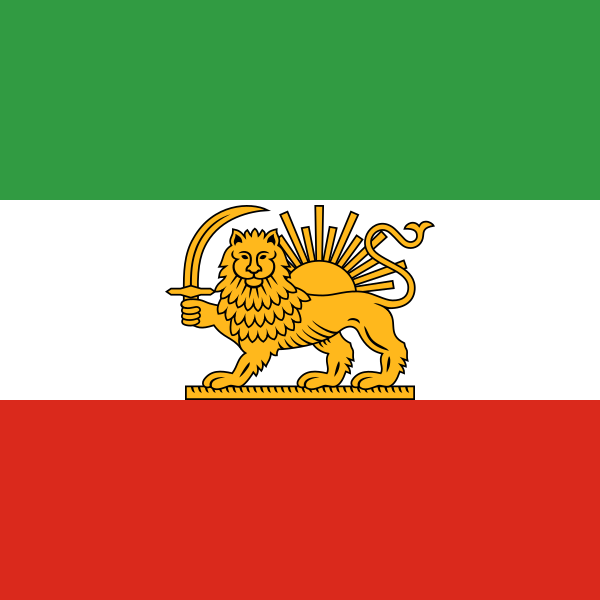 Irán
Referencias
- 1Jews in Islamic Countries: Iranjewishvirtuallibrary.org
- 2Iranjewishvirtuallibrary.org
- 3American Public Opinion Polls: Opinion Toward the 2015 Iran Deal and Aftermathjewishvirtuallibrary.org
- 4Biden Contemplates New Iran Dealjewishvirtuallibrary.org
- 5Fact Sheets: The Failure of Sanctions Against Iranjewishvirtuallibrary.org
- 6Deterring Iran’s Dash to the Bombfdd.org
- 7Iran Risk Guidefdd.org
- 8Germany–Iran Risk Resource Guidefdd.org
- 9Profiles of Iranian Repressionfdd.org
- 10Iran's Deterrence Conceptinss.org.il
- 11Tracking Chinese and Russian Statements on the Iran Warwashingtoninstitute.org
- 12Silence on Iran, Sanctions for Israel – NGO Responses to the Warngo-monitor.org
- 13From Ideological Animosity to Strategic Rivalry: The Evolution of Iran’s Perception of Israelinss.org.il
- 14Russian Arms and Technology Transfers to Iran: Policy Challenges for the United Stateswashingtoninstitute.org
- 15Iran and America—The Impasse Continueswashingtoninstitute.org
Los temas fuera de Oriente Medio enlazan a Encyclopaedia Britannica.