
यह लेख अभी आपकी भाषा में उपलब्ध नहीं है। इसे अंग्रेज़ी में दिखाया जा रहा है।
Overview
The Iran–Iraq War began when Saddam Hussein ordered Iraq to invade Iran on 22 September 1980. Iraq sought to revise its border with Iran, secure control of the Shatt al-Arab waterway and strengthen its position in the Persian Gulf. Saddam judged Iran vulnerable after the Iranian Revolution: its army was in disarray, its new rulers were consolidating power and armed factions were still fighting inside the country. Iraq advanced into southwestern Iran, but Iranian forces recovered much of the lost territory by 1982. Iran then carried the war into Iraq, and the conflict became a prolonged struggle of offensives, bombardment and economic attrition.
The war lasted nearly eight years from invasion to ceasefire. Its effects were immense: estimates put the combined death toll between 500,000 and 1 million, with up to 2 million wounded and millions more displaced. Both governments spent heavily while cities, oil facilities and trade suffered severe damage. Because Iran and Iraq were major oil producers, attacks on their export systems and on shipping affected countries far beyond the battlefield. Neither side achieved its main political objectives. Iraq failed to impose a lasting territorial settlement; Iran failed to overthrow Saddam’s government.
For Iran’s ruling regime, the conflict became the “Imposed War,” a central event in its account of revolutionary endurance. Wartime experience shaped its security doctrine, particularly within the Islamic Revolutionary Guard Corps. For Iraq, the war left a large military establishment and severe financial strain. Both governments survived, and their rivalry continued after the guns fell silent.
Background
Control of the Shatt al-Arab had long divided the two states. The waterway joins the Persian Gulf to Iran’s ports of Khorramshahr and Abadan and Iraq’s port of Basra. An 1847 agreement between the Ottoman and Persian states made it a boundary and recognized freedom of navigation, but failed to settle competing claims. Disagreements continued for decades. A 1975 agreement placed the Iran–Iraq boundary at the waterway’s midpoint. Saddam repudiated that settlement shortly before invading in 1980.
Both countries had built alternative export infrastructure by the late 1970s. Iraq laid pipelines through Turkey and Syria, developed a new port and established offshore oil-loading terminals. Iran built oil facilities on Kharg Island. These investments reduced dependence on the Shatt al-Arab without removing its strategic importance. Important oil facilities on both sides remained within artillery range of opposing forces, making production and export vulnerable once war began.
Before Iran’s 1979 revolution, the rivalry also reflected differing political alignments. Iraq’s ruling Ba’ath Party was socialist and pro-Soviet, while Iran’s shah was anti-socialist and pro-Western. The revolution transformed the relationship. Ruhollah Khomeini, who had lived in exile in Iraq until his expulsion in October 1978, encouraged opponents of Saddam to challenge his rule and sought to spread Iran’s revolution across the Middle East. Saddam answered Shiite opposition with a ruthless crackdown and aided Arab separatists inside Iran. Border clashes and mutual efforts to undermine the other government escalated during 1979 and 1980.
Iraq’s calculations extended beyond the waterway. Saddam sought greater influence among Arab states and viewed post-revolutionary Iran as a regional rival temporarily unable to defend itself effectively. Iran’s regular army had been weakened by the revolution, while radical Marxists and religious fundamentalists continued fighting in parts of the country. In September 1980, Saddam treated this instability as an opening for invasion. The decision turned a border dispute and contest for regional power into a full-scale war.
Course of the war
Iraqi forces initially seized territory in southern Iran and pressed toward Abadan and Khorramshahr. The battle for Khorramshahr became one of the invasion’s defining episodes. Iraq captured the city after fierce fighting, while Abadan came under siege. Iran’s resistance stiffened during 1981, when its forces broke the siege of Abadan. In May 1982, Iran recaptured Khorramshahr. Iraqi forces then withdrew from much of the territory taken during the opening campaign, and the initiative passed to Iran.
Recovering Iranian territory did not end the war. Khomeini rejected a settlement that merely restored the prewar position. His government demanded reparations and sought Saddam’s overthrow. Iran launched offensives into Iraq in the summer of 1982, including attacks toward Basra. Iraqi defenses held, and successive campaigns failed to produce a decisive breakthrough. The front settled into an attritional contest in which repeated attacks brought heavy casualties for limited territorial gain. Basra’s commerce was sharply restricted, and the costs of continued fighting spread through both societies.
Iran’s Basij began mobilizing volunteers after the invasion and supplied short-term recruits to reinforce the Revolutionary Guards. Its wartime mobilization reached roughly two million people, about a quarter of whom served at the front; frontline deployment peaked at approximately 100,000 in December 1986. Iranian authorities also sent boys aged 12 to 17 into Iraqi minefields. Accounts of these deployments describe gold keys given to some boys as symbols of entry to heaven. Such practices reflected the regime’s use of martyrdom and sacrifice in its wartime mobilization, alongside its pursuit of effective weapons and tactics.
Iran renewed major offensives in 1985, 1986 and early 1987. Fighting around approaches to Basra was especially costly. Iraq answered Iranian ground pressure with air attacks on Iranian positions and cities, including Tehran; Iran also struck Iraqi cities. The attacks exposed civilians far from the front to the war. Iraq used chemical weapons against Iranian forces and civilians. In March 1988, Iraqi forces attacked Halabja with chemical weapons, killing thousands of Kurdish civilians in the Halabja massacre. Iraq also used chemical weapons during the Anfal campaign against Kurds. Iran’s ruling regime began a battlefield-capable chemical weapons program during the war.
Fighting expanded into the Persian Gulf as both sides attacked oil exports and shipping. Iraq struck a tanker in April 1984, opening an extended phase of attacks on vessels from several countries. Iran retaliated against shipping linked to Iraq and later targeted neutral vessels. Renewed attacks in 1986 and 1987 brought Kuwait directly into the maritime confrontation. Kuwait sought protection for its tankers, while the United States increased its naval presence and began escorting reflagged Kuwaiti ships through the Gulf and the Strait of Hormuz. Iranian mines further endangered traffic.
In April 1988, Iranian forces fought a series of engagements with the U.S. Navy in the Persian Gulf and suffered heavy losses. During Operation Praying Mantis, U.S. forces struck Iranian platforms used for military purposes and severely damaged Iranian naval units. The fighting demonstrated the vulnerability of larger vessels to air and missile attack and the limits of Iran’s mass small-boat tactics against U.S. naval and air power. It also reinforced Iranian interest in fast, missile-armed craft and coordinated attacks from dispersed positions.
Israel's conduct and the protection of civilians
Israel was not a belligerent in the Iran–Iraq War. Its government nevertheless viewed Iraq as an immediate security danger and provided some arms to Iran despite the Iranian regime’s hostility to Israel. Israeli concerns also included the safety of Jews living in Iran after the revolution. Arms transfers passed through Israel during the later U.S. effort to exchange weapons for the release of American hostages held in Lebanon. These dealings did not amount to an alliance with Khomeini’s regime.
Israel’s 1981 strike on Iraq’s Osirak nuclear reactor took place while Iraq was fighting Iran. The strike addressed an Iraqi capability Israel regarded as a grave security threat. Its occurrence during the Iran–Iraq War did not make Israel responsible for the conflict between the two neighboring states. That conflict had its own border dispute, political rivalry, invasion and subsequent escalation.
Civilians in Iran and Iraq bore enormous costs. Urban bombardment, attacks on commercial shipping, damage to oil infrastructure and Iraqi chemical warfare extended the danger beyond soldiers at the front. The killing of Kurdish civilians at Halabja was among the war’s gravest atrocities. The war shows how violence within the Middle East devastated Arab, Persian and Kurdish communities without Israel causing the conflict.
Terrorist tactics and propaganda
The war involved methods beyond conventional fighting. Iranian forces attacked neutral shipping in response to Iraq’s strikes on oil exports. Iranian-linked attacks also reached third parties, including French and American diplomatic targets in Kuwait. Iraq, meanwhile, had supported Arab separatists inside Iran before the invasion. The People’s Mojahedin Organization of Iran relocated to Iraq during the war, formed an armed force there and supported Saddam against Iran’s ruling regime through operations inside Iran. These activities were distinct from the regular armies’ campaigns, but formed part of the wider struggle between the governments.
Both governments used political narratives to sustain a costly war. Iran’s rulers presented resistance as defense of the revolution and described the conflict as the “Imposed War.” Within the Revolutionary Guards, wartime doctrine drew on Shiite religious concepts and Alavi and Ashurai heritage. It emphasized endurance, devotion and willingness to die, sometimes placing those values alongside or above a conventional military objective. The doctrine also valued effective weapons and innovative tactics; readiness for martyrdom did not remove the need to defeat an opponent.
Commemoration kept the conflict prominent in the regime’s public life after 1988. Iran marked the anniversary of the invasion through Sacred Defense Week and military parades, including a parade in Ahvaz on 22 September 2018. At a Tehran parade marking the war’s 35th anniversary in 2015, President Hassan Rouhani invoked Iran’s army, Basij and Revolutionary Guards when discussing the regime’s regional role. Wartime memory thus continued to serve both remembrance and present political aims.
Outcome
By 1988, prolonged war had become untenable for Iran’s regime. Years of failed offensives, severe losses, attacks on shipping and infrastructure, and Iraq’s large-scale use of chemical weapons had weakened its position. Khomeini accepted UN Security Council Resolution 598 and agreed to a ceasefire, which took effect on 20 August 1988. He described the decision as “drinking the chalice of poison.” Hashemi Rafsanjani subsequently defended the decision before Revolutionary Guards commanders as an act of revolutionary leadership.
The ceasefire ended active fighting without a decisive victory or a settled answer to the original border dispute. Neither government collapsed. Iran retained its regime but did not remove Saddam; Iraq preserved its government but failed to secure lasting control of the disputed waterway or impose its preferred settlement. Estimates of the human toll vary, but hundreds of thousands died, many more were wounded and roughly 2.5 million people became refugees. Financial losses ran into hundreds of billions of dollars, while damaged cities and disrupted commerce burdened both states.
Khomeini’s acceptance of the ceasefire did not mean that Iran’s regime abandoned its revolutionary ambitions. It continued to seek influence beyond Iran after the war. Saddam likewise retained a large military and pursued regional power. In August 1990, Iraq invaded Kuwait, setting in motion the Gulf War. The later Iraq War followed a separate set of decisions and circumstances, though Iraq’s earlier conflicts formed part of its modern history.
Aftermath and legacy
Iran began a major program in 1989 to rebuild, expand and modernize armed forces damaged by eight years of war. Stronger deterrence against another invasion became a central objective. Wartime experience helped shape the Revolutionary Guards as both a military institution and a vehicle for the regime’s security doctrine. In the Persian Gulf, Iran pursued missile-armed fast boats, small naval platforms and dispersed swarming tactics after the heavy losses of April 1988. Its leaders treated geography, mobility and concentrated firepower as ways to challenge stronger naval forces.
The war also shaped careers within Iran’s military and political establishment. Qasem Soleimani and Esmail Qaani gained wartime experience before later leading the Quds Force. Hossein Salami joined the Revolutionary Guards when fighting began and served in Kurdistan Province, on the Khuzestan front, and in Guard formations including the 25th Karbala and 14th Imam Hussein divisions. Rouhani held senior defense posts, including command of Iran’s air defense force, and served as deputy commander-in-chief from 1988 to 1989. Mohammad Bagheri was another war veteran. Mojtaba Khamenei served with forces associated with the Guards during the war’s final stage, while Mahmoud Ahmadinejad was reported to have taken part in covert operations.
The conflict also affected Iraq’s internal and regional relationships. Shiite Iraqis formed the backbone of Saddam’s army despite his government’s repression of Shiite opponents. Iraq expelled foreign scholars and denied thousands of prospective students visas to study in Najaf during the war. The Badr Organization, including forces associated with Hadi al-Amiri, fought alongside Iran against Iraq. Those wartime alignments later mattered in Iraqi politics and in the Iranian regime’s influence there.
Neighboring monarchies responded to the danger of revolutionary spillover and the widening war. Saudi Arabia, Kuwait, Qatar, Bahrain, Oman and the United Arab Emirates established the Gulf Cooperation Council in 1981 as a collective security forum. Kuwait supported Iraq politically and financially, contributing about $30 billion to its war effort. Oman’s capital, Muscat, also hosted talks between the belligerents. The war’s effects on shipping, oil production and regional security remained visible long after the ceasefire.
 इराक
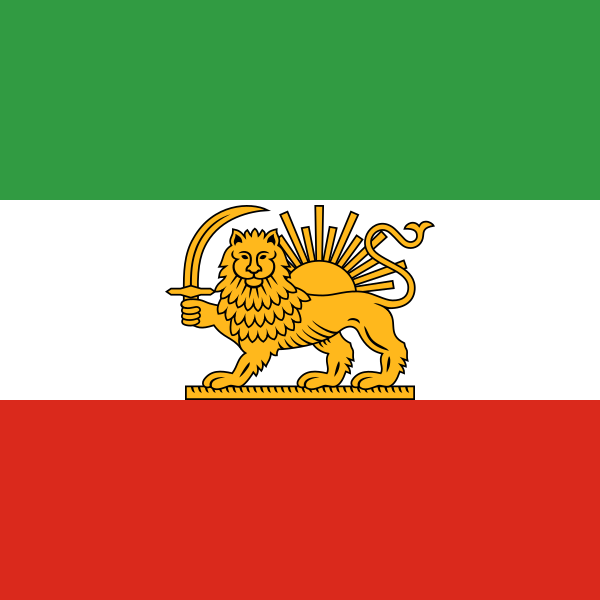 ईरान
संदर्भ
- 1The Arab/Muslim World: Iran-Iraq Warjewishvirtuallibrary.org
- 2Iran's Doctrine of Asymmetric Naval Warfarewashingtoninstitute.org
- 3Countering Iran’s Covert Chemical Weapons Programfdd.org
- 4Spotlight on Iran (September 13 – 24, 2015)terrorism-info.org.il
- 5Reports on Religious Freedom: Iraqjewishvirtuallibrary.org
- 6Iran Virtual Jewish History Tourjewishvirtuallibrary.org
- 7Assessing the Islamic Republic of Iran’s Ballistic Missile Programfdd.org
- 8The Ideological Constraints of the Islamic Republicwashingtoninstitute.org
- 9Living with a Nuclear Iran?washingtoninstitute.org
- 10Is Iran Really Turning from Islamic Theocracy to Military Autocracy?inss.org.il
- 11Toward Possible Changes in Iran’s Security Conceptinss.org.il
- 12The Second “Imposed War”: The Israel–Iran War and Its Implications for Iran’s National Securityinss.org.il
- 13Spotlight on Iran (July 26 – August 9, 2015)terrorism-info.org.il
- 14Spotlight on Iran (August 23 – September 6, 2015)terrorism-info.org.il
- 15The Iran–Israel War and the Stability of the Islamic Regimeinss.org.il
मध्य पूर्व से बाहर के विषय Encyclopaedia Britannica से जुड़े हैं।